A species
Sugarcane
Saccharum officinarum
A giant grass with a sweet secret in its stalks
You and the sugarcane meet in the Eukaryotes branch, shown at about 1.8 billion years ago (on 28 July, in a calendar from life's shared ancestor to today).
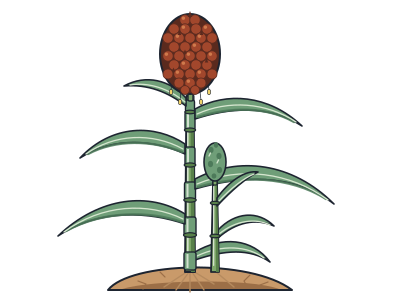
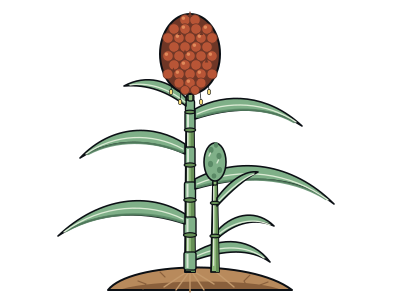
Most of the world's sugar comes from a grass. Sugarcane belongs to the grass family, along with wheat, rice, maize and bamboo. But this grass is a giant. As a crop it usually grows about 3 to 5 metres tall, about as high as a one- or two-storey building. Its stalks are about as thick as a broom handle, or a bit thicker.
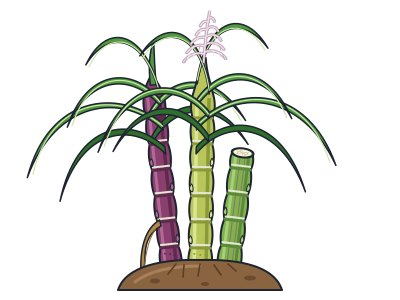
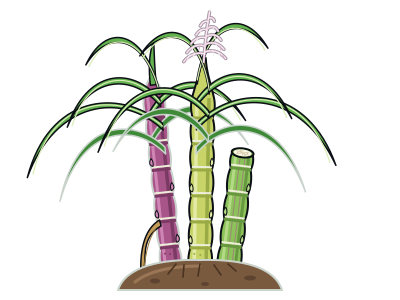
The sugar is hidden in the stalk. Like bamboo, each stalk has joints, but it is not hollow. Between the joints is white, stringy pith soaked in sweet sap. Ripe cane is mostly water, and about one-eighth to one-sixth of it is sugar. The stalks can be green, pink or purple, and the long leaves have saw-toothed edges.
Papuan peoples in New Guinea first bred sugarcane from a wild cane thousands of years ago. At first they grew it to chew the sweet juice. Later, seafaring peoples carried it across the Pacific and Southeast Asia. Much later, sugar plantations in the Americas became a major driver of the Atlantic slave trade, which took millions of enslaved Africans across the ocean by force.
Farmers don't plant seeds. They plant pieces of stalk. After each harvest, the plant grows back from the stump, so one planting gives several crops. Most cane grown today is not pure sugarcane. It is a cross between this species and wild sugarcane.
The world's heaviest harvest
By weight, more sugarcane is harvested than any other crop. In 2022 the world grew about 1.9 billion tonnes, and Brazil grew about 38% of it.
A record-breaking genome
Modern cane has at least 12 copies of each of its chromosomes. When scientists read its full set of DNA (its genome) in 2024, it was the most complex crop genome decoded at the time. It is about three times the size of the human genome.
Much more than sugar
Cane is also used to make ethanol fuel. The crushed fibre left over is burned to make electricity, and molasses is used to make rum.
Next to it on the tree
- Bread wheatCarries three ancestors' worth of genes from two ancient crosses between wild grasses.
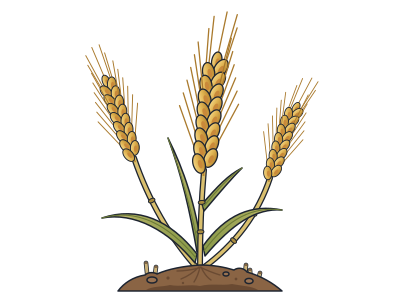
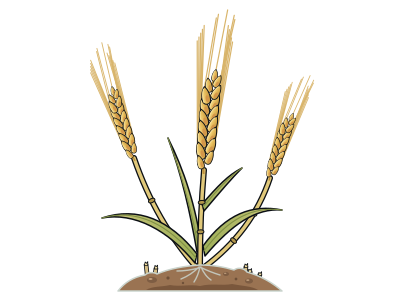
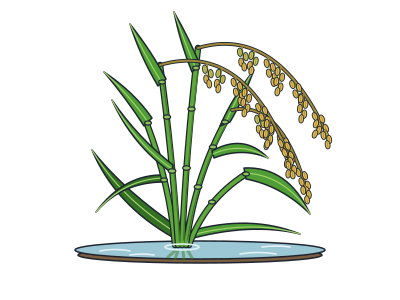
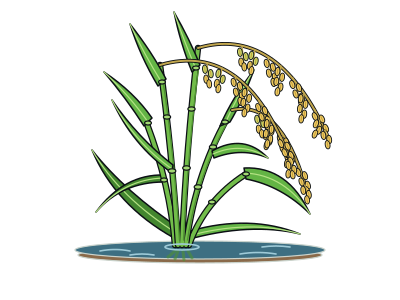
- RiceFeeds more than half the people on Earth.
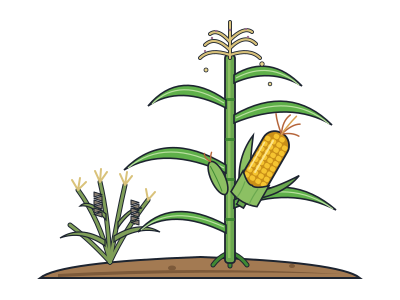
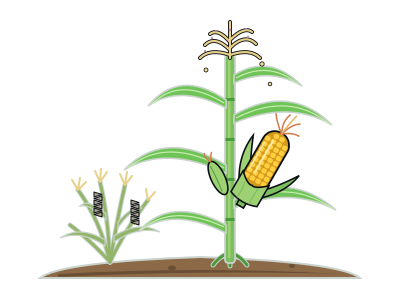
- MaizeBred from a scrappy wild grass called teosinte by farmers in Mexico about 9,000 years ago.
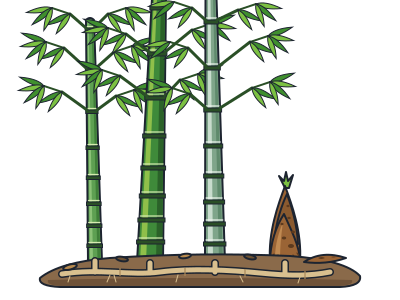
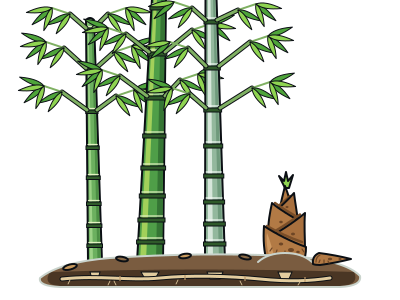
- Moso bambooA grass that can grow nearly a metre in a day and flowers only once every few decades.
- BarleyOne of the first crops ever farmed, used for bread and beer for 10,000 years.
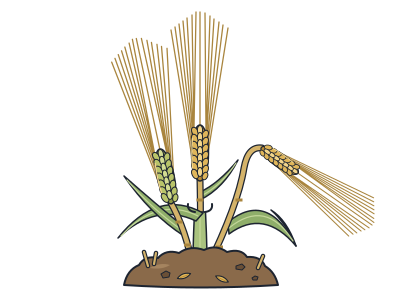
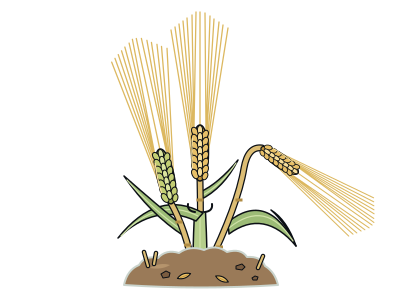
- OatsStarted as a weed in wheat fields before becoming a crop in its own right.
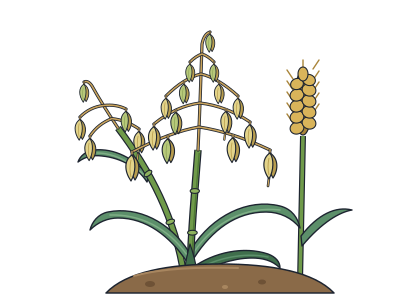
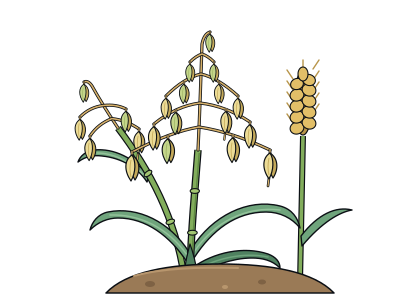
- SorghumA drought-tough grain from Africa that feeds half a billion people.