A group of living things
Palms, grasses and gingers
commelinids
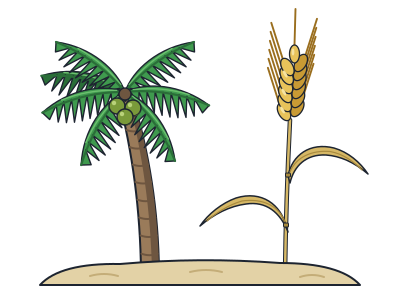
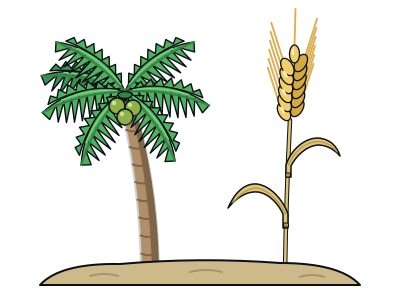
Coconuts, bananas, pineapples, ginger and wheat: one surprising branch of plants
This branch is shown at about 115 million years ago; its age is a rough estimate.
You and palms, grasses and gingers meet in the Eukaryotes branch, shown at about 1.8 billion years ago (on 28 July, in a calendar from life's shared ancestor to today).
A tall coconut palm, a banana plant, a spiky pineapple, a knob of ginger and a field of wheat look nothing alike. Yet they all come from one shared ancestor. Sedges, rushes and spiderworts belong to this branch too. Many of these plants have long leaves with veins that run side by side.
The family details are full of surprises. Pineapple belongs to the same order as grasses, so it is closer kin to wheat than to banana. Banana, in turn, shares its order with ginger and the bird-of-paradise flower.
So what links such different plants? The clue is hidden in their cell walls. These walls contain a chemical called ferulic acid, which glows under ultraviolet light. That glow was an important early clue that these plants belong together. Later, DNA studies backed it up.
This group feeds much of the world. Rice, wheat and maize (corn) are all grasses. Together they provide more than two-fifths of all the food energy people eat. Grasslands cover about 40% of Earth's land, not counting Greenland and Antarctica. There are about 12,000 kinds of grass and about 2,600 kinds of palm.
Tallest of its kind
The Quindío wax palm of Colombia grows up to about 60 metres tall. That is taller than any other plant in the wider monocot group, and taller than a 15-storey building.
A record-breaking seed
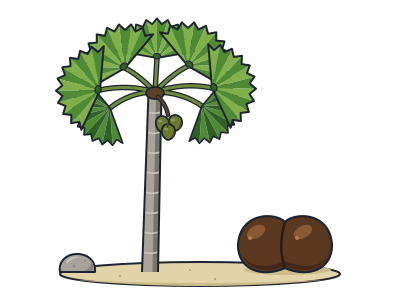
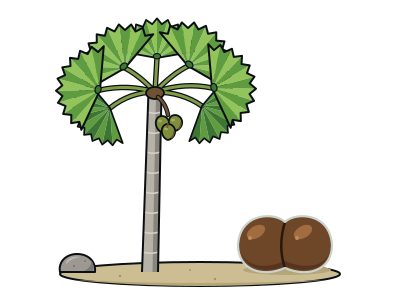
The coco de mer palm has the largest seed of any plant. It can be about 40 to 50 cm across and weigh roughly 15 to 30 kg, about as heavy as a medium-sized dog.
Trunks that don't spread
Palms lack the kind of growth layer that lets oak or gum trees widen their trunks every year. So most palm trunks do not keep getting much thicker with age, and many look like tall, even columns.
Inside palms, grasses and gingers
- PalmsAbout 2,600 palm species give us coconuts, dates, palm oil and the biggest seed on Earth.
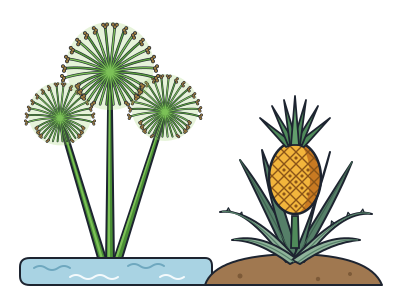
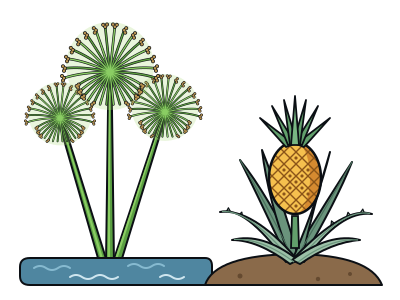
- Grasses, sedges and bromeliadsGrasses share their branch with sedges, cattails and pineapples.
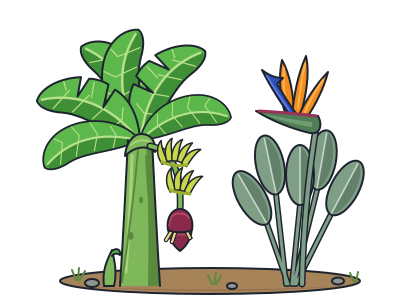
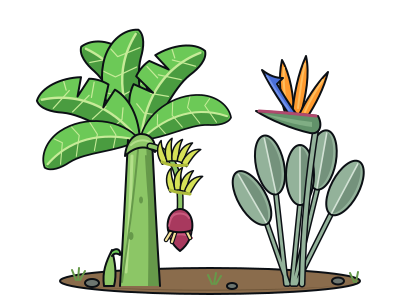
- Bananas and gingersBig-leaved tropical plants, from bananas and gingers to bird-of-paradise flowers.
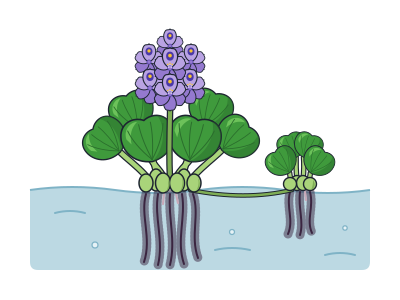
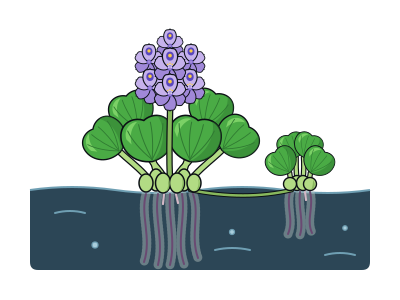
- Water hyacinthA floating plant with lilac flowers that can double its mats in two weeks.
Next to it on the tree
- Orchids, onions and agavesOrchids share a branch with onions, aloes, asparagus and dragon trees.
- Arums and seagrassesWater-loving monocots, from house-plant arums to the only flowering plants that live in the sea.
- LiliesShowy six-petalled flowers from bulbs, including lilies, tulips and the plant with the biggest flowering-plant genome.
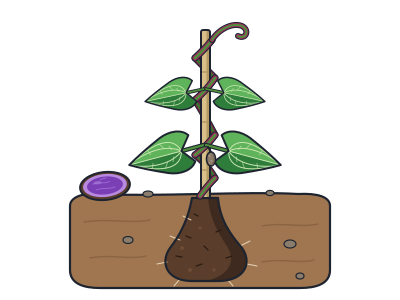
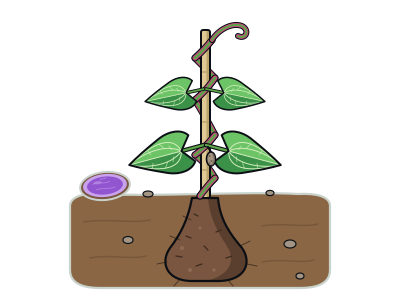
- Greater yamA climbing vine whose huge purple tubers are the ube of Filipino desserts.