A species
Greater yam
Dioscorea alata
The climbing vine behind ube, the purple star of Filipino desserts
You and the greater yam meet in the Eukaryotes branch, shown at about 1.8 billion years ago (on 28 July, in a calendar from life's shared ancestor to today).
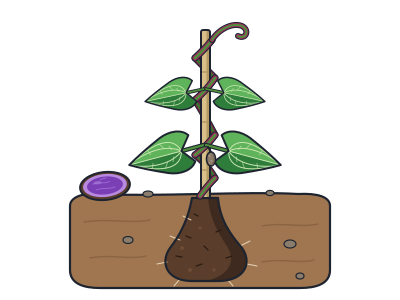
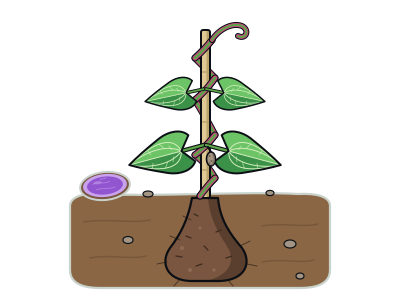
Ube, the bright purple star of Filipino desserts, comes from the underground tuber of this climbing vine. Its violet flesh is cooked into ube halaya, a sweet jam-like treat. Ube also goes into ice cream, cakes and halo-halo, an iced dessert. Not every greater yam is purple, though. Some varieties have cream or plain white flesh.
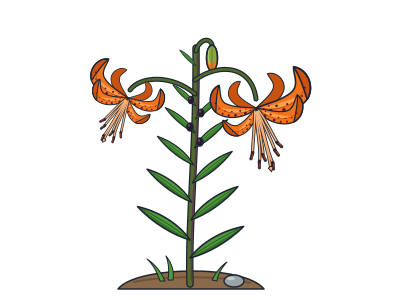
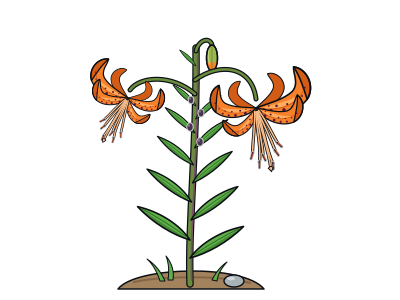
Here is the surprise. This yam is a monocot, so it belongs to the same big group of flowering plants as grasses, lilies, orchids and palms. Within that group, the yam family's closest relatives are the screw pines and their kin. Sweet potatoes are often mixed up with yams, but they belong to the morning glory family and are not closely related.
Most monocots, like grasses, have leaves with straight, parallel veins. The yam's leaves are unusual because their veins form a net. The vine twines over shrubs and trees, while its heavy tuber grows deep underground. It is grown more widely around the world than any other yam and is found right across the tropics. The tuber is cooked before eating, because raw it contains irritating substances.
A word that crossed an ocean
'Ube' is a Tagalog word. The Māori word 'uwhi' comes from the same ancient root word. The languages are related, and their speakers carried this yam across the Pacific.
Which way it twists
Its stems twine to the right (clockwise) as they climb. This helps people tell it apart from its relative the air potato, which twines the other way.
Grown without seeds
Some farmed varieties never flower, and many others cannot make seeds. Farmers grow new plants from pieces of tuber instead.
Next to it on the tree
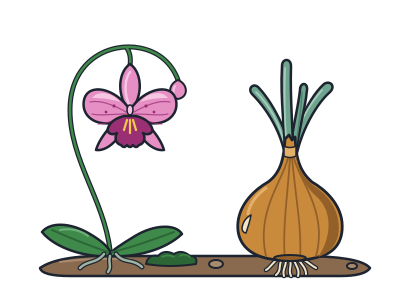
- Orchids, onions and agavesOrchids share a branch with onions, aloes, asparagus and dragon trees.
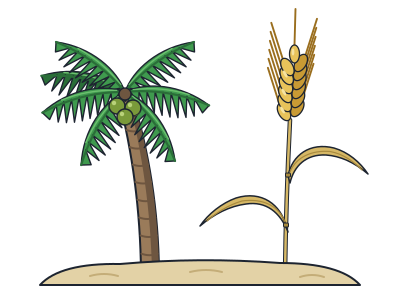
- Palms, grasses and gingersPalms, bananas, pineapples, ginger and grasses all share one ancestor.
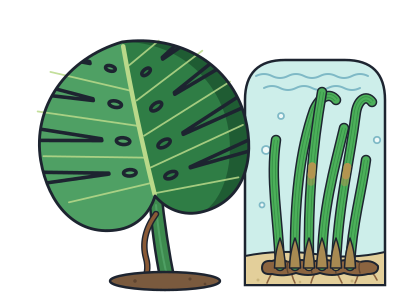
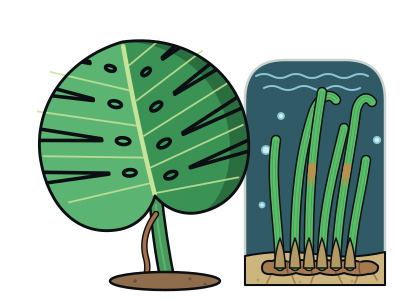
- Arums and seagrassesWater-loving monocots, from house-plant arums to the only flowering plants that live in the sea.
- LiliesShowy six-petalled flowers from bulbs, including lilies, tulips and the plant with the biggest flowering-plant genome.