A species
Canopy plant
Paris japonica
A quiet mountain wildflower carrying the biggest known genome of any flowering plant.
You and the canopy plant meet in the Eukaryotes branch, shown at about 1.8 billion years ago (on 28 July, in a calendar from life's shared ancestor to today).
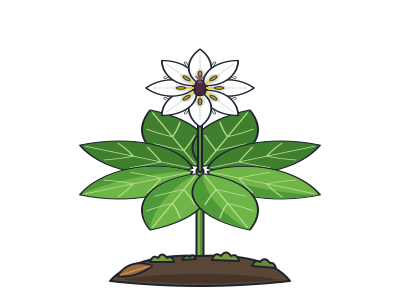
This modest white wildflower from the mountains of Japan looks quite ordinary. Yet each of its cells holds more DNA than any other flowering plant we know of. Its genome is about 149 billion DNA 'letters' long, roughly 50 times the size of ours. If you stretched out the DNA from just one of its cells, it would be taller than Big Ben.
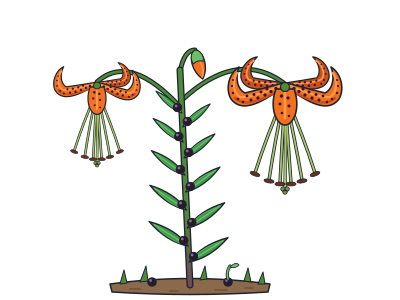
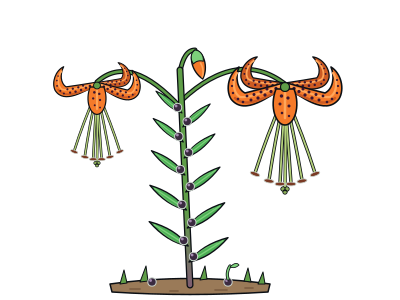
On the tree it sits near garden tulips and tiger lilies. They are relatives in the wider lily group, but this plant belongs to a different family, along with trilliums. The plant record for the biggest genome has stayed in this wider lily group for a long time. Before this plant, a hybrid trillium held it, and before that a fritillary, which is a relative of tulips and lilies.
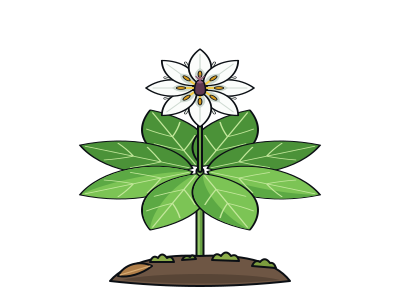
The plant grows about 30 to 80 cm tall. Its single stem carries one flat ring of about 8 to 10 pointed leaves, spread like the spokes of an umbrella. In midsummer, one white, star-shaped flower sits above them. Its Japanese name means roughly 'silk umbrella plant'.
A bigger genome does not make a living thing more complex or more advanced. In plants, much of the difference in genome size comes from long stretches of DNA that are repeated many times. This plant is also slow-growing. After planting, it can take a few years to show itself above ground.
Matching numbers
The number of leaves in its ring (anywhere from 6 to 11) usually matches the number of parts in its flower, right down to the petal-like parts and stamens.
A flower that changes colour
The white petal-like parts slowly turn pinkish-red as they age, and finally green.
Measured, not read
Scientists found the genome size by staining cell centres with a dye and measuring how much dye stuck to the DNA. They did not need to read the DNA letter by letter.