A group of living things
Arums and seagrasses
Alismatales
From the Monstera on your windowsill to the only flowering plants that live fully underwater in the sea.
This branch is shown at about 130 million years ago; its age is a rough estimate.
You and arums and seagrasses meet in the Eukaryotes branch, shown at about 1.8 billion years ago (on 28 July, in a calendar from life's shared ancestor to today).
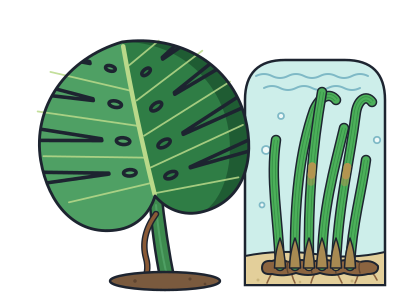
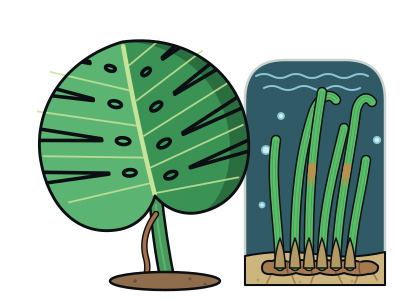
If you have a Monstera on your windowsill, it has relatives living on the sea floor. This group of monocots, many of them water lovers, stretches from leafy house plants to the seagrasses. Seagrasses are the only flowering plants that grow completely underwater in the sea.
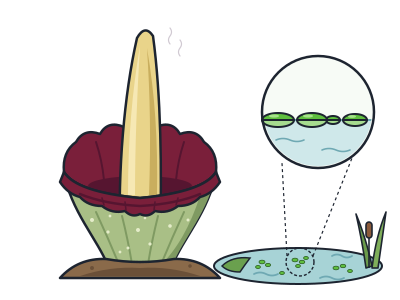
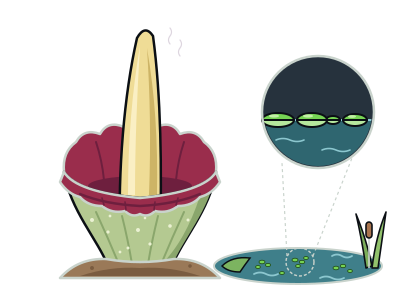
Most of the group's roughly 4,500 species live in the tropics or in water. The biggest family is the arums. Most arums carry their tiny flowers on a fleshy spike, which is usually wrapped in a leaf-like hood. Monstera, peace lilies and taro are all arums. So is duckweed, the green specks that float on ponds, and one kind of duckweed is the smallest flowering plant on Earth.
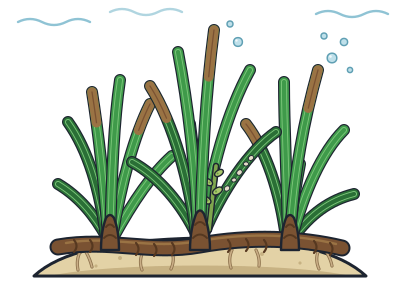
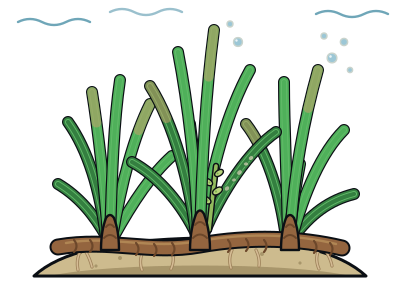
Seagrasses are not seaweeds. Seaweeds are algae, but seagrasses have true roots, creeping underground stems and flowers. Different groups of seagrasses moved from land back into the sea on about three or four separate occasions. Today their meadows grow along the coasts of every continent except Antarctica. Manatees and sea turtles graze on them, and young fish shelter among the leaves.
Neptune grass grows only in the Mediterranean Sea. Its ribbon-like leaves are about 1 cm wide and up to about 45 cm long, half as long again as a school ruler. They turn from bright green to brown as they age.
Warm flowers
Many arums heat up their flower spikes, sometimes to about 45 °C. The warmth helps spread their scent, which draws in beetles and other pollinators.
The biggest plant known
In Shark Bay, Western Australia, a single Posidonia australis seagrass plant spreads across about 180 km. It is at least 4,500 years old, and the whole meadow grew from one seedling.
Beach balls from the sea
Old Neptune grass fibres roll up into brown 'Neptune balls' that wash up on Mediterranean beaches. These balls can even trap tiny bits of plastic.
Inside arums and seagrasses
Next to it on the tree
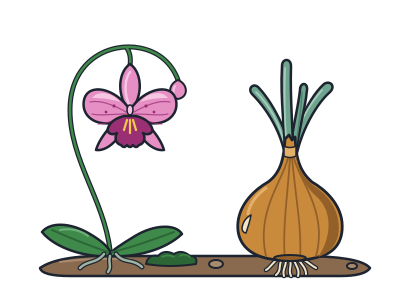
- Orchids, onions and agavesOrchids share a branch with onions, aloes, asparagus and dragon trees.
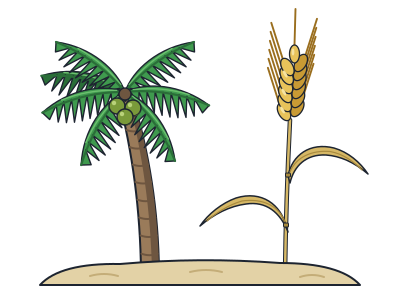
- Palms, grasses and gingersPalms, bananas, pineapples, ginger and grasses all share one ancestor.
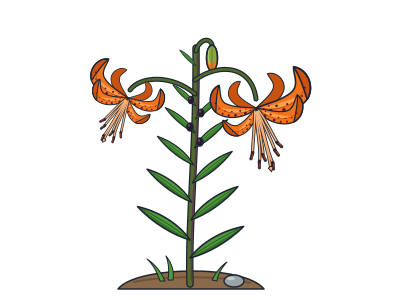
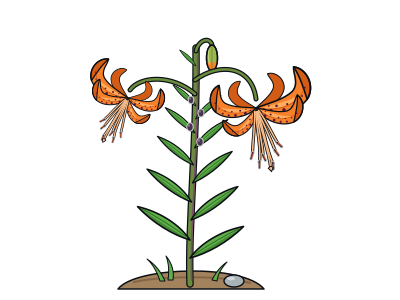
- LiliesShowy six-petalled flowers from bulbs, including lilies, tulips and the plant with the biggest flowering-plant genome.
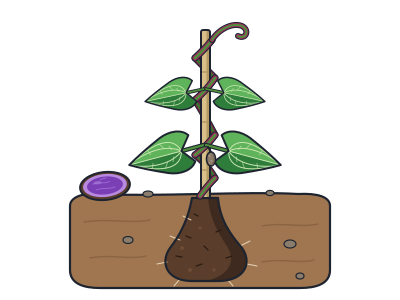
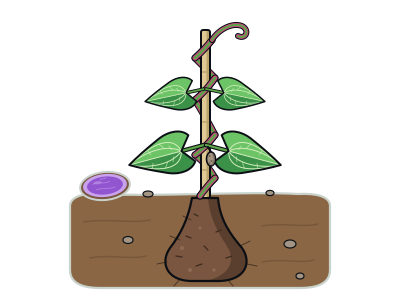
- Greater yamA climbing vine whose huge purple tubers are the ube of Filipino desserts.