A species
Neptune grass
Posidonia oceanica
A Mediterranean seagrass that may form some of the oldest living things on Earth
You and the neptune grass meet in the Eukaryotes branch, shown at about 1.8 billion years ago (on 28 July, in a calendar from life's shared ancestor to today).
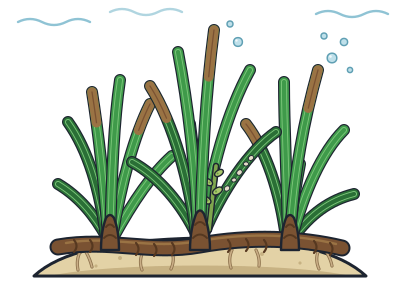
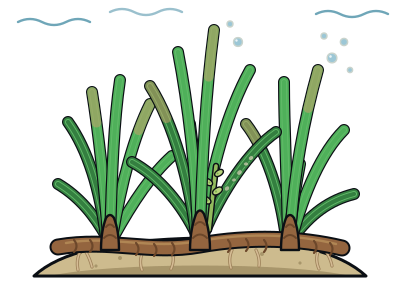
Under the clear water of the Mediterranean grows a plant that may be astonishingly old. Neptune grass spreads through creeping stems buried in the sand. These stems send up new shoots with the same genes, and broken-off pieces can drift away and take root again. Over time, one plant can become a clone spread over kilometres. Around Formentera and Ibiza, in Spain's Balearic Islands, scientists worked out that one clone could be about 80,000 to 200,000 years old if it grew only by creeping. They think it is probably younger, but still thousands of years old.
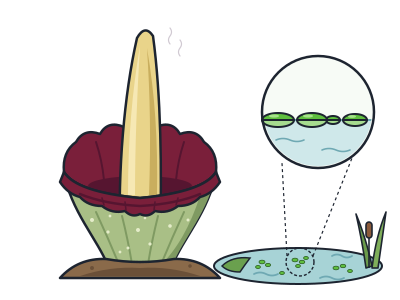
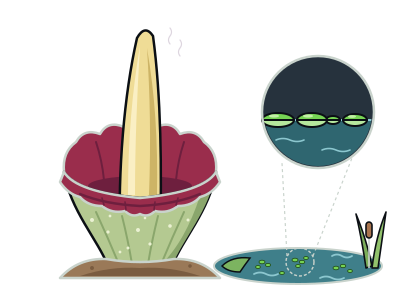
Despite its name, it is not a true grass, and it is not a seaweed either. It is a flowering plant, with roots, leaves, flowers and fruit. Its ancestors lived on land, and seagrasses later moved back into the sea. On the tree of life it shares a branch with the arum family. The grasses of your lawn are only distant cousins.
It grows very slowly. Its creeping stems move forward only about 1 to 6 cm a year. Its leaves are bright green ribbons about 1 cm wide and usually up to about 45 cm long, roughly one and a half school rulers.
Together its meadows cover about 3% of the Mediterranean. They shelter young fish and help protect sandy beaches from being washed away.
Sea olives
Its floating fruits are called 'sea olives'. They contain oil that helps them float.
Beach balls
Waves roll fibres from its old leaves into brown, felt-like 'Neptune balls' that wash up on Mediterranean beaches.
Named for a sea god
Its genus, the small group of closely related seagrasses it belongs to, is named after Poseidon, the Greek god of the sea.