A species
Water hyacinth
Pontederia crassipes
A floating plant with lilac flowers that can double its mats in about two weeks.
You and the water hyacinth meet in the Eukaryotes branch, shown at about 1.8 billion years ago (on 28 July, in a calendar from life's shared ancestor to today).
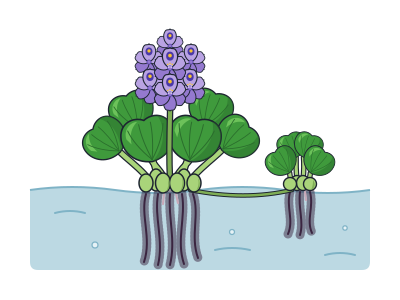
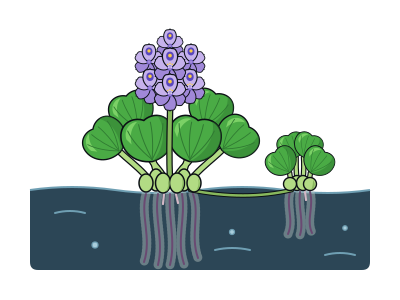
Picture a pretty pond plant with lilac flowers that can double the size of its floating mats in about one to two weeks. Water hyacinth comes from warm rivers and lakes in South America, especially the Amazon. It floats because its leaf stalks are swollen and spongy, like built-in pool floats. Dark, feathery roots up to about a metre long hang down in the water below.
Despite its name, it is not a true hyacinth. It belongs to the small pickerelweed family. That family's wider group is most closely related to bananas and gingers. Together with palms and grasses, they all sit on one big branch of flowering plants.
Each plant sends out short sideways stems that grow new daughter plants, linking them into thick mats. People carried it around the world as a pond plant, and it is now invasive in more than 50 countries. In Florida, someone threw spare plants into the St Johns River around 1890. A little over ten years later, about 320 kilometres of the river were covered. Thick mats block sunlight and lower the oxygen in the water, which can kill fish. They also get in the way of boats. Chopping it up does not help, because broken pieces can grow into new plants.
Gardens on the water
Mats can grow thick enough for people to walk on. On Inle Lake in Myanmar, people have used them to build floating gardens.
A souvenir gone wrong
In 1884, visitors to a cotton fair in New Orleans, USA, were given water hyacinths as souvenirs. That is part of how it reached American waterways.
Seeds that wait
Each plant makes thousands of seeds a year, and the seeds can stay alive for decades. So the weed can come back long after a lake has been cleared.