A group of living things
Grasses, sedges and bromeliads
Poales
The lawn under your feet is a cousin of papyrus and pineapple.
This branch is shown at about 105 million years ago; its age is a rough estimate.
You and grasses, sedges and bromeliads meet in the Eukaryotes branch, shown at about 1.8 billion years ago (on 28 July, in a calendar from life's shared ancestor to today).
The grass on a lawn has some surprising relatives. It shares its branch of the tree of life with sedges, rushes, cattails and even the pineapple. Altogether this group has more than 23,000 species. They range from tiny grasses a few centimetres tall to giant bamboos about as tall as a ten-storey building.
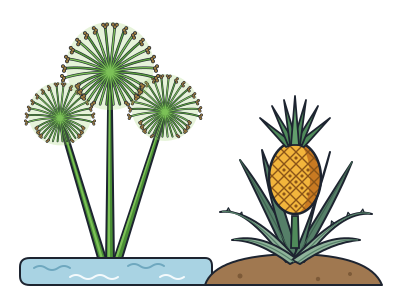
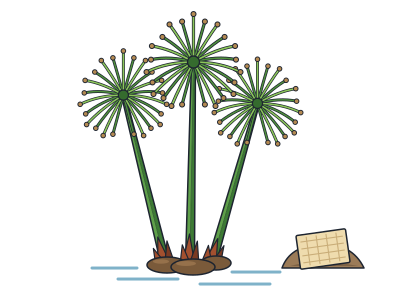
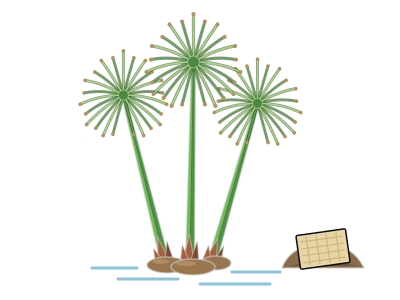
Pineapples are not the grasses' closest relatives, though. Pineapples and the rest of their family, the bromeliads, probably split off early in the group's history, along with cattails. The grasses' nearest relatives are two small plant families that few people have heard of. Sedges form another branch. Papyrus is a sedge that grows in swamps and along lake edges in Africa, Madagascar and around the Mediterranean. Ancient Egyptians made paper, boats and sandals from it.
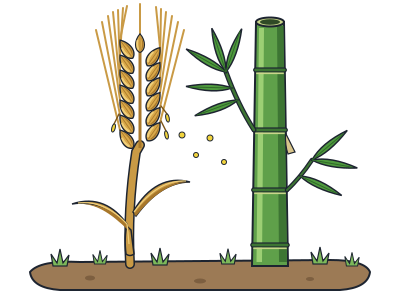
Many members have small flowers wrapped in leaf-like scales and grouped in clusters. Many grasses and sedges are pollinated by the wind, so they don't need bright petals to attract animals. Their seeds usually store starch, and that matters a lot to people. Wheat, rice, maize, barley and millet are all grasses. Rice alone provides about a fifth of the calories eaten around the world, and wheat almost as much. Some experts say this may be the most useful group of plants on Earth.
Grass covers the planet
Grasslands cover about 40% of Earth's land, not counting Greenland and Antarctica.
Record-breaking bamboo
There are more than 1,400 kinds of bamboo. Some giant bamboo stems grow about 46 metres long, nearly as long as four buses parked end to end.
Dinosaur dinner
Some of the oldest known grass fossils are tiny bits of grass stuck in the teeth of a plant-eating dinosaur that lived about 113 to 100 million years ago.
Inside grasses, sedges and bromeliads
- GrassesWind-pollinated plants that feed the world: rice, wheat and maize all come from grasses.
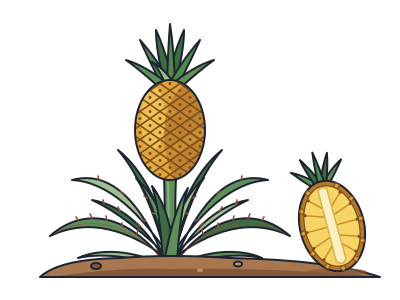
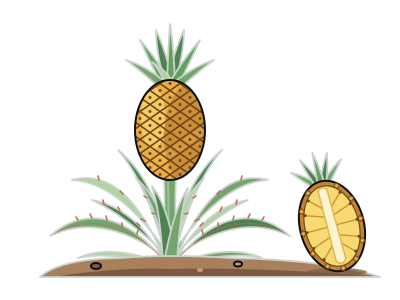
- PineappleEach pineapple is many fruits fused together around a stem.
- PapyrusA tall Nile sedge that ancient Egyptians pressed into sheets for writing, the root of the word paper.
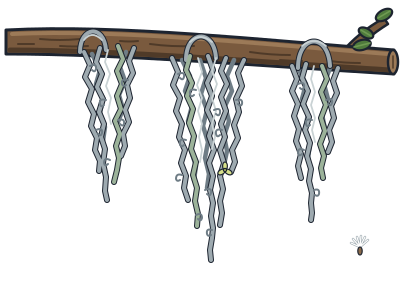
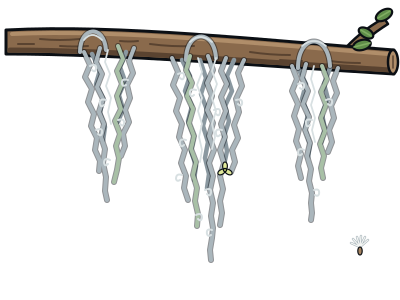
- Spanish mossGrey beards on southern oaks; not a moss at all but a rootless pineapple relative.
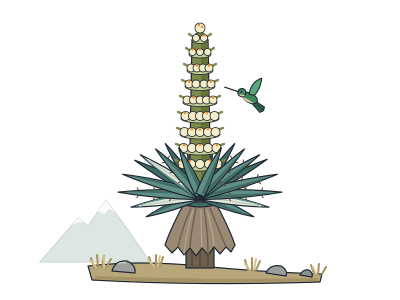
- Queen of the AndesGrows for up to a century, then raises a flower spike 10 metres tall and dies.