A species
Papyrus
Cyperus papyrus
The Nile plant that gave us the word "paper"
You and the papyrus meet in the Eukaryotes branch, shown at about 1.8 billion years ago (on 28 July, in a calendar from life's shared ancestor to today).
Long before paper existed, people in ancient Egypt wrote on a plant. Papyrus is a tall sedge that grows beside the Nile and other African waters. Workers peeled its stems, cut the soft inner part into strips and laid one layer across another. Then they pressed and dried the layers into smooth sheets. The English word "paper" comes from this plant's name, by way of Greek and Latin.
Papyrus looks like a grass or a reed, but it is a sedge. Sedges are relatives of grasses. On the tree, both sit in the same wider group as pineapples and Spanish moss. You can usually spot a sedge by its stem: a papyrus stem has three sides, like a long triangle.
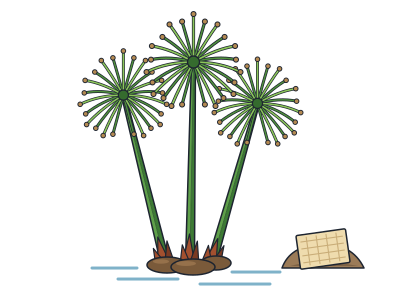
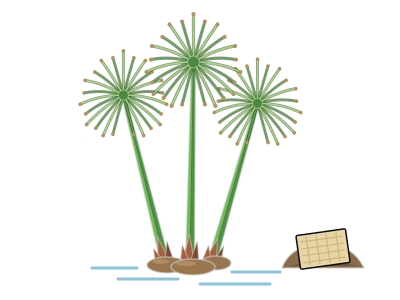
In the wild, papyrus usually grows about 4 to 5 metres tall, about as tall as a double-decker bus. Each green stem ends in a ball of 100 or more thread-like rays, a bit like a feather duster. You won't see obvious leaves, because they have shrunk to papery red-brown scales at the base of each stem.
The Egyptians used almost every part of it. They made boats, mats and cloth from the stems, and bowls and fuel from the roots. Today papyrus is rare in the Nile Delta, but it still forms huge swamps across tropical Africa.
Pyramid paperwork
The oldest known papyrus with writing on it is about 4,500 years old. It is a logbook that records boats carrying limestone blocks to build the Great Pyramid of Giza.
From plant to Bible
The Greeks had a second word for papyrus, "byblos". It is linked to the port of Byblos, and it gave us words such as "bible" and "bibliography".
A bird that needs it
The papyrus gonolek is a black, white and bright orange-red bird about 18 cm long. It lives only in papyrus swamps in East and Central Africa.
Next to it on the tree
- GrassesWind-pollinated plants that feed the world: rice, wheat and maize all come from grasses.
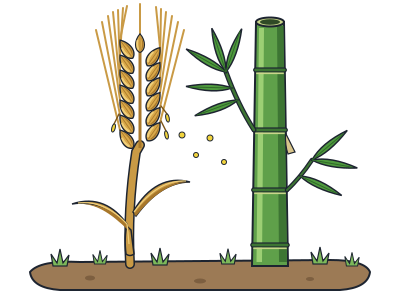
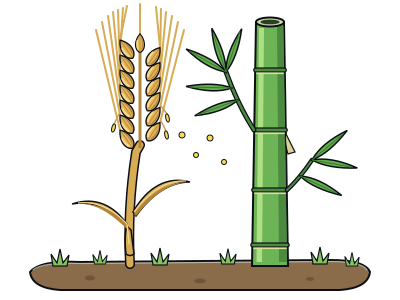
- PineappleEach pineapple is many fruits fused together around a stem.
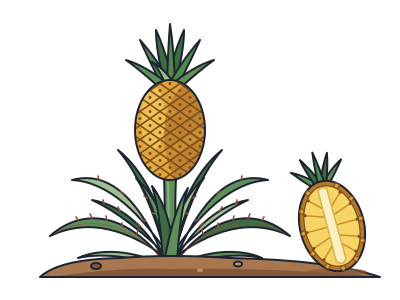
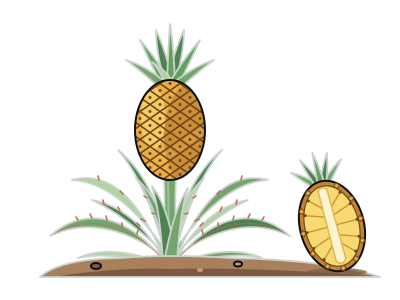
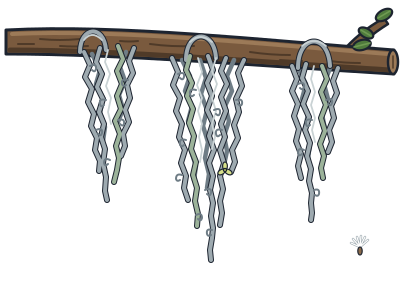
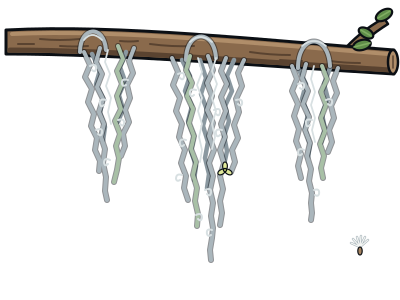
- Spanish mossGrey beards on southern oaks; not a moss at all but a rootless pineapple relative.
- Queen of the AndesGrows for up to a century, then raises a flower spike 10 metres tall and dies.