A species
Spanish moss
Tillandsia usneoides
Grey beards on southern oaks that aren't moss at all, but a rootless relative of the pineapple.
You and the spanish moss meet in the Eukaryotes branch, shown at about 1.8 billion years ago (on 28 July, in a calendar from life's shared ancestor to today).
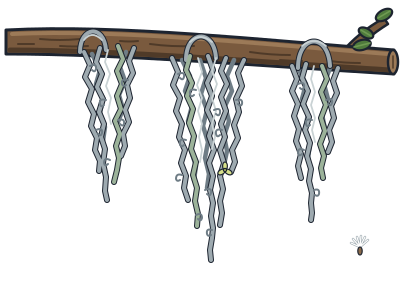
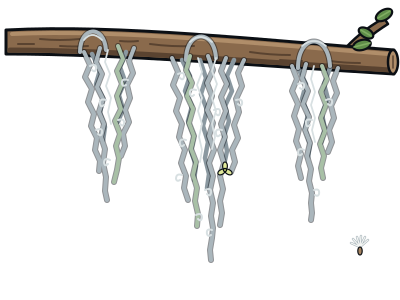
Grey, shaggy beards hang from oak trees across the American South. They look like moss, but they are not moss at all. Spanish moss is a flowering plant in the bromeliad family, which also includes the pineapple. It isn't Spanish either. It comes from the Americas.
It has no roots. Tiny scales cover the plant, including its thin, curly leaves. They soak up water and minerals from rain, damp air and bits of debris. The scales also give the plant its silvery-grey colour, and when it gets wet it turns bright green. It uses trees only for support. It is not a parasite and rarely kills the tree it hangs from.
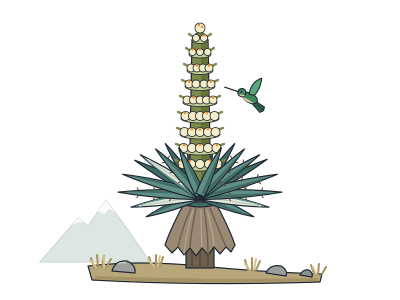
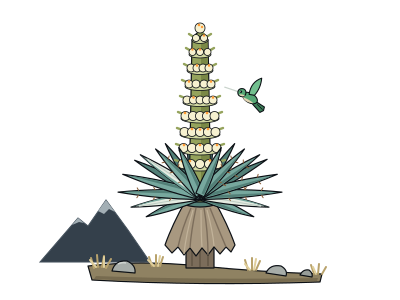
The bromeliad family comes in very different shapes. Queen of the Andes, another bromeliad, grows about 3 to 4 metres tall, and its flower spikes usually reach 4 to 6 metres, occasionally about 10. Spanish moss is only a tangle of wire-thin stems, but its strands can hang about 6 metres long, longer than a family car.
It does flower, but the flowers are tiny and easy to miss. Its seeds float away on fluffy parachutes, like dandelion seeds. Wind also carries broken pieces to new trees, and birds take strands away to build their nests.
Stuffed into mattresses
People once harvested it in huge amounts for mattress stuffing, insulation and car seat padding. More than 10,000 tons were processed in 1939.
A home for a spider
Rat snakes and bats live in Spanish moss. One small jumping spider has only ever been found living on it.
Unwelcome in Australia
It has gone wild in parts of eastern Australia, including Lord Howe Island. There, thick growth can shade trees' leaves and make branches snap, and it threatens World Heritage-listed ecosystems.
Next to it on the tree
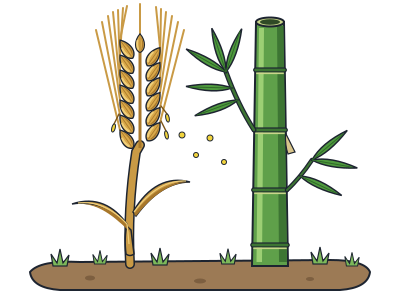
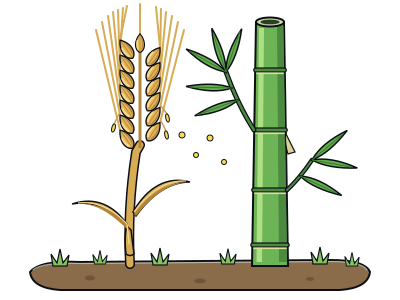
- GrassesWind-pollinated plants that feed the world: rice, wheat and maize all come from grasses.
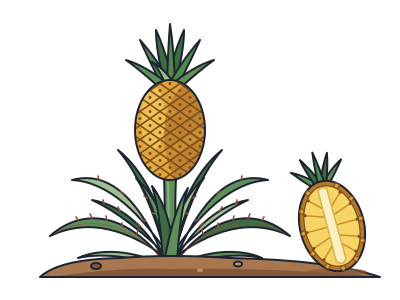
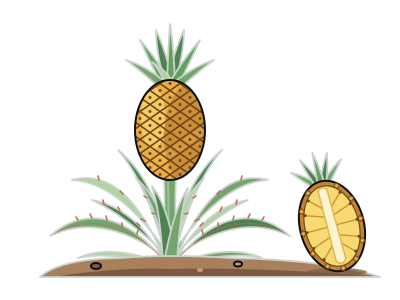
- PineappleEach pineapple is many fruits fused together around a stem.
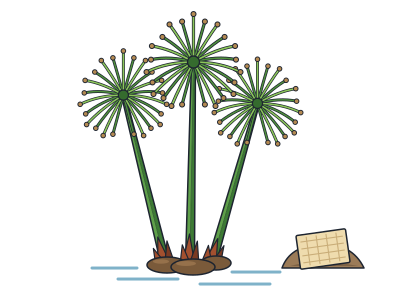
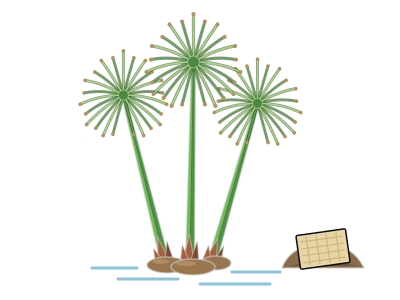
- PapyrusA tall Nile sedge that ancient Egyptians pressed into sheets for writing, the root of the word paper.
- Queen of the AndesGrows for up to a century, then raises a flower spike 10 metres tall and dies.