A species
Pineapple
Ananas comosus
Not one fruit but a crowd of them, fused around a stem.
You and the pineapple meet in the Eukaryotes branch, shown at about 1.8 billion years ago (on 28 July, in a calendar from life's shared ancestor to today).
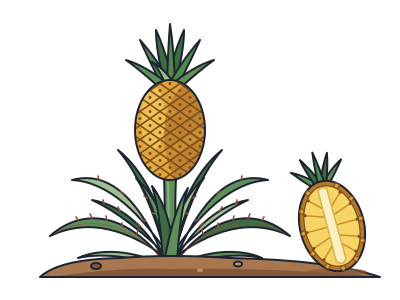
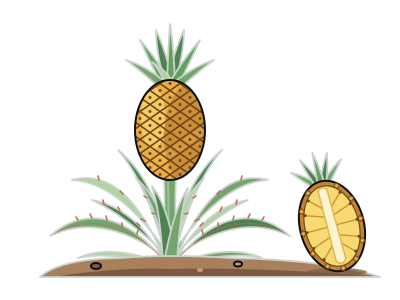
A pineapple isn't really one fruit. It's dozens, sometimes hundreds, of small fruits fused together. The plant grows a head of small flowers that are white at the base and purple at the tips. Each flower swells into a little fruitlet, and they all join into one juicy lump. Every diamond-shaped 'eye' on the skin was once a flower.
The hard core running up the middle is the stem the flowers grew on. The stem doesn't stop at the top. It keeps growing and makes the leafy tuft, or crown. The eyes on the skin line up in spirals that cross each other. Often there are 8 going one way and 13 the other.
Pineapples don't grow on trees or underground. Each one sits on top of a low, spiky plant at ground level, about knee to shoulder height on a grown-up. Its stiff, waxy leaves can be longer than your arm.
Its relatives are surprising. The pineapple is a bromeliad, so it's in the same family as Spanish moss, a grey plant that hangs from trees and isn't a moss at all. It also belongs to the same wider plant group as grasses, so it's a relative of rice, wheat and maize.
Named after a pine cone
In English, 'pineapple' first meant a pine cone. The fruit got the name because it looks like one. Many other languages call it 'ananas', from 'nanas', a word used by Tupi-Guarani peoples of South America.
Fresh pineapple ruins jelly
Pineapple contains bromelain, a mix of substances that break down protein. It can make meat more tender, and it stops gelatine from setting, so jelly made with fresh pineapple stays runny.
An apple can help it flower
Home growers sometimes put slices of ripe apple in the middle of a pineapple plant. The apple gives off a gas called ethylene, which can make the plant start to flower.
Next to it on the tree
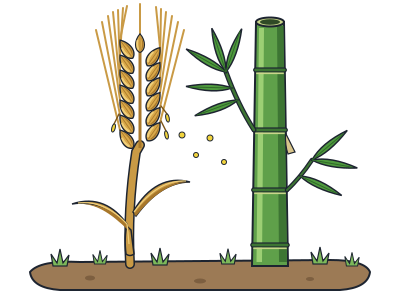
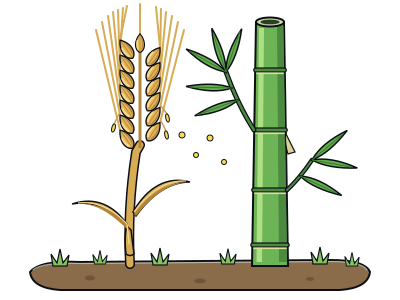
- GrassesWind-pollinated plants that feed the world: rice, wheat and maize all come from grasses.
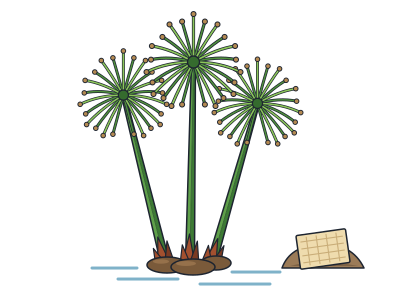
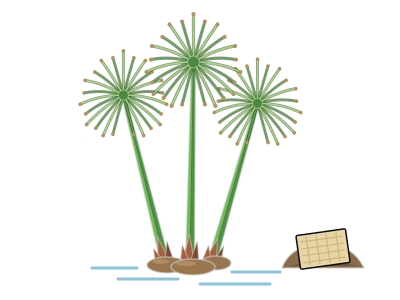
- PapyrusA tall Nile sedge that ancient Egyptians pressed into sheets for writing, the root of the word paper.
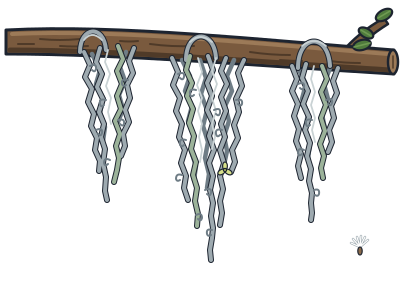
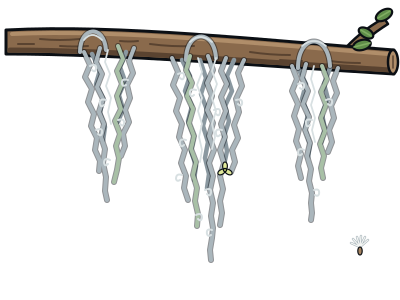
- Spanish mossGrey beards on southern oaks; not a moss at all but a rootless pineapple relative.
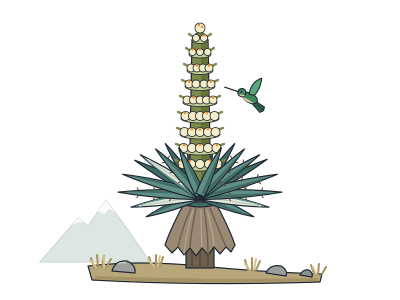
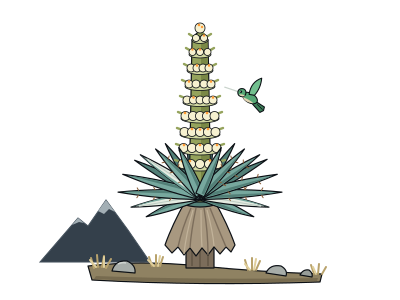
- Queen of the AndesGrows for up to a century, then raises a flower spike 10 metres tall and dies.