A species
Queen of the Andes
Puya raimondii
A giant mountain bromeliad that waits decades to bloom once, then dies.
You and the queen of the andes meet in the Eukaryotes branch, shown at about 1.8 billion years ago (on 28 July, in a calendar from life's shared ancestor to today).
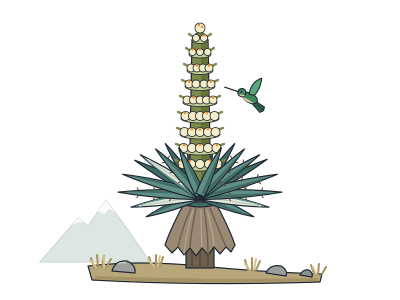
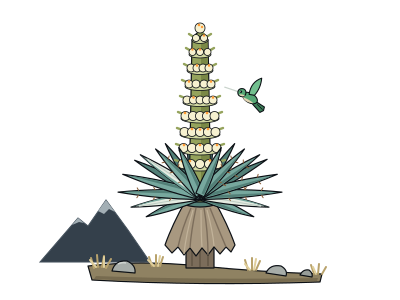
This plant spends many decades as a giant spiky ball on a cold mountainside. In the wild, that wait can last up to about a century. Then, just once in its whole life, it sends up an enormous spike of flowers, lets its seeds ripen and dies. Guinness World Records lists the spike as the largest single cluster of flowers in the world. It is usually about 4 to 6 metres tall and can reach about 8 metres. Some records put it at about 10 metres, as tall as a three-storey building.
It looks a bit like a cactus, but it is a bromeliad, in the same family as the pineapple. On the tree, its wider group also includes grasses and papyrus. Unlike the pineapple, it never grows side shoots, so every new plant has to start from a seed.
Before it flowers, it sits on a trunk up to about 4 metres tall. On top is a dense crown of sword-like leaves about a metre long, edged with small hooked spines. When it blooms, at least six kinds of hummingbird come to feed, including the Giant Hummingbird.
It grows only high in the Andes of Peru and Bolivia, in cold, windy grassland. It is listed as Endangered, and fires, climate change and harvesting all threaten it.
Millions of seeds
One plant can make about 6 to 12 million tiny seeds, and up to 80% of them can sprout.
Faster in a garden
Garden plants can flower much sooner than wild ones. At a botanical garden in California, one flowered at 24 years old in 2014, and an earlier one flowered at 28.
Named after an explorer
Its scientific name honours Antonio Raimondi, an Italian scientist who studied the plants of Peru in the 1800s. He wrote about it as a new plant in 1874 under a different name. It got its present name in 1928.
Next to it on the tree
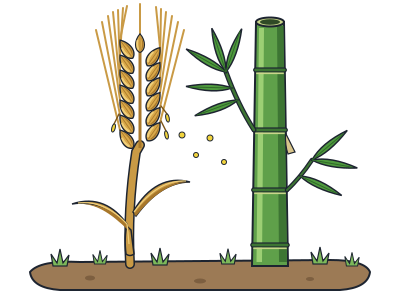
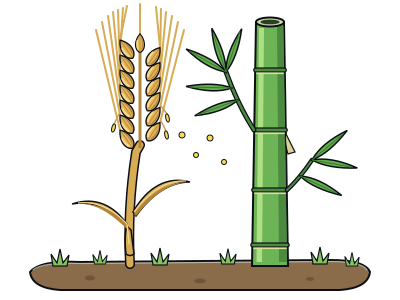
- GrassesWind-pollinated plants that feed the world: rice, wheat and maize all come from grasses.
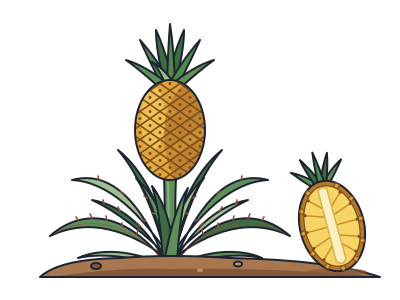
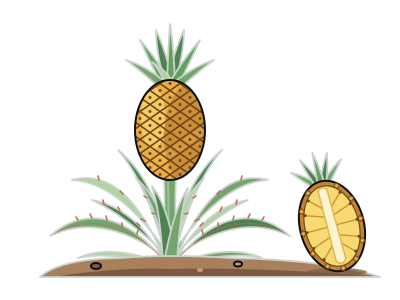
- PineappleEach pineapple is many fruits fused together around a stem.
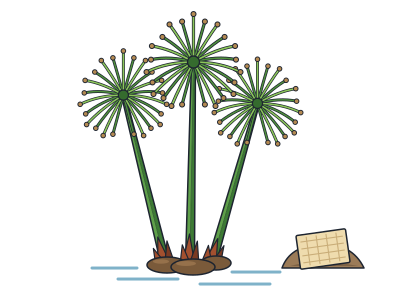
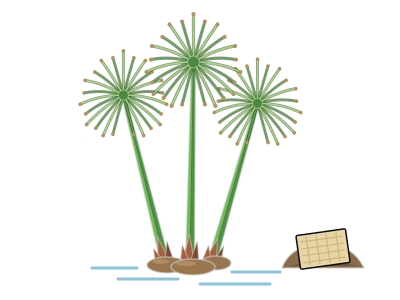
- PapyrusA tall Nile sedge that ancient Egyptians pressed into sheets for writing, the root of the word paper.
- Spanish mossGrey beards on southern oaks; not a moss at all but a rootless pineapple relative.