A species
Coco de mer
Lodoicea maldivica
The palm with the heaviest seed on Earth
You and the coco de mer meet in the Eukaryotes branch, shown at about 1.8 billion years ago (on 28 July, in a calendar from life's shared ancestor to today).
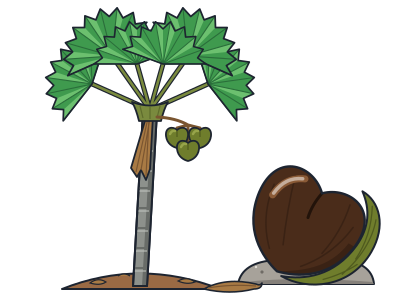
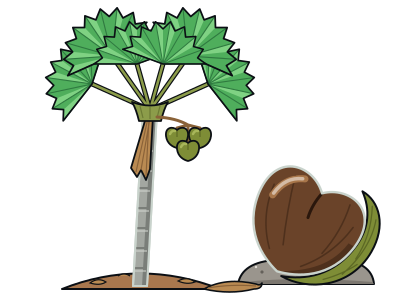
The coco de mer grows the heaviest seed of any plant. By some measurements, a single seed can weigh up to about 25 kilograms. That is roughly as much as a fully packed suitcase. In the wild, this palm grows on only two islands in the Seychelles, Praslin and Curieuse, in the Indian Ocean.
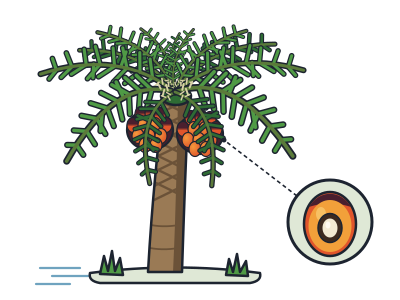
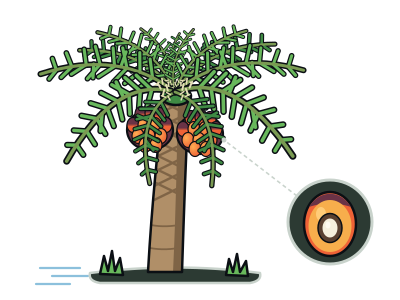
It is a palm, like the coconut, date and oil palms beside it on the tree. But its nickname, 'double coconut', is misleading. It sits on a different branch of the palm family from the coconut. Its closest relatives are the palmyra palms.
The tree stands about 25 to 34 metres tall, as tall as a 10-storey building. Its fan-shaped leaves can be up to about 10 metres long. Each tree is either male or female. A fruit takes about six to seven years to ripen, and the seed can then take up to two more years to sprout.
Its huge leaves catch rain and send it down the trunk. On the way, the water picks up pollen and animal droppings. Phosphate is a plant nutrient. The soil at the base ends up with more than three times as much phosphate as soil under other native plants nearby. Today the palm is Endangered, with about 8,000 mature trees left in the wild.
A mystery from the sea
Sailors found the nuts floating in the ocean long before anyone knew where they grew. The tree's home was only found when an expedition reached the Seychelles in 1768. Live seeds actually sink. Only hollow, dead nuts can drift.
A parrot's favourite home
The rare Seychelles black parrot nests almost only in the dead, standing trunks of coco de mer trees.
Long-lasting flowers
Male trees carry flower spikes up to about 2 metres long. Each one can keep making pollen for about 8 to 10 years, which makes them some of the longest-lived flower clusters known.