A species
Oil palm
Elaeis guineensis
The African palm whose orange fruit makes more vegetable oil than any other crop
You and the oil palm meet in the Eukaryotes branch, shown at about 1.8 billion years ago (on 28 July, in a calendar from life's shared ancestor to today).
Its orange fruit makes more vegetable oil than any other crop on Earth. In the 2024–25 season that came to about 80 million tonnes, or just over a third of the world's total. You can spot palm oil on the ingredient labels of many packaged foods.
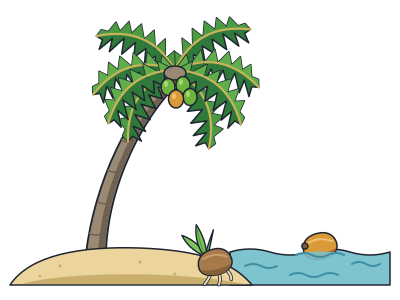
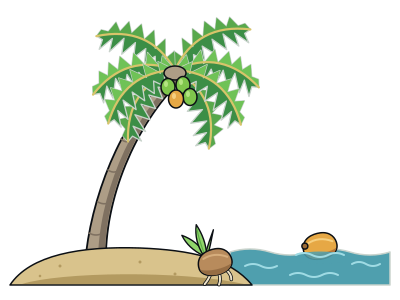
The oil palm is a close relative of the coconut palm. Both belong to the same group within the palm family. Even so, palm oil is not coconut oil. Each oil palm fruit gives two different oils: palm oil from its soft orange flesh, and palm kernel oil from the seed inside.
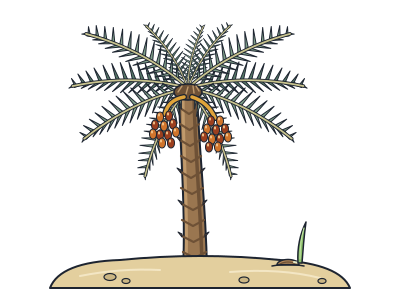
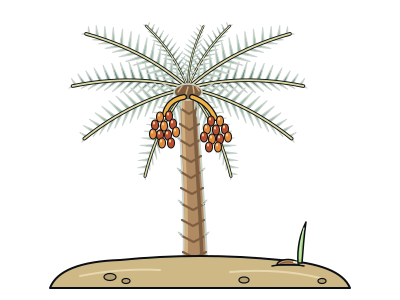
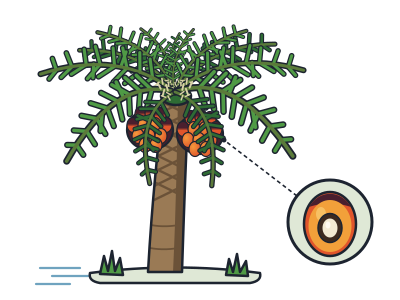
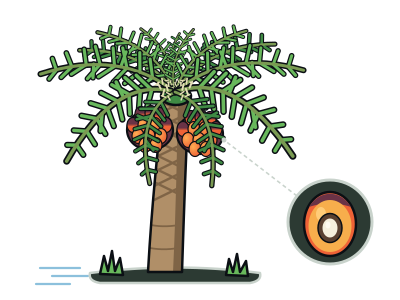
This tall palm has one straight trunk. It grows up to about 20 metres, roughly as high as a six-storey building. Tight bunches of fruit sit tucked among the leaf bases, just under its shaggy crown of long, feathery leaves. One bunch can hold up to about 3,000 fruits. Each fruit is about the size of a plum or smaller, and ripens to a glossy orange-red.
Most palm oil now comes from Indonesia and Malaysia, but the tree is African. In the wild it grows along riverbanks and the edges of swamps in the rainforests of West and Central Africa. Each hectare of oil palm gives a lot of oil. In 2017, palm made over a third of the world's vegetable oil on less than a tenth of the land used for oil crops. However, from 2001 to 2016, clearing forest for oil palm plantations caused almost a quarter of Indonesia's forest loss.
A beetle that boosted harvests
The oil palm's main pollinator is a small weevil from Cameroon. People deliberately brought it to South-East Asia in 1981, and fruit harvests there rose sharply afterwards.
Much more than oil
People tap the unopened male flower clusters to make palm wine. They also eat the palm heart as a vegetable and weave the fronds into baskets, mats and brooms.
A family of two
There are only two species of oil palm. One is this African species and the other is the American oil palm of Central and South America. The two can even breed together and produce fertile young plants.