A species
Date palm
Phoenix dactylifera
The palm that grew from a 2,000-year-old seed
You and the date palm meet in the Eukaryotes branch, shown at about 1.8 billion years ago (on 28 July, in a calendar from life's shared ancestor to today).
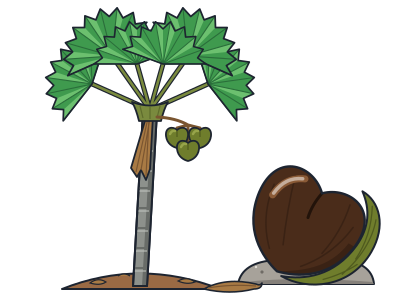
About 2,000 years ago, a date seed was left behind at Masada, a cliff-top fortress near the Dead Sea. Archaeologists dug it up in the 1960s. In 2005, two scientists in Israel planted it, and about eight weeks later it sprouted. They named the young tree Methuselah, after the oldest man in the Bible. Guinness World Records lists it as the oldest seed ever to sprout.
Methuselah grew into a male tree. Date palms are either male or female, and only females grow dates. So Methuselah gives pollen instead. A female called Hannah, grown from another ancient seed, has now produced hundreds of dates. People describe them as semi-dry with a honey taste, a bit like Medjool dates.
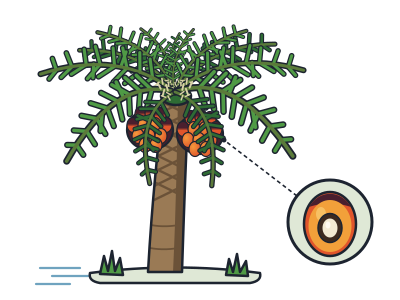
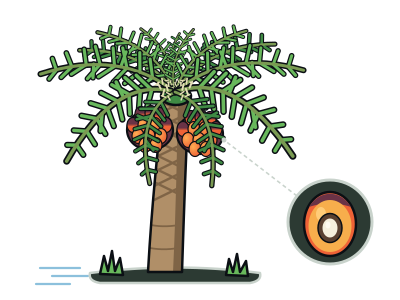
We call it a tree, but a date palm is a monocot. That makes it more closely related to grasses, bananas and ginger than to oaks or apple trees. Its trunk does not get thicker each year or form growth rings the way an oak trunk does. Its relatives on the tree include coconut palms and pineapples.
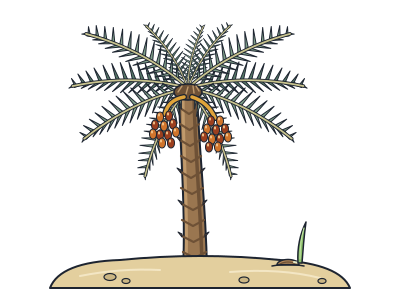
Date palms grow in hot, dry places where there is water underground, like desert oases. They are usually about 15 to 25 metres tall, as tall as a five- to eight-storey building.
One male, many females
When farmers spread the pollen by hand, a single male date palm can pollinate about 100 female trees.
Bigger seeds long ago
The ancient seeds were bigger than today's date seeds, which suggests the ancient dates were bigger too.
A lost Roman treat
Dates from Judea were famous for being large, sweet and long-lasting, and were traded across the Roman Empire. The region's date farms had died out completely by the 1800s.