A group of living things
Shorebirds, gulls and auks
Charadriiformes
From mudflat walkers to underwater flyers
This branch is shown at about 60 million years ago; its age is a rough estimate.
You and shorebirds, gulls and auks meet in the Amniotes branch, shown at about 320 million years ago (on 4 December, in a calendar from life's shared ancestor to today).
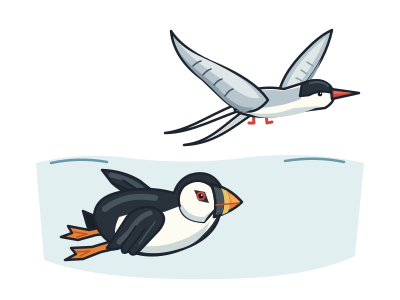
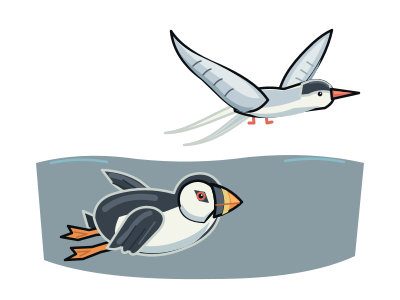
A puffin beating its wings underwater and a tern hovering above the waves look very different. Yet both belong to this group, alongside gulls and mudflat waders. Gulls and terns share one bird family. Puffins belong to the auk family within the same wider group. Their different shapes can hide that family connection.
Watch how an Atlantic puffin catches dinner. It ‘flies’ beneath the surface, beating its wings to chase small fish while its feet help it steer. Those wings work in the air too. An Arctic tern feeds differently: it often hovers before diving to take fish at or just below the surface.
These birds show why a shared family tree does not mean a shared way of life. Not every member hunts by chasing fish underwater. Even birds feeding around the same water can find food in very different ways.
A burrow for a nest
Atlantic puffins usually nest in burrows and lay one egg. Both partners help with the digging.
Several fish at once
An Atlantic puffin can carry several fish crosswise in its bill. Backward-pointing structures inside its mouth help hold them.
A tail with streamers
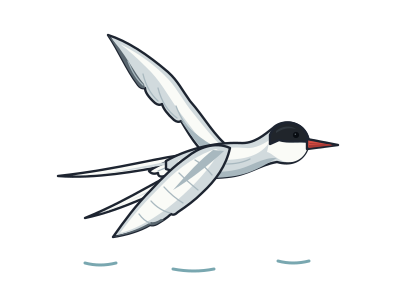
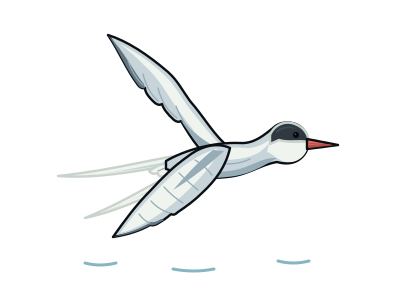
An adult Arctic tern in the breeding season has a deeply forked tail. Its two long outer feathers form streamers.
Inside shorebirds, gulls and auks
- Arctic ternFlies from the Arctic to the Antarctic and back each year, the longest migration known.
- Herring gullThe bold seaside gull whose chicks peck the red spot on a parent's beak to ask for food.
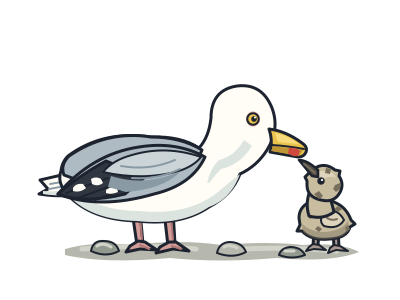
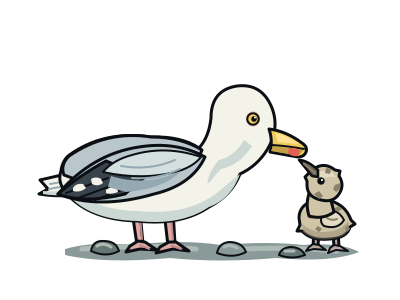
- AuksNorthern seabirds that 'fly' underwater with their short wings, like penguins of the north.
- KilldeerA plover that lures danger away from its nest by pretending to have a broken wing.
- Eurasian oystercatcherUses its long orange beak to pry open mussels and hammer through shells.
- Bar-tailed godwitFlies from Alaska to New Zealand without stopping: over 13,000 km in about 11 days.
- Eurasian woodcockA forest wader with eyes set so far back it can see behind itself without turning.
- African jacanaWalks across lily pads on enormous toes; fathers care for the chicks, even carrying them under their wings.
Next to it on the tree
- Pigeons and dovesThe dodo was a giant ground pigeon.
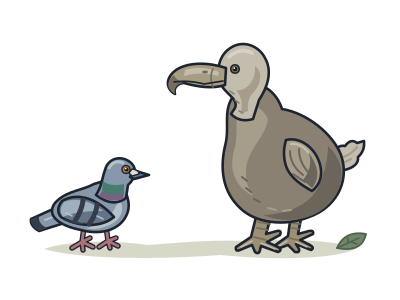
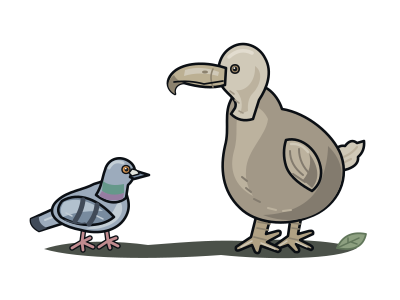
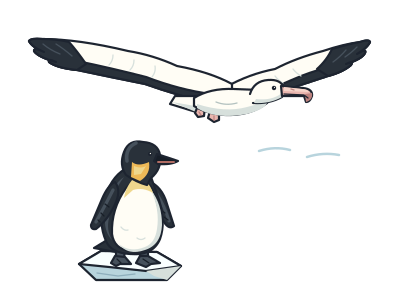
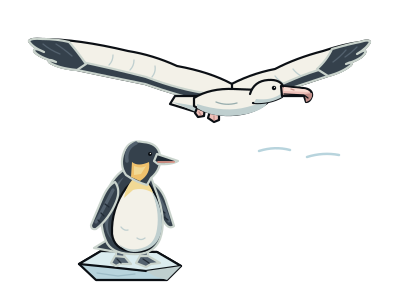
- Core waterbirdsPenguins, albatrosses, pelicans and herons share one ancestor.
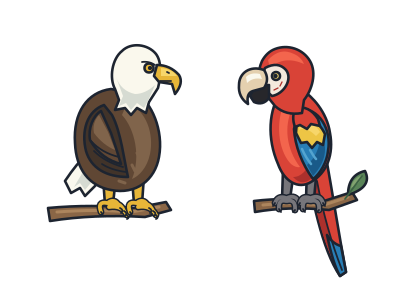
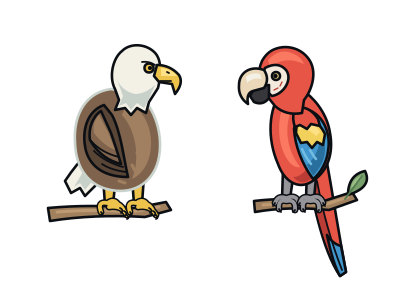
- Land birdsOwls, eagles, parrots and songbirds came from one ancestor, probably a predator.
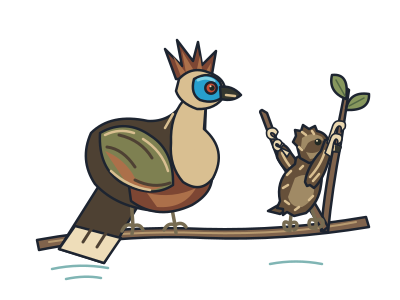
- HoatzinChicks have claws on their wings; adults ferment leaves in their gut like a cow.
- Flamingos and grebesFlamingos' closest relatives are grebes, diving birds that look nothing like them.
- Cuckoos, turacos and bustardsThree very different-looking families, from tree-hopping turacos to huge ground-striding bustards, share one ancestor.
- Nightjars, swifts and hummingbirdsHummingbirds and swifts descend from night-flying, insect-catching ancestors like nightjars.
- Cranes and railsStately cranes and secretive marsh rails are cousins.