A species
Arctic tern
Sterna paradisaea
From Arctic to Antarctic and back again
You and the arctic tern meet in the Amniotes branch, shown at about 320 million years ago (on 4 December, in a calendar from life's shared ancestor to today).
Arctic terns travel from northern breeding grounds to Antarctic waters and back each year. This is the longest known annual return migration of any animal—not one continuous, non-stop flight. They breed in the northern summer, then spend the southern summer around Antarctica. Their journey takes them from summer in the north to summer in the south. Tracked birds from Greenland took different routes south: some followed Africa, while others travelled beside South America.
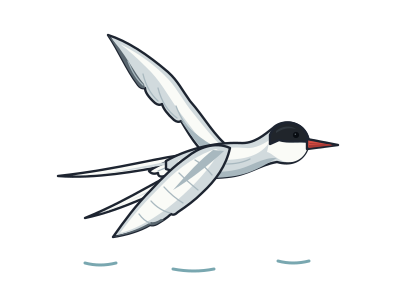
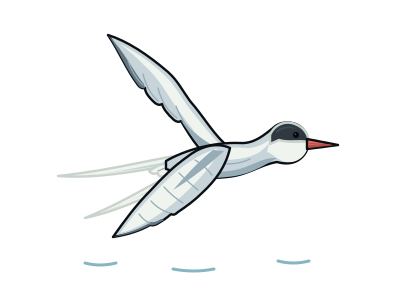
Despite its slim shape, an Arctic tern belongs to the same family as familiar gulls. A breeding adult has a black cap, white cheeks, a red bill and very short red legs. Its narrow, pointed wings and deeply forked tail give it a delicate outline.
It finds food close to the water's surface rather than diving deep. It often hovers above feeding areas before catching small fish at the surface or with a shallow dive. It also catches insects from the air or water.
A simple ground nest
The nest is a shallow hollow scraped into the ground. Both birds may add nearby grass or pebbles.
A fish offering
During courtship, males offer fish to females.
Vocal nest defenders
Arctic terns nest in noisy groups and defend their nests by diving towards intruders.
Next to it on the tree
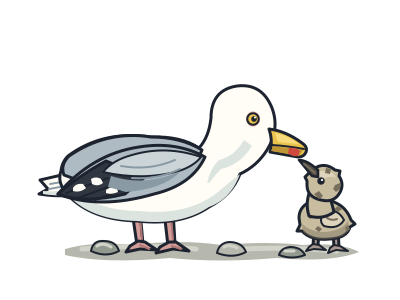
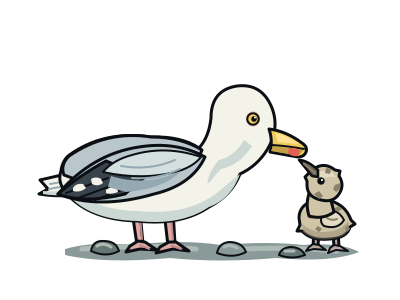
- Herring gullThe bold seaside gull whose chicks peck the red spot on a parent's beak to ask for food.
- AuksNorthern seabirds that 'fly' underwater with their short wings, like penguins of the north.
- KilldeerA plover that lures danger away from its nest by pretending to have a broken wing.
- Eurasian oystercatcherUses its long orange beak to pry open mussels and hammer through shells.
- Bar-tailed godwitFlies from Alaska to New Zealand without stopping: over 13,000 km in about 11 days.
- Eurasian woodcockA forest wader with eyes set so far back it can see behind itself without turning.
- African jacanaWalks across lily pads on enormous toes; fathers care for the chicks, even carrying them under their wings.