A group of living things
Neoaves
Neoaves
A possible bird boom after the asteroid
This branch is shown at about 70 million years ago; its age is a rough estimate.
You and neoaves meet in the Amniotes branch, shown at about 320 million years ago (on 4 December, in a calendar from life's shared ancestor to today).
Most living bird diversity belongs to a branch that may have expanded rapidly just after the asteroid struck about 66 million years ago. The impact wiped out the other dinosaurs, but birds survived. They were already here before the disaster. A major DNA study supports a burst of early branching around or after that event—not the sudden appearance of every species alive today.
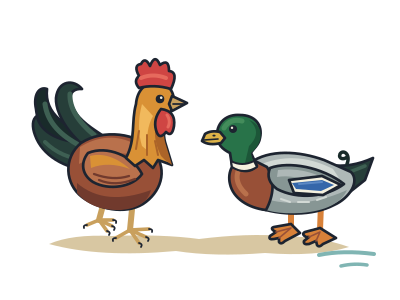
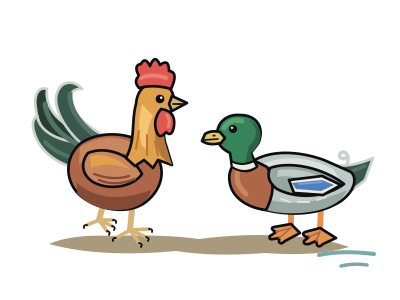
This enormous branch contains about 19 out of every 20 living bird species. Its sister group—the other branch at the same fork—is fowl and waterfowl, including chickens, ducks and geese. Ostriches, emus, kiwis and their relatives sit on a separate branch outside both groups.
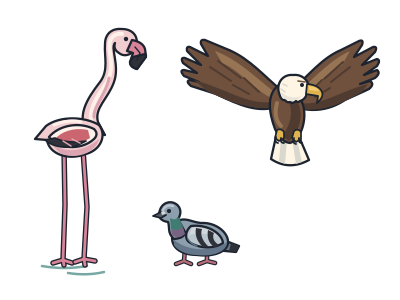
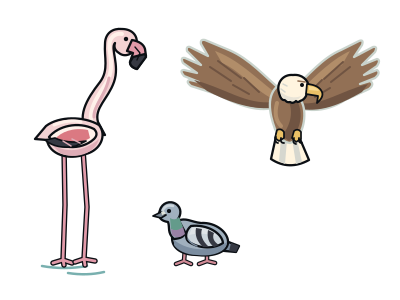
Picture a flamingo, a pigeon and an eagle: all belong here, despite their different shapes. They are three examples from this vast part of the bird family tree. Their variety makes the connection easy to miss.
An unexpected pairing
Flamingos and grebes belong to the same well-supported branch, despite their very different shapes.
A huge DNA comparison
The 2024 study compared DNA from about 360 bird species, representing about 92% of bird families.
White heads take time
Young bald eagles develop the adults’ white head and tail feathers over about five years.
Inside neoaves
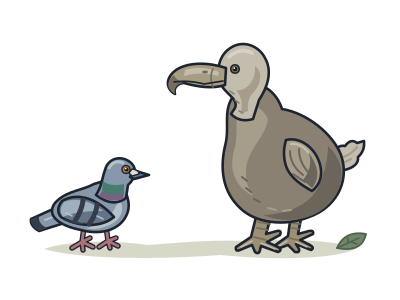
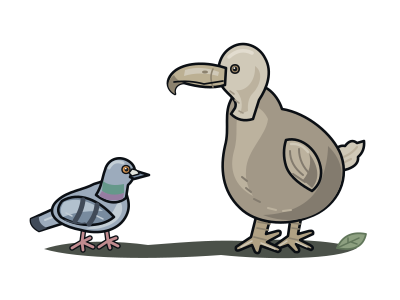
- Pigeons and dovesThe dodo was a giant ground pigeon.
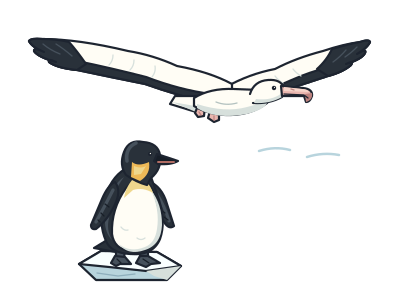
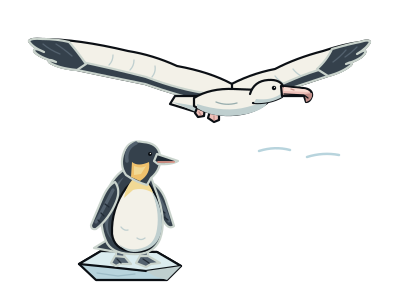
- Core waterbirdsPenguins, albatrosses, pelicans and herons share one ancestor.
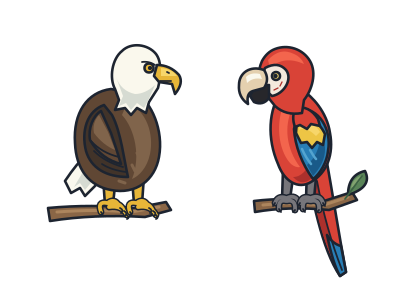
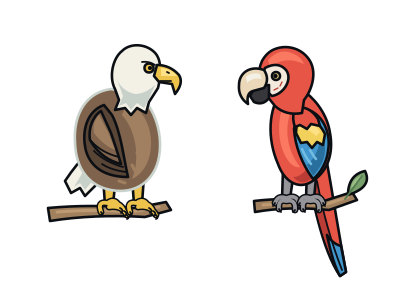
- Land birdsOwls, eagles, parrots and songbirds came from one ancestor, probably a predator.
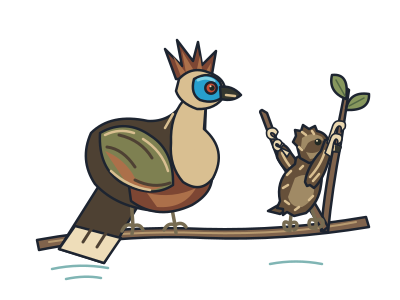
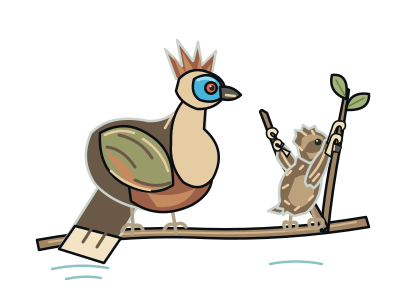
- HoatzinChicks have claws on their wings; adults ferment leaves in their gut like a cow.
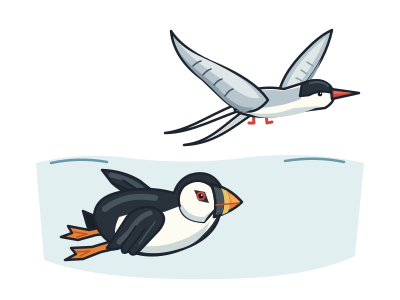
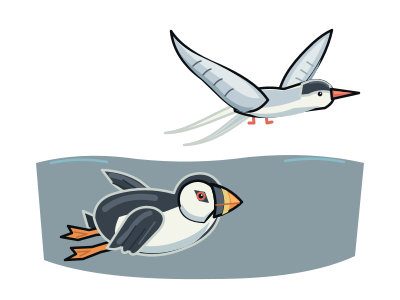
- Shorebirds, gulls and auksA varied group, from waders to gulls to puffins that 'fly' underwater.
- Flamingos and grebesFlamingos' closest relatives are grebes, diving birds that look nothing like them.
- Cuckoos, turacos and bustardsThree very different-looking families, from tree-hopping turacos to huge ground-striding bustards, share one ancestor.
- Nightjars, swifts and hummingbirdsHummingbirds and swifts descend from night-flying, insect-catching ancestors like nightjars.
- Cranes and railsStately cranes and secretive marsh rails are cousins.