A group of living things
Fowl and waterfowl
Galloanserae
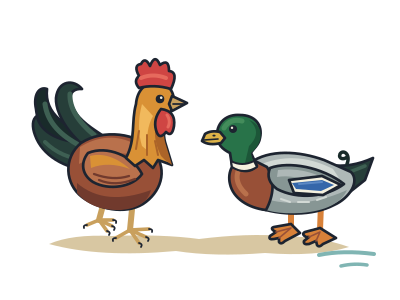
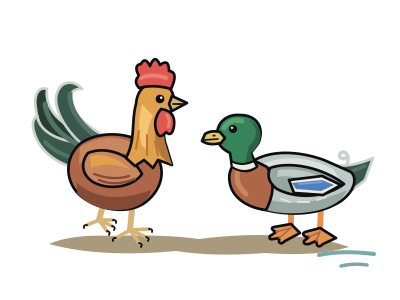
The surprising family link between chickens and ducks
This branch is shown at about 75 million years ago; its age is a rough estimate.
You and fowl and waterfowl meet in the Amniotes branch, shown at about 320 million years ago (on 4 December, in a calendar from life's shared ancestor to today).
Chickens and ducks belong to each other's closest living branches of birds. The chicken-like birds and the duck-like birds are sister groups: two branches joined at the same fork of the family tree. That does not make a chicken closer to a mallard than to a turkey, which sits within the chicken-like branch.
This family reaches far beyond the farmyard. The chicken-like side includes quails, pheasants, grouse and Australian brush-turkeys. The waterfowl side includes ducks, geese and swans, but also South American screamers and the magpie goose of Australia and New Guinea. Together, these two branches form the closest living branch to the group containing most other birds. Ostriches and their relatives sit outside this pairing.
Their homes are just as varied. Wild chicken-like birds live in forests, deserts, scrub and mountain meadows as well as farmland. Waterfowl use ponds, lakes, rivers and marshes, with some also using coastal waters.
Eggs warmed without a sitting parent
Some chicken relatives bury their eggs. Depending on the species, rotting vegetation, sun-heated sand or warmth from the ground keeps the eggs warm.
A shared flash of blue
Both male and female mallards have a blue wing patch edged with white.
A temporary break from flying
After breeding, mallards lose their flight feathers together. They cannot fly for about three to four weeks while replacements grow.
Inside fowl and waterfowl
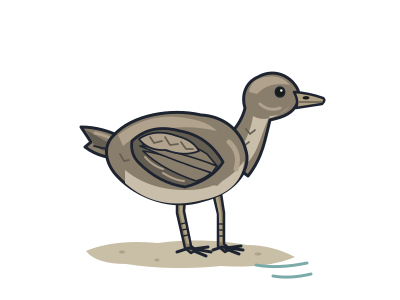
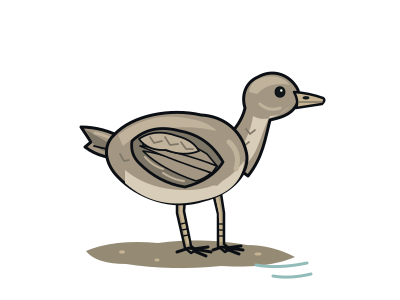
- WonderchickenA small partridge-sized bird from just before the asteroid; one of the oldest known modern birds.
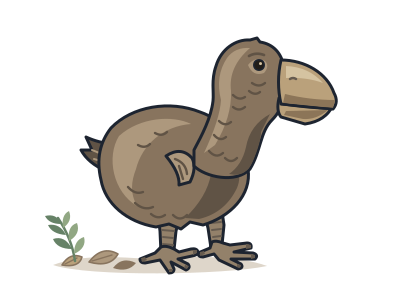
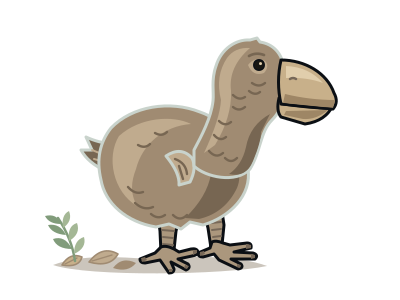
- DiatrymaA two-metre flightless bird with a huge beak, probably used for cracking seeds, not prey.
- GamebirdsGround-loving birds with strong legs that scratch for food and burst into flight when startled.
- Ducks, geese and swansWeb-footed birds with flat, comb-edged bills for sieving food from water.
- Stirton's thunderbirdA 3-metre, half-tonne Australian bird with a massive beak; its closest living kin are chickens and ducks.