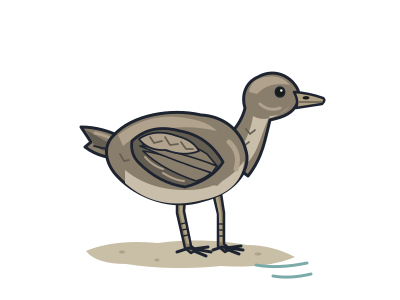
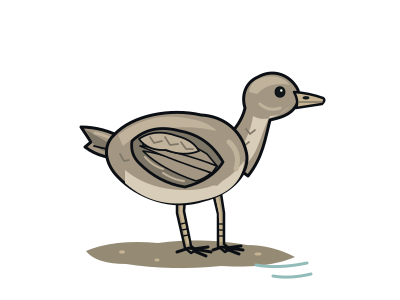
An extinct species
Wonderchicken †
Asteriornis maastrichtensis
A small bird from just before the asteroid, with hints of chickens and ducks.
Lived about 66.8–66.7 million years ago.
You and the wonderchicken meet in the Amniotes branch, shown at about 320 million years ago (on 4 December, in a calendar from life's shared ancestor to today).
Wonderchicken was a small bird, about the size of a partridge. It lived about 66.8 to 66.7 million years ago, just before the asteroid extinction. It was one of the oldest known members of the group that includes all living birds. Its skull combined features seen in landfowl, such as chickens, and waterfowl, such as ducks. Despite its nickname, it was not a chicken species or a proven direct ancestor of chickens.
Much of its story came from a nearly complete skull, preserved in three dimensions rather than flattened. Some parts were broken or displaced. The rest of the body was known only from broken bones. Researchers used X-ray scans to look inside the rock without removing the skull. No skin or feathers were preserved, so its true colours remained unknown.
Its fossils came from a quarry in Belgium, near the Dutch border. It lived alongside a toothed bird called Janavis. Together, these finds showed that birds belonging to the living-bird group shared their world with more distant bird branches.
A toothless beak
Wonderchicken had no teeth in its beak.
Small, but not a chick
Its thigh bone indicated that the individual was fully grown, or nearly so.
A four-piece puzzle
The main fossil specimen was preserved across four pieces of rock.
Next to it on the tree
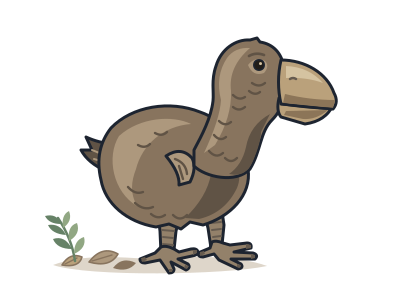
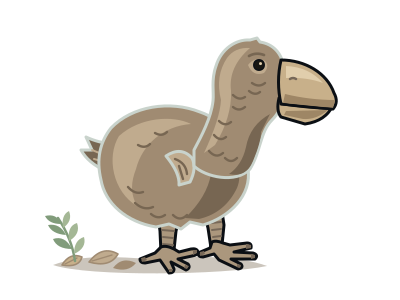
- DiatrymaA two-metre flightless bird with a huge beak, probably used for cracking seeds, not prey.
- GamebirdsGround-loving birds with strong legs that scratch for food and burst into flight when startled.
- Ducks, geese and swansWeb-footed birds with flat, comb-edged bills for sieving food from water.
- Stirton's thunderbirdA 3-metre, half-tonne Australian bird with a massive beak; its closest living kin are chickens and ducks.