A group of living things
Lizard-hipped dinosaurs
Saurischia
Long necks, sharp teeth—and living birds.
This branch is shown at about 235 million years ago; its age is a rough estimate.
You and lizard-hipped dinosaurs meet in the Amniotes branch, shown at about 320 million years ago (on 4 December, in a calendar from life's shared ancestor to today).
Long-necked giants and meat-eating theropods might look like very different dinosaurs, but this tree puts them on the same family branch. Birds belong here too: they are living theropod dinosaurs, not members of the confusingly named bird-hipped branch.
The name ‘lizard-hipped’ describes a hip arrangement in which one lower hip bone pointed forwards and downwards. Some theropods later developed a backwards-pointing version. So the name is a clue to an early body feature, not a rule that every member followed.
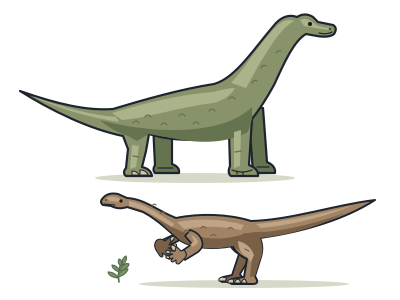
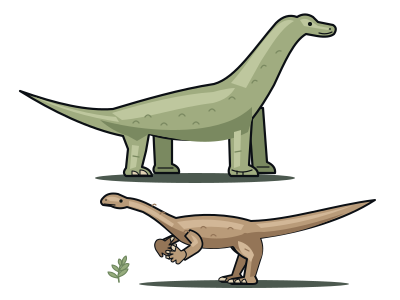
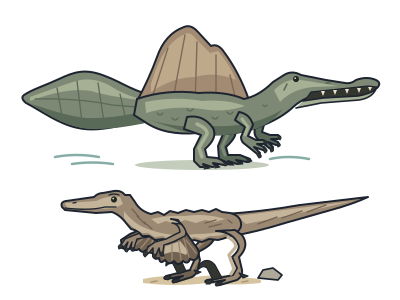
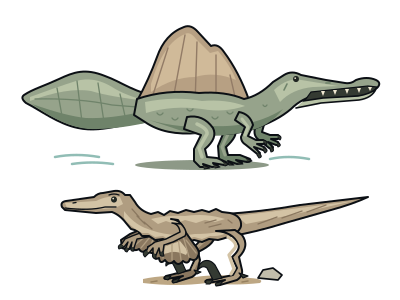
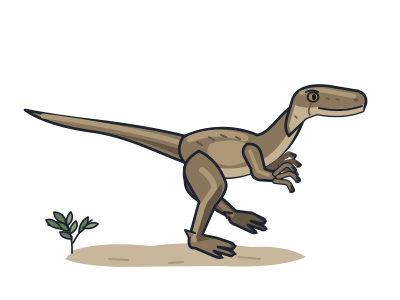
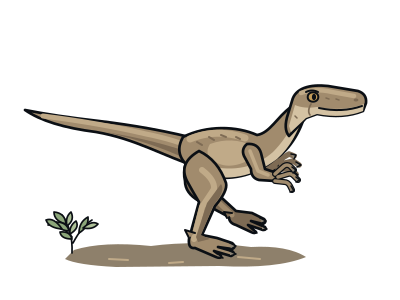
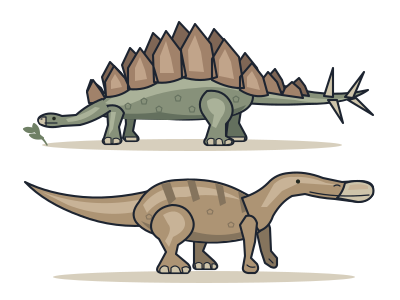
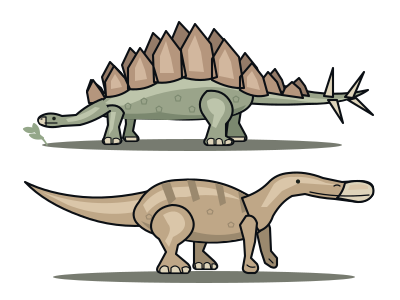
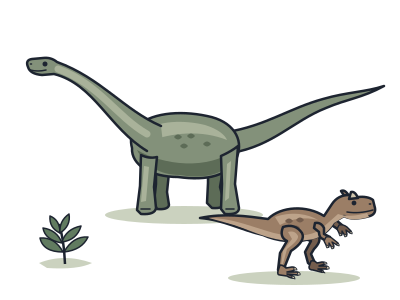
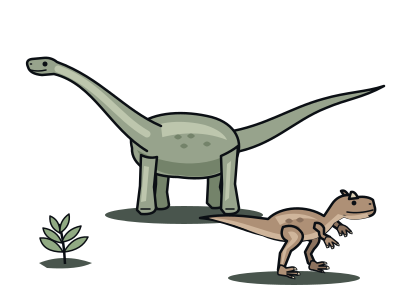
Picture two contrasting members. A sauropod had a long neck, a long tail and four pillar-like legs supporting its body. It ate plants. Beside it, picture a meat-eating theropod walking on two legs. These were not always animals from separate worlds: about 150 million years ago, sauropods and predatory theropods shared river floodplains in what is now northeastern Utah.
Land-animal record holders
Sauropods became the largest land animals known.
A worldwide fossil trail
Sauropod fossils have been found on every continent.
Sitting over eggs
A fossil of a non-bird theropod sitting over its eggs suggests it was keeping them warm, much as birds do.