An extinct group
Long-necked dinosaurs †
Sauropodomorpha
The dinosaur family that took size to new heights
This branch is shown at about 233 million years ago; its age is a rough estimate.
Lived about 233–66 million years ago.
You and long-necked dinosaurs meet in the Amniotes branch, shown at about 320 million years ago (on 4 December, in a calendar from life's shared ancestor to today).
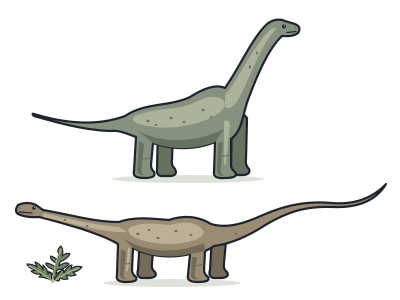
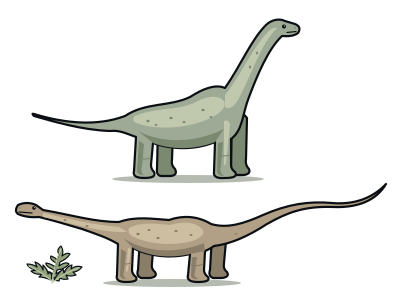
The largest animals ever to walk on land belonged to this dinosaur family. Its giant plant-eaters, called sauropods, included Brachiosaurus. Yet the wider family was not simply a collection of giants on four legs. These dinosaurs lived about 233 to 66 million years ago, and different branches had very different builds.
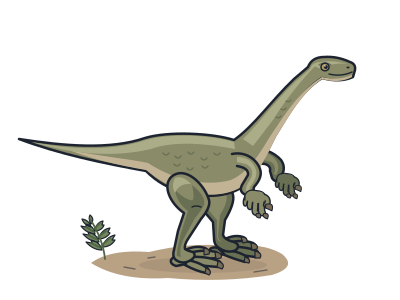
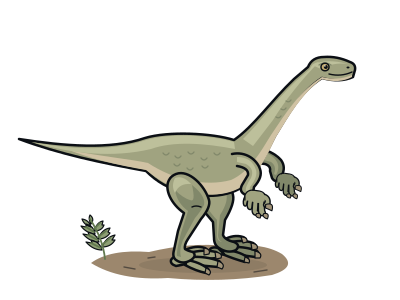
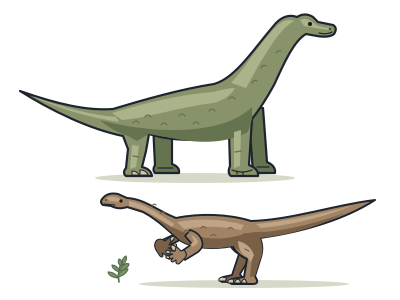
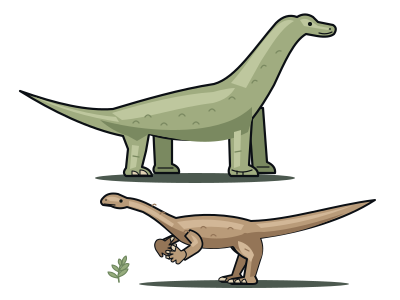
Compare towering Brachiosaurus with its smaller relative Plateosaurus. Brachiosaurus had longer front legs than back legs. Its bones showed how these gave it high shoulders, with its back sloping down towards its hips. Studies of Plateosaurus bones and digital body models supported a different picture: it walked on its two hind legs, holding its back roughly horizontal.
Plateosaurus was not a baby Brachiosaurus or its known direct ancestor. They belonged to different branches of the family. Plateosaurus lived about 210 million years ago; Brachiosaurus lived about 152 to 145 million years ago. They were relatives from different times, not animals that met.
Lighter on the inside
Sauropods had air spaces inside some bones, helping to lighten their huge skeletons.
No chewing needed
Sauropods swallowed plant food without chewing it. Their small, light heads helped make extremely long necks possible.
A wide reach
Long necks let sauropods reach plants across a wide area without moving their heavy bodies as often.