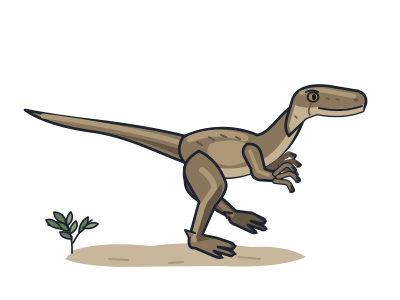
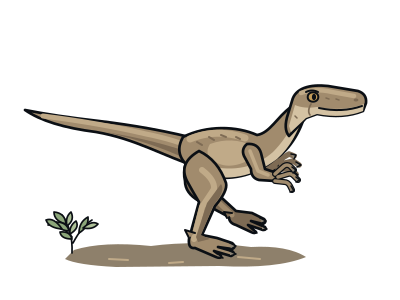
An extinct species
Herrerasaurus †
Herrerasaurus ischigualastensis
An early dinosaur built for running in Argentina’s Valley of the Moon.
Lived about 233–228 million years ago.
You and the herrerasaurus meet in the Amniotes branch, shown at about 320 million years ago (on 4 December, in a calendar from life's shared ancestor to today).
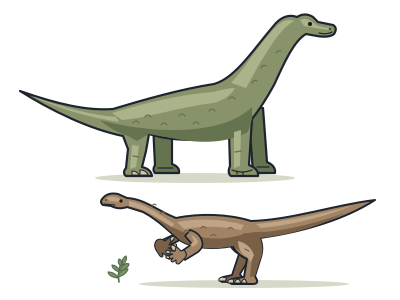
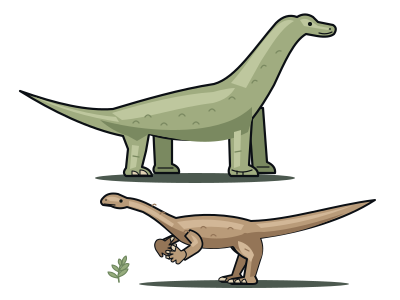
One of the earliest known dinosaurs, this meat-eater lived about 233 to 228 million years ago. Its fossils came from Argentina’s Valley of the Moon. It belonged to the broad lizard-hipped dinosaur group, which also included long-necked dinosaurs. Being an early member did not mean it was their direct ancestor.
Fossil bones showed a two-legged animal with long hind legs, a long tail and shorter arms. Its build suggested a capable runner, although its exact speed was unknown. Strong arms and grasping hands suggested that it could hold prey. These were clues from its skeleton, not observations of a living hunter.
Despite the valley’s bare landscape today, the rocks recorded rivers and floodplains where it lived. Dinosaurs did not yet dominate this region. Other reptiles and early mammal relatives were prominent neighbours, and the largest hunters were land-living relatives of crocodiles.
Three prominent fingers
Each hand had three long, clawed fingers, plus greatly reduced remains of two others.
Claws that closed together
Its finger joints brought the three main claws towards the palm as the hand closed.
Hollow inside
Its long arm and leg bones had hollow interiors—even many of its finger bones were hollow.