An extinct group
Pterosaurs †
Pterosauria
The first backbone animals to fly, with wings held open by one long finger.
This branch is shown at about 225 million years ago; its age is a rough estimate.
Lived about 220–66 million years ago.
You and pterosaurs meet in the Amniotes branch, shown at about 320 million years ago (on 4 December, in a calendar from life's shared ancestor to today).
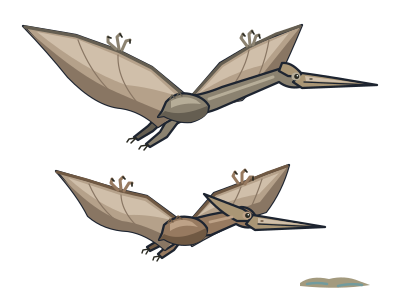
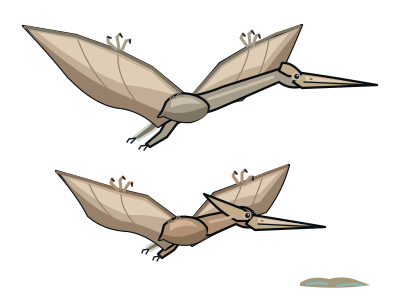
Pterosaurs were the first animals with backbones to fly by flapping, rather than simply gliding. They were close relatives of dinosaurs, but were not dinosaurs themselves. Nor were they the ancestors of birds. Pterosaurs, birds and bats each evolved flight separately.
They lived about 220 to 66 million years ago. Each wing was a thin sheet of skin supported along its outer front edge by an enormously lengthened fourth finger. Unlike a bat’s wing, it did not have several long fingers spread through it. Exceptional fossils preserved parts of these skin wings and their supporting fibres, not just bones.
The group included giants such as Quetzalcoatlus, whose spread wings measured about 10 to 11 metres across—like a small aeroplane. That size was an estimate from incomplete fossils. Scientists used the more complete remains of a smaller Quetzalcoatlus species to help reconstruct its giant relative.
Light but fragile
Their hollow bones helped make flight possible, but broke easily before they could become fossils.
Walking on four limbs
Fossilised tracks showed that pterosaurs could move over the ground using both their hands and feet.
An asteroid-era ending
The last pterosaurs disappeared in the mass extinction about 66 million years ago, when an asteroid struck Earth.
Inside pterosaurs
- PteranodonA toothless pterosaur with a seven-metre wingspan that soared over inland seas.
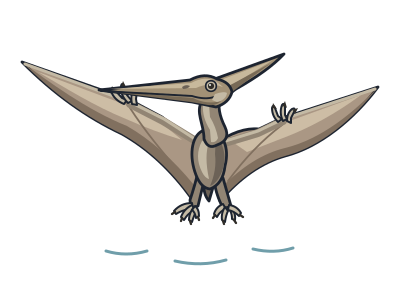
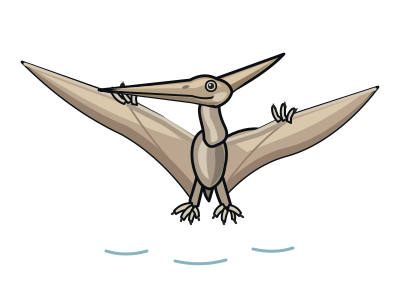
- QuetzalcoatlusA flying reptile as tall as a giraffe that stalked prey on the ground.
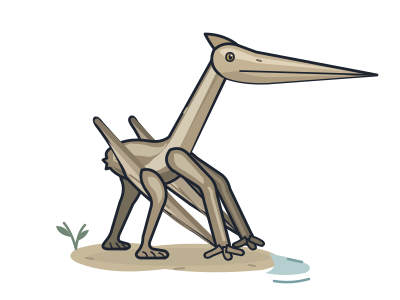
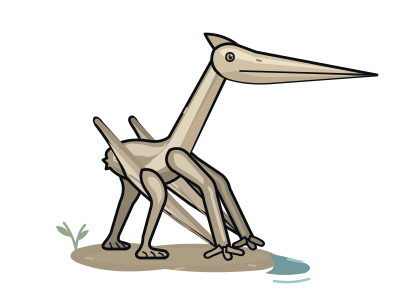
- DimorphodonAn early pterosaur with a big, puffin-like head and two kinds of teeth.
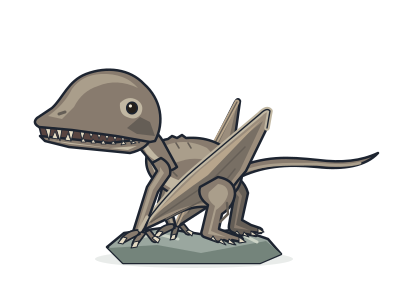
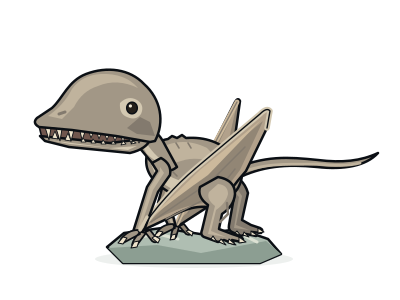
- RhamphorhynchusA long-tailed pterosaur with a diamond-shaped vane at the tail tip.
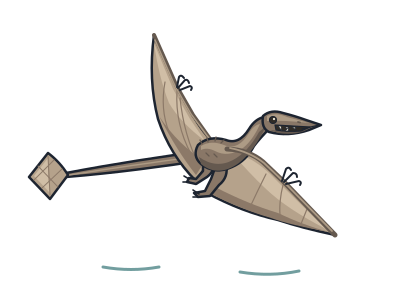
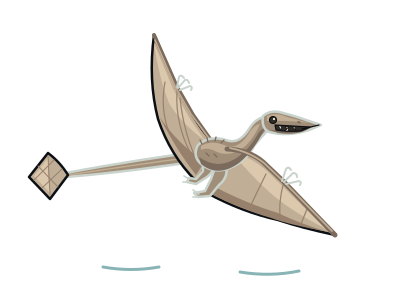
- PterodactylusThe first pterosaur ever named, first thought to be a swimming animal.
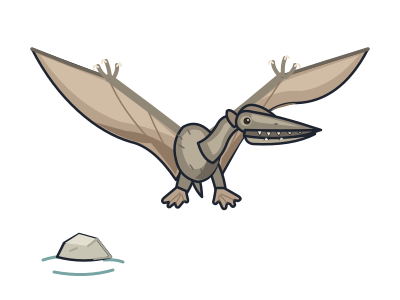
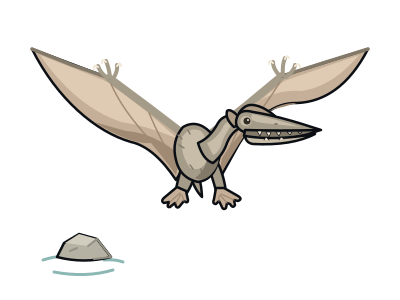
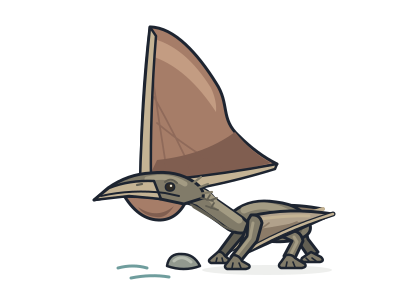
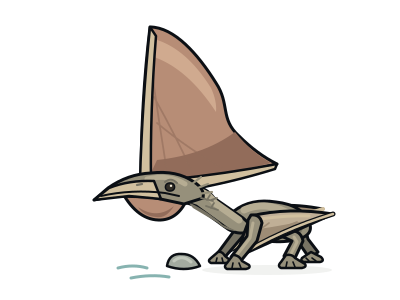
- TupandactylusWore a huge sail-like crest on its head, taller than its skull was long.