An extinct species
Quetzalcoatlus †
Quetzalcoatlus northropi
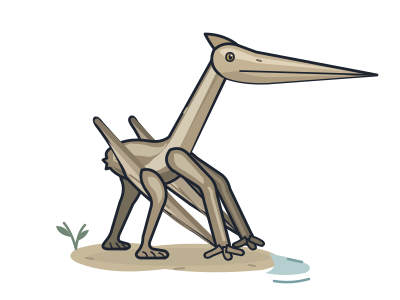
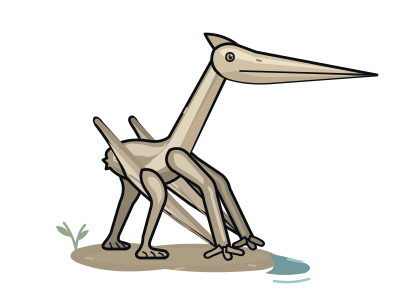
A giant flying reptile that probably hunted on foot.
Lived about 68–66 million years ago.
You and the quetzalcoatlus meet in the Amniotes branch, shown at about 320 million years ago (on 4 December, in a calendar from life's shared ancestor to today).
This flying reptile may have stood as tall as a giraffe—and probably searched for small animals on foot. It was a pterosaur, a member of the flying-reptile branch related to dinosaurs. Despite its size and appearance, it was not a dinosaur. Nor was it an ancestor of birds. It lived about 68 to 66 million years ago.
Researchers reconstructed it walking on all four limbs, with its long wing fingers folded out of the way. Its wings were its arms, not an extra pair of limbs. Comparisons with better-known relatives suggested a long neck and long, toothless jaws.
The fossils told only part of the story: the original discovery consisted of pieces of one wing, not a complete skeleton. Researchers used relatives to help fill the gaps. Ground-level hunting was an interpretation of its anatomy and its family's fossil evidence, rather than behaviour preserved in those bones.
A student's discovery
Geology student Douglas Lawson discovered its first fossils in Big Bend National Park in 1971.
A revealing bone
The first discovered wing bone was hollow and very thin-walled. These clues helped identify it as a pterosaur.
Two namesakes
Its name honoured Quetzalcoatl, a Mexican deity, and aircraft designer Jack Northrop.
Next to it on the tree
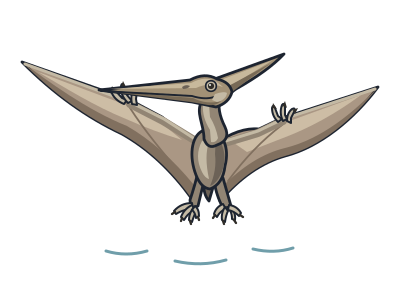
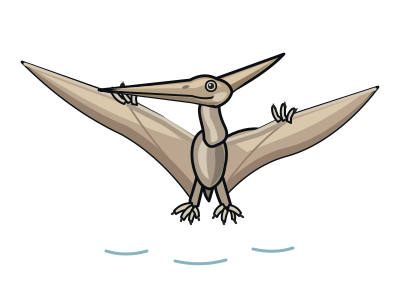
- PteranodonA toothless pterosaur with a seven-metre wingspan that soared over inland seas.
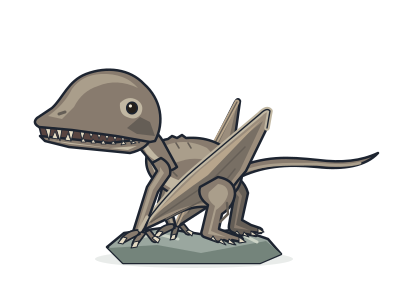
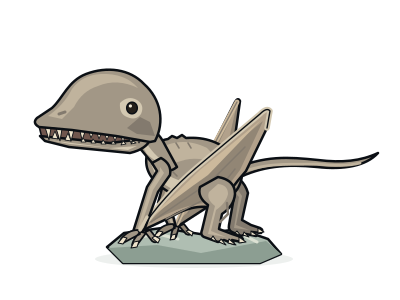
- DimorphodonAn early pterosaur with a big, puffin-like head and two kinds of teeth.
- RhamphorhynchusA long-tailed pterosaur with a diamond-shaped vane at the tail tip.
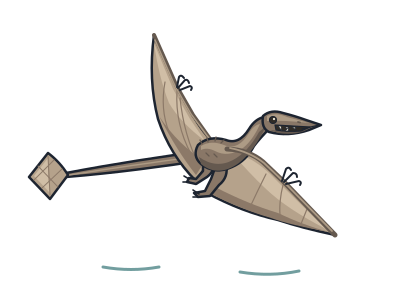
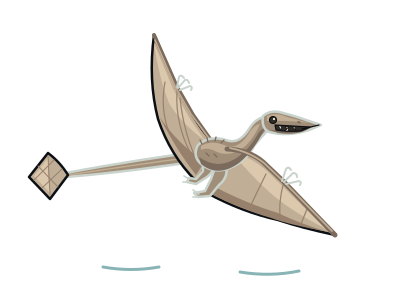
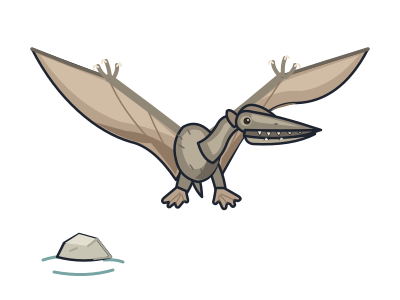
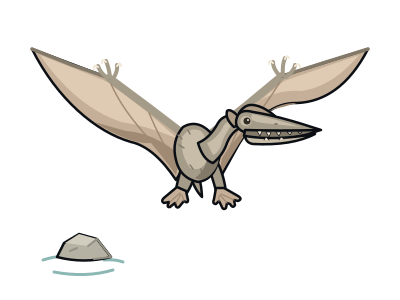
- PterodactylusThe first pterosaur ever named, first thought to be a swimming animal.
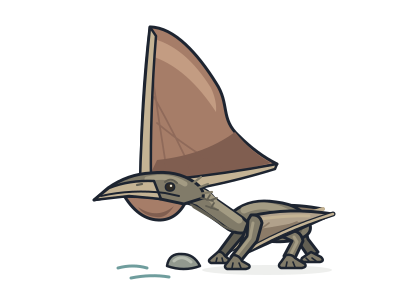
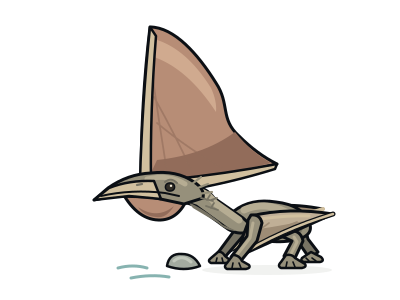
- TupandactylusWore a huge sail-like crest on its head, taller than its skull was long.