An extinct species
Dimorphodon †
Dimorphodon macronyx
A puffin-like head, but no bird.
Lived about 199–191 million years ago.
You and the dimorphodon meet in the Amniotes branch, shown at about 320 million years ago (on 4 December, in a calendar from life's shared ancestor to today).
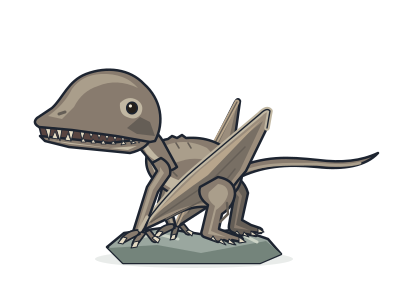
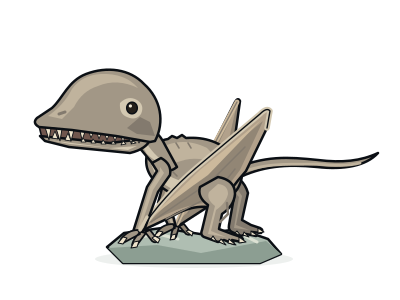
With a big, deep head and two very different sizes of teeth, this early pterosaur had a loosely puffin-like outline. Yet it was no bird: it belonged to a separate branch of flying reptiles related to dinosaurs. It was not a dinosaur itself. It lived about 199 to 191 million years ago.
It had long, curved teeth near the front of its jaws. Much smaller pointed teeth lined the back of its lower jaw. The puffin comparison described its head’s outline, not a toothless bill or a proven way of feeding. That resemblance did not establish that this reptile lived or hunted like a puffin.
Its body was compact, with a long tail behind it. Researchers pieced together its skeleton from several incomplete specimens and extra bones, rather than one perfectly preserved animal. The bones and teeth provided firmer clues than reconstructions of its soft body parts.
A name about teeth
Its name meant ‘two-formed tooth’, referring to its different teeth.
Mary Anning’s discovery
Mary Anning discovered the original fossil at Lyme Regis in southern England in December 1828.
A missing head
Anning’s original specimen lacked a skull, so that fossil did not show the famous tooth types.
Next to it on the tree
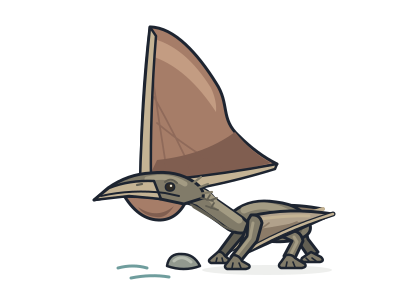
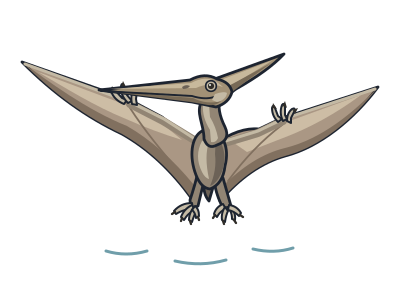
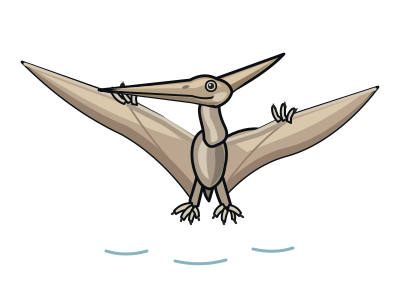
- PteranodonA toothless pterosaur with a seven-metre wingspan that soared over inland seas.
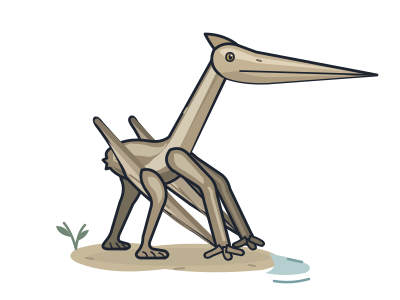
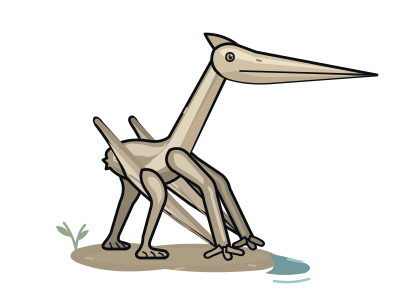
- QuetzalcoatlusA flying reptile as tall as a giraffe that stalked prey on the ground.
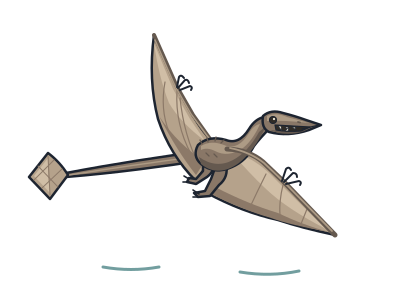
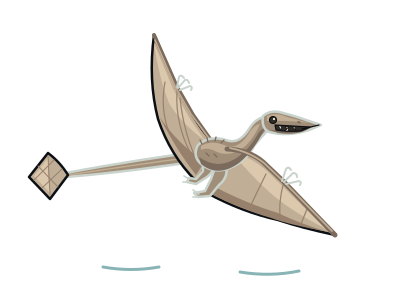
- RhamphorhynchusA long-tailed pterosaur with a diamond-shaped vane at the tail tip.
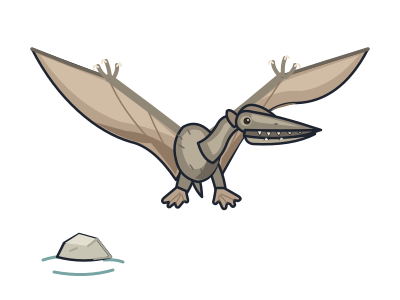
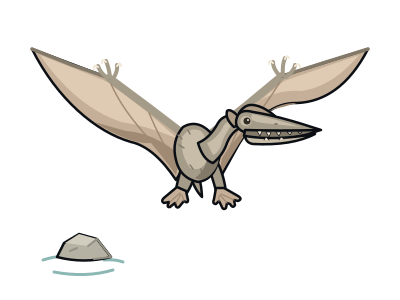
- PterodactylusThe first pterosaur ever named, first thought to be a swimming animal.
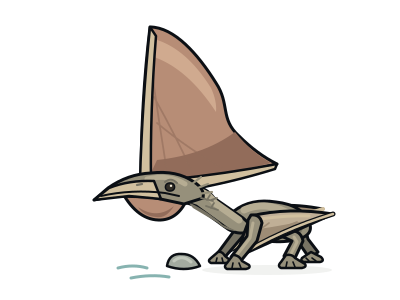
- TupandactylusWore a huge sail-like crest on its head, taller than its skull was long.