An extinct species
Rhamphorhynchus †
Rhamphorhynchus muensteri
A flying reptile with a diamond-tipped tail
Lived about 151–148 million years ago.
You and the rhamphorhynchus meet in the Amniotes branch, shown at about 320 million years ago (on 4 December, in a calendar from life's shared ancestor to today).
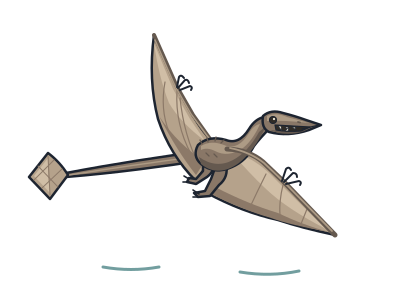
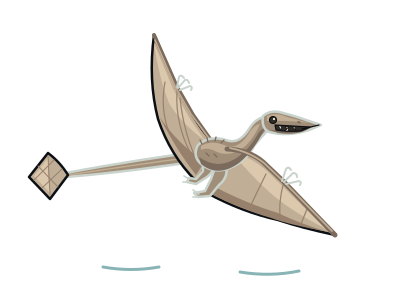
A long tail ending in a diamond-shaped flap made this flying reptile stand out. It belonged to the pterosaurs: relatives of dinosaurs, but not dinosaurs themselves. Nor was it an early bird. Birds belonged within the dinosaur branch, while pterosaurs developed flight separately. It lived about 151 to 148 million years ago.
Its slender tail was several times as long as the part of its body between its neck and hips. The flattened flap at the tip, called a vane, was preserved in fossils—not simply imagined by artists. Its wings were sheets of skin, each supported by a greatly lengthened fourth finger. Preserved wing outlines extended towards the ankles.
Known adults usually measured about 1 metre across their open wings, roughly the width of a large umbrella. Those sizes were estimates from skeletons, not measurements of living animals. Some exceptional fossils preserved delicate wing tissues as well as bones, giving researchers clues about how these unusual wings were built.
A toothless tip
Its jaws usually held 34 teeth, but the very tips of the jaws had none.
A framework inside the tail flap
The tail vane contained a crisscrossing framework of thicker structures and finer fibres.
Many fossils to study
More than 100 specimens were recorded in public collections.
Next to it on the tree
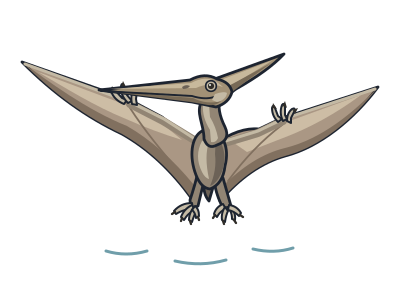
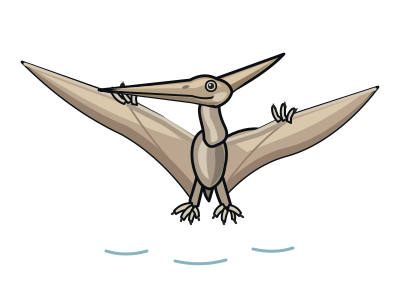
- PteranodonA toothless pterosaur with a seven-metre wingspan that soared over inland seas.
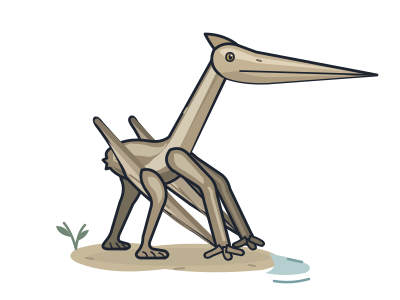
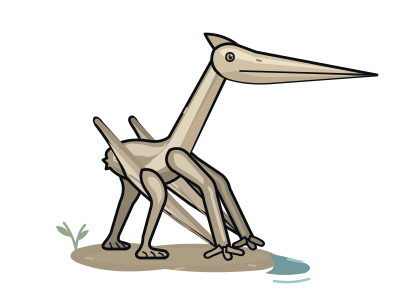
- QuetzalcoatlusA flying reptile as tall as a giraffe that stalked prey on the ground.
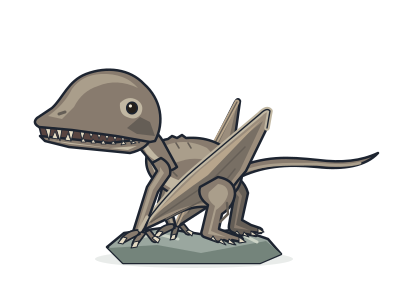
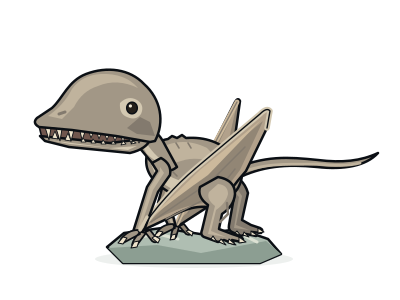
- DimorphodonAn early pterosaur with a big, puffin-like head and two kinds of teeth.
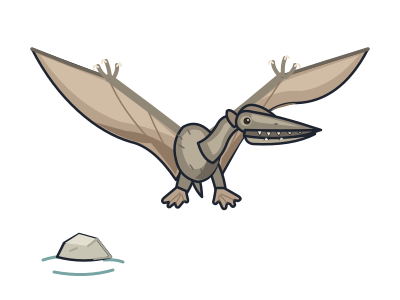
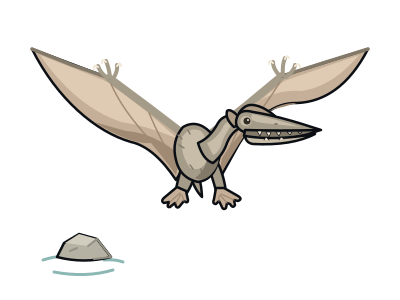
- PterodactylusThe first pterosaur ever named, first thought to be a swimming animal.
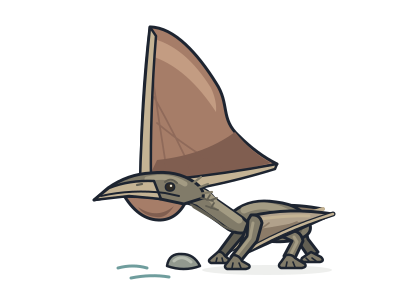
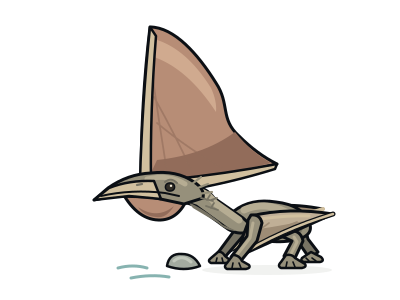
- TupandactylusWore a huge sail-like crest on its head, taller than its skull was long.