An extinct species
Pteranodon †
Pteranodon longiceps
A toothless giant above an ancient inland sea
Lived about 88–80 million years ago.
You and the pteranodon meet in the Amniotes branch, shown at about 320 million years ago (on 4 December, in a calendar from life's shared ancestor to today).
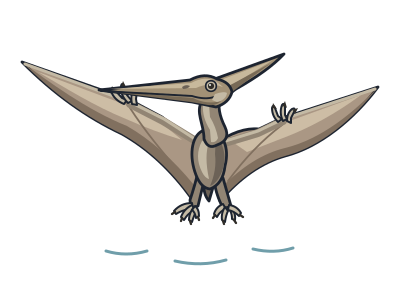
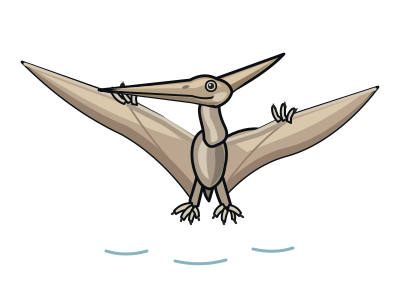
This toothless flying reptile had wings that stretched about seven metres across in large individuals—roughly the width of a hang-glider. It was a pterosaur, a relative of dinosaurs, but not a dinosaur itself. Nor was it a bird. It lived about 88 to 80 million years ago.
Its home was around an inland sea that split North America into two land masses. Parts of western Kansas, now dry land, lay beneath that water. Fossil bones found there helped researchers reconstruct this enormous flyer, though many were flattened or incomplete.
Its wings had sheets of skin rather than the rows of large flight feathers found in birds. Researchers inferred that it often soared instead of constantly flapping, rather like an albatross. Despite its impressive reach, not every adult was a seven-metre giant: adult sizes varied considerably.
Lightweight bones
Its bones were thin-walled and air-filled, helping keep such a large flying animal relatively light.
A bigger relative
Quetzalcoatlus was a substantially larger pterosaur.
A name with a clue
The first part of its scientific name meant ‘winged and toothless’.
Next to it on the tree
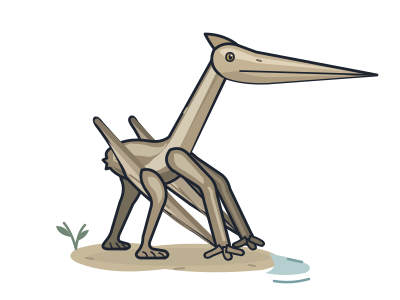
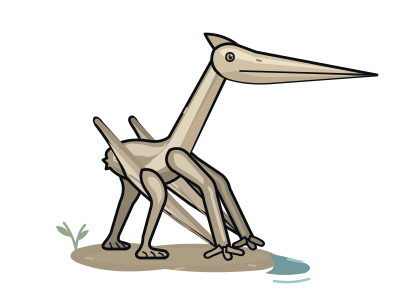
- QuetzalcoatlusA flying reptile as tall as a giraffe that stalked prey on the ground.
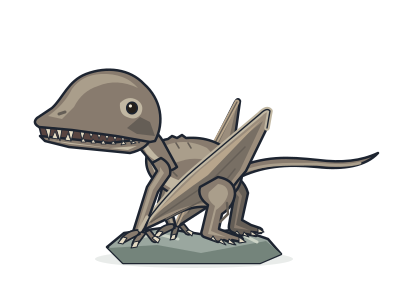
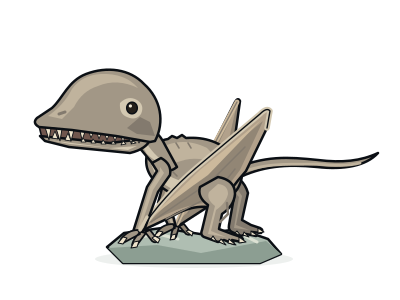
- DimorphodonAn early pterosaur with a big, puffin-like head and two kinds of teeth.
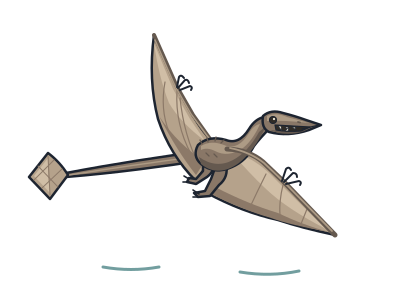
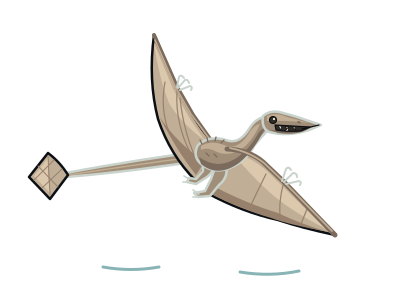
- RhamphorhynchusA long-tailed pterosaur with a diamond-shaped vane at the tail tip.
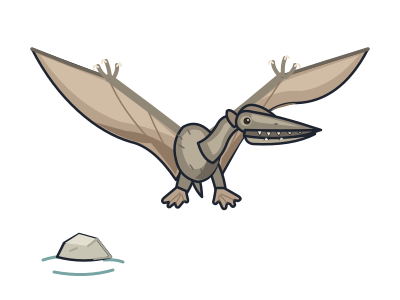
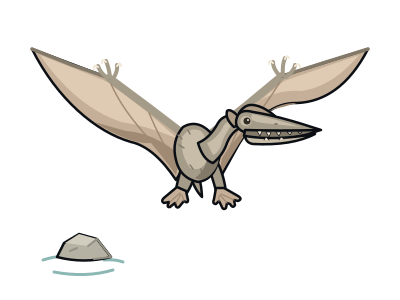
- PterodactylusThe first pterosaur ever named, first thought to be a swimming animal.
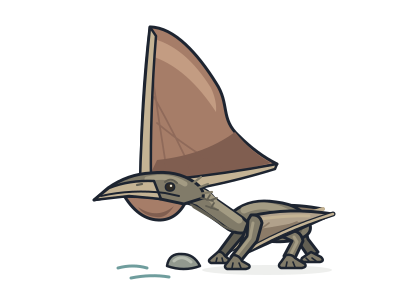
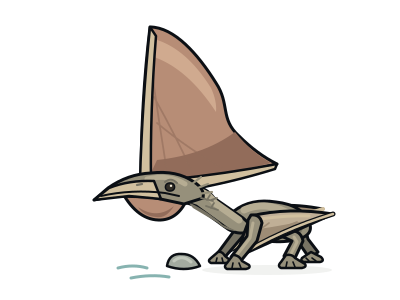
- TupandactylusWore a huge sail-like crest on its head, taller than its skull was long.