A group of living things
Theropods
Theropoda
T. rex, raptors and every bird: one dinosaur family.
This branch is shown at about 231 million years ago; its age is a rough estimate.
You and theropods meet in the Amniotes branch, shown at about 320 million years ago (on 4 December, in a calendar from life's shared ancestor to today).
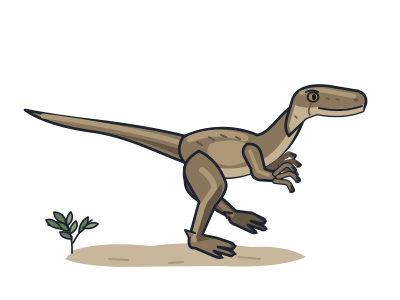
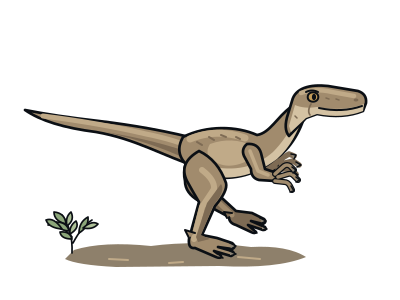
T. rex, Velociraptor and every bird belong to the same dinosaur branch. These are the theropods: a family known for walking on two hind legs and, in many members, having thin-walled, hollow bones. Birds evolved from small theropods, not from T. rex itself.
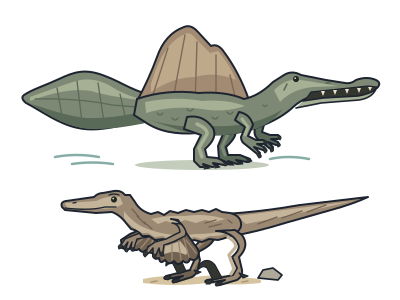
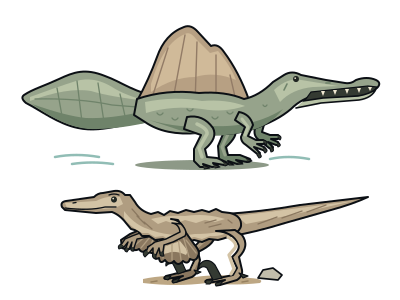
Those hollow bones were not simply equipment for flight: they were present in dinosaurs that could not fly. Velociraptor had feathered, wing-like arms but could not fly. Having feathers did not necessarily mean an animal could fly.
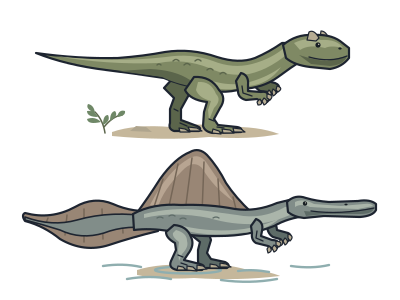
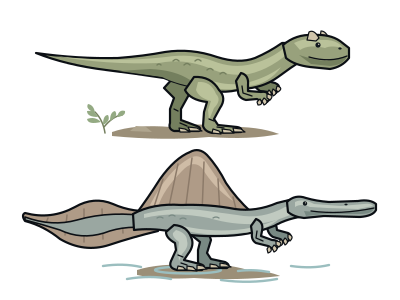
Spinosaurus shows how varied this family could be. It was about 14 metres long, roughly the length of a bus. It lived around North African waterways and wetlands about 99 to 94 million years ago. From this enormous dinosaur to living birds, there is no single size that fits the whole branch.
Three main toes
The typical theropod foot had three main toes, though the arrangement varied between branches.
Jaws suited to fish
Spinosaurus had narrow jaws with a notch near the front. Their shape suggests it ate fish, though fish need not have been its only food.
More bird-like bones
Velociraptor shared a wishbone and folding wrist joints with birds.
Inside theropods
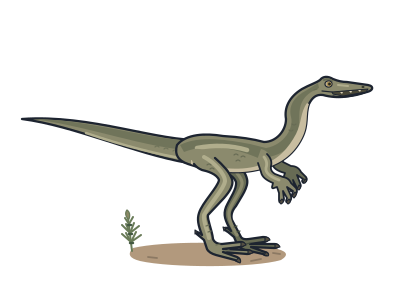
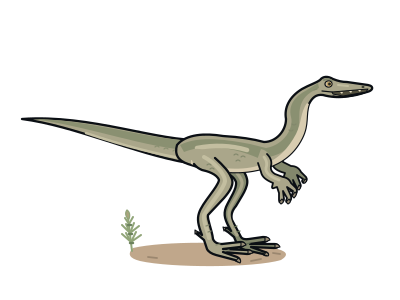
- CoelophysisA slim early hunter known from hundreds of skeletons in one New Mexico quarry.
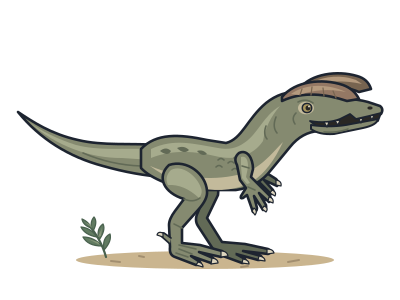
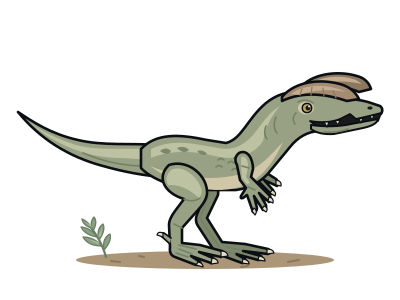
- DilophosaurusWore twin head crests; it did not spit venom or have a neck frill.
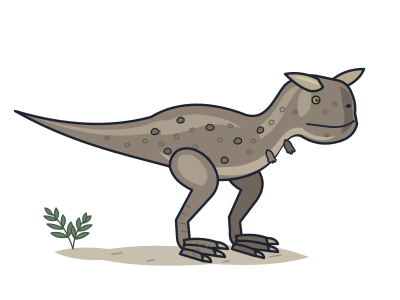
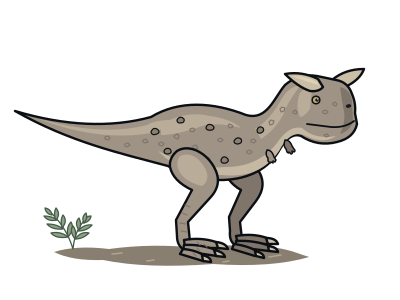
- CeratosaursHorned and short-armed predators; some had arms even tinier than T. rex's.
- Stiff-tailed theropodsMost big predatory dinosaurs, plus the line that led to birds.
- CryolophosaurusFound in Antarctica, it had a sideways crest like a quiff, earning the nickname Elvisaurus.