An extinct species
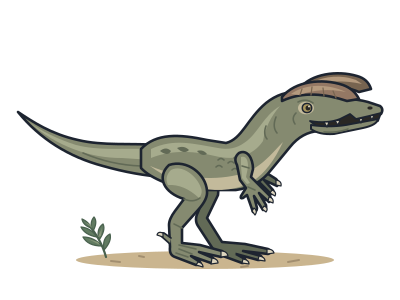
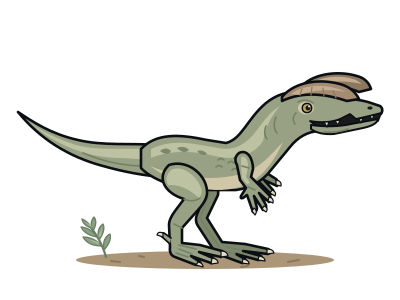
Dilophosaurus †
Dilophosaurus wetherilli
Real twin crests, fictional film tricks
Lived about 190–183 million years ago.
You and the dilophosaurus meet in the Amniotes branch, shown at about 320 million years ago (on 4 December, in a calendar from life's shared ancestor to today).
Two bony head crests were real; the venom-spitting and expanding neck frill from Jurassic Park were inventions, with no fossil evidence for either. This dinosaur belonged to the theropods, the dinosaur branch that includes living birds. It was a relative of birds, not a giant lizard or a proven direct ancestor of birds.
It lived about 190 to 183 million years ago, during the Early Jurassic. Its fossils came from what is now northern Arizona, including Navajo Nation land. Its surroundings included rivers and wetter ground among desert dunes, rather than one unbroken stretch of dry sand.
It was a meat-eater with sharp, curved teeth and a noticeable notch in its upper jaw. Fossilised bones preserved its distinctive crests, but they did not reveal every detail of its living appearance. A detailed study found attachment areas for powerful jaw muscles, challenging older ideas that it had weak jaws.
A name with two crests
Its name meant ‘two-crested lizard’.
An important discovery
Jesse Williams, a Navajo man, discovered the first partial skeletons in Arizona.
A changed identity
It was first classified as a species of Megalosaurus, before a later discovery revealed its distinctive crests.
Next to it on the tree
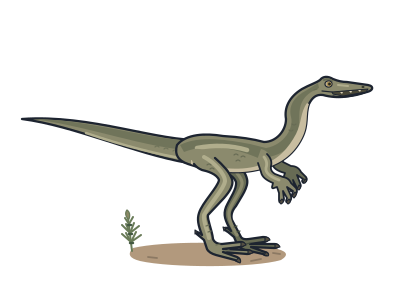
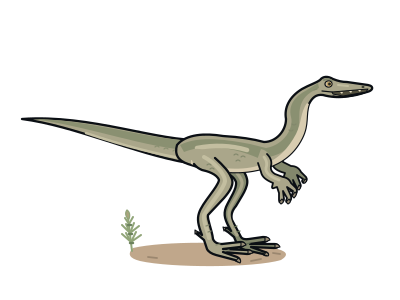
- CoelophysisA slim early hunter known from hundreds of skeletons in one New Mexico quarry.
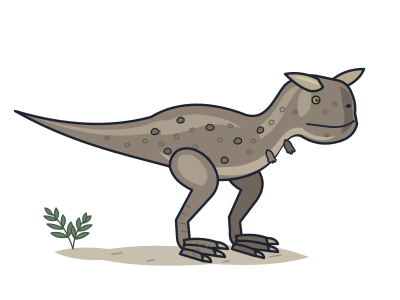
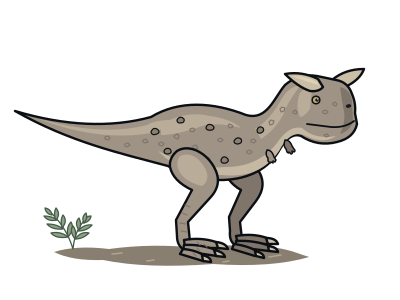
- CeratosaursHorned and short-armed predators; some had arms even tinier than T. rex's.
- Stiff-tailed theropodsMost big predatory dinosaurs, plus the line that led to birds.
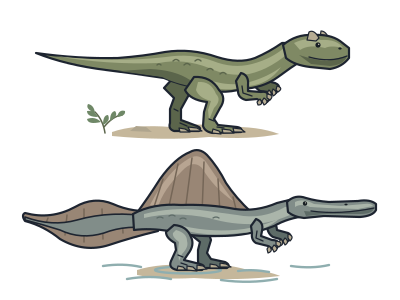
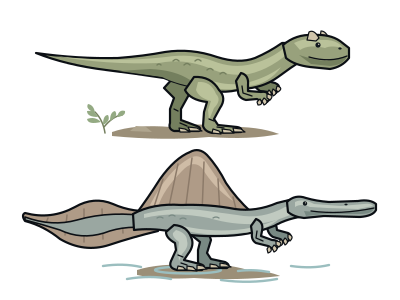
- CryolophosaurusFound in Antarctica, it had a sideways crest like a quiff, earning the nickname Elvisaurus.