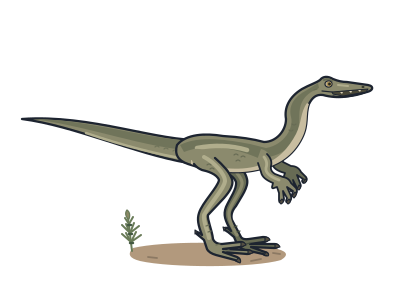
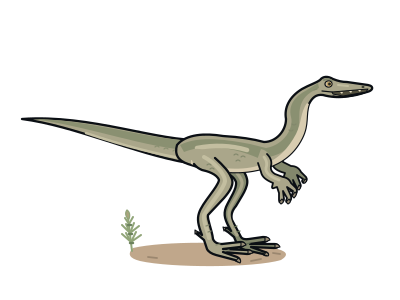
An extinct species
Coelophysis †
Coelophysis bauri
A slim early hunter, known from hundreds of skeletons
Lived about 210–201 million years ago.
You and the coelophysis meet in the Amniotes branch, shown at about 320 million years ago (on 4 December, in a calendar from life's shared ancestor to today).
This slim early hunter left hundreds of skeletons in one quarry at Ghost Ranch in northern New Mexico. It belonged to an early branch of theropods, the dinosaur group that includes living birds. It was a distant relative of birds, not a demonstrated direct ancestor. It lived about 210 to 201 million years ago.
Its skeleton showed a small, lightly built body, a long neck and two long hind legs. Its much shorter arms reached forwards. Researchers reconstructed its long, relatively stiff tail as a counterbalance, helping to balance the body as it moved on two legs.
The quarry held both young animals and adults. Together, their bones gave scientists an unusually rich record of how an early dinosaur grew. Rather than relying on a single skeleton, researchers could compare animals at different stages of life. That made this crowded patch of rock especially valuable.
Three grasping fingers
Each hand had three useful clawed fingers for grasping.
Tiny bones around the eyes
Some fossils preserved delicate rings of small bones that supported the eyes.
A state symbol
New Mexico chose it as the official state fossil in 1981.
Next to it on the tree
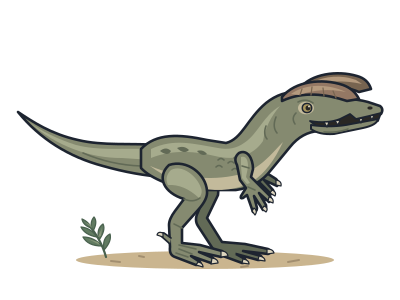
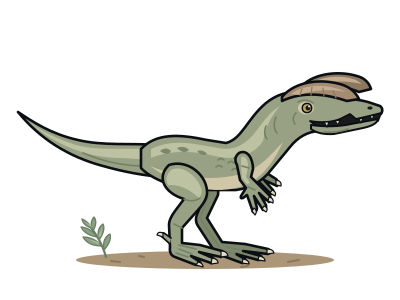
- DilophosaurusWore twin head crests; it did not spit venom or have a neck frill.
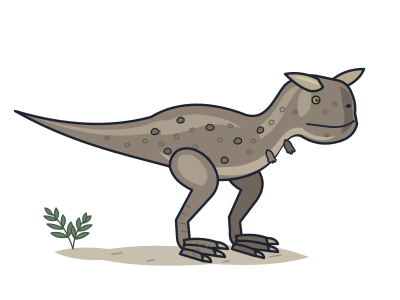
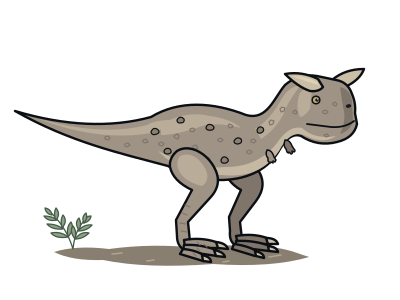
- CeratosaursHorned and short-armed predators; some had arms even tinier than T. rex's.
- Stiff-tailed theropodsMost big predatory dinosaurs, plus the line that led to birds.
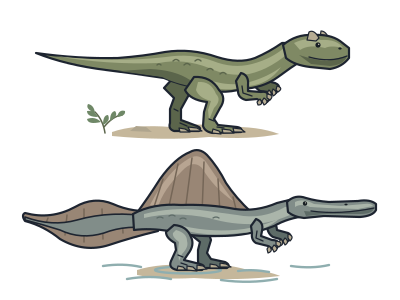
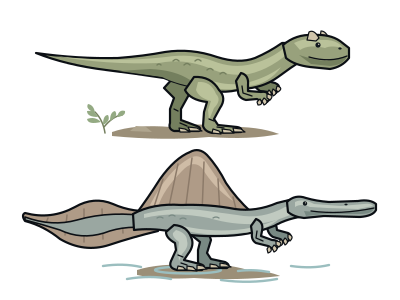
- CryolophosaurusFound in Antarctica, it had a sideways crest like a quiff, earning the nickname Elvisaurus.