An extinct species
Plateosaurus †
Plateosaurus trossingensis
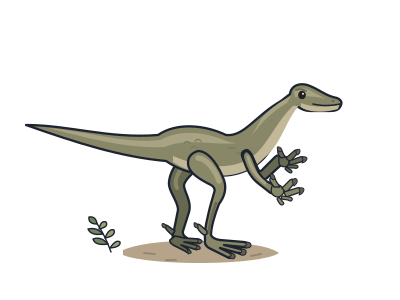
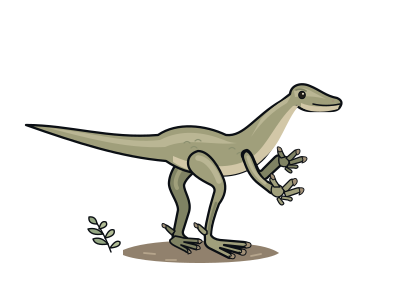
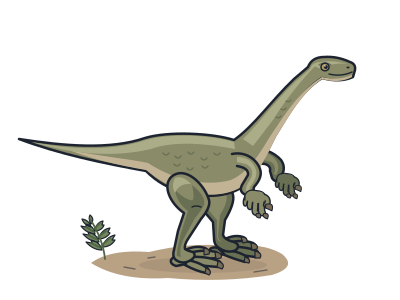
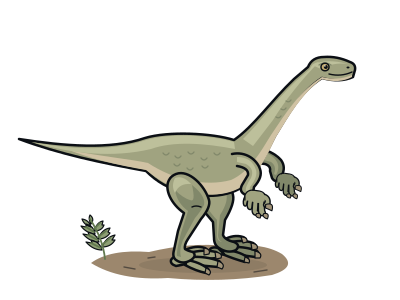
A long neck on two walking legs.
Lived about 214–204 million years ago.
You and the plateosaurus meet in the Amniotes branch, shown at about 320 million years ago (on 4 December, in a calendar from life's shared ancestor to today).
This early long-necked dinosaur walked on two legs before the later giants went on four. It belonged to the wider long-necked dinosaur family, but sat outside the sauropods—the group that included the later four-legged giants. It was their relative, not their proven direct ancestor. It lived about 214 to 204 million years ago.
Its fossil bones showed arms only about half as long as its hind legs. Studies of the joints suggested that its hands grasped rather than supported its weight during walking. Its forearms could not turn its palms down far enough for normal four-legged walking. Computer reconstructions supported a roughly level back, rather than an upright, kangaroo-like pose.
This plant-eater lived in what became central Europe. At Trossingen, in present-day Germany, rocks recorded a broad muddy plain. Wetter spells supported plenty of vegetation, while drier intervals let the ground dry out. Its world was not simply a permanent desert.
Five fingers
Each hand had five fingers. The first three were strong and clawed; the outer two were slimmer.
A remarkable fossil haul
Historical excavations at Trossingen uncovered about 80 skeletons.
Blue bones, not blue skin
Some freshly uncovered bones looked blue because of a mineral. The colour faded in air.