A group of living things
Pigeons and doves
Columbidae
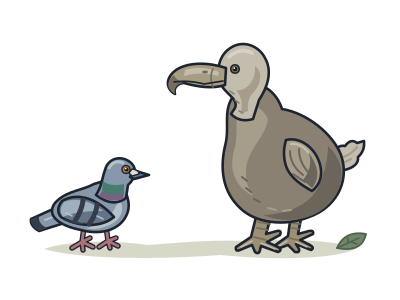
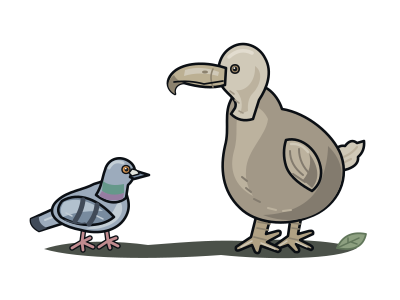
The dodo was a giant ground pigeon.
This branch is shown at about 25 million years ago; its age is a rough estimate.
You and pigeons and doves meet in the Amniotes branch, shown at about 320 million years ago (on 4 December, in a calendar from life's shared ancestor to today).
The dodo was a giant ground pigeon—a member of the same bird family as the rock dove. Its ancestors could fly, but its branch of the family became larger and lost flight as it adapted to island life. The Nicobar pigeon is the dodo’s closest living relative.
“Pigeon” and “dove” are everyday names, not two separate scientific groups. The same species can be called a pigeon in one place and a dove somewhere else. This family contains hundreds of species, with most living in the tropics. Its members live around the world outside the polar regions, so there is much more to this family than familiar city birds.
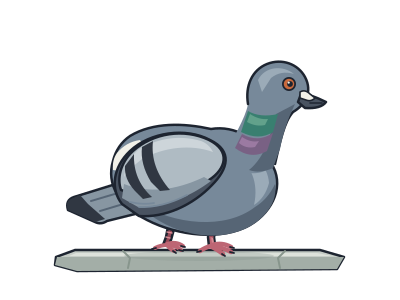
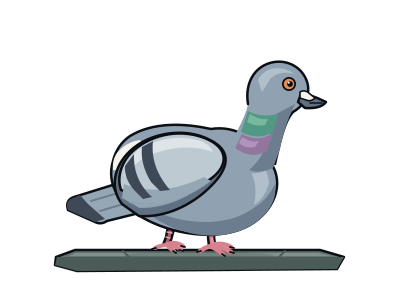
Many tropical pigeons eat fruit. Rock doves make use of both natural cliffs and human buildings, nesting on ledges, under overhangs and on bridges. A building ledge gives these birds a nesting place much like a cliff ledge.
Milk-like meals
Both rock dove parents feed their chicks a milk-like food made in a food-storage pouch near the throat.
Shared egg duty
Male and female rock doves take turns keeping their eggs warm. The male usually takes the middle-of-the-day shift.
A built-in drinking straw
Rock doves keep their bill in the water and draw water up, rather like drinking through a straw.
Inside pigeons and doves
- Rock doveThe city pigeon, which can find its way home from hundreds of kilometres away.
- DodoA flightless pigeon from Mauritius, gone within a century of sailors arriving.
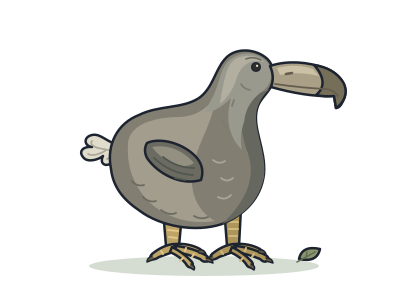
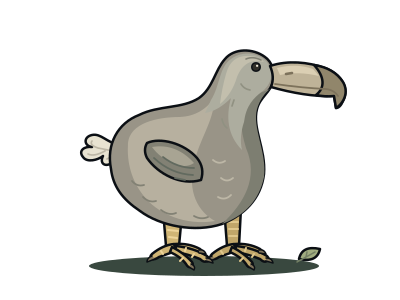
- Nicobar pigeonAn iridescent island pigeon; the dodo's closest living relative.
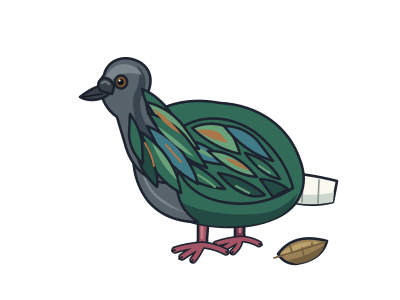
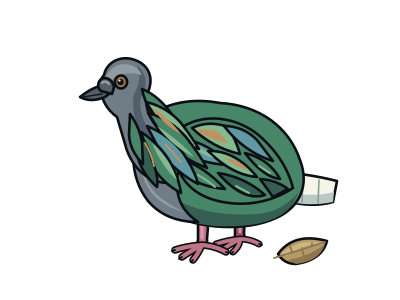
- Passenger pigeonOnce in flocks of billions, it was hunted out; the last one, Martha, died in 1914.
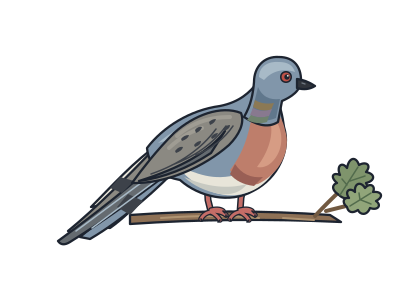
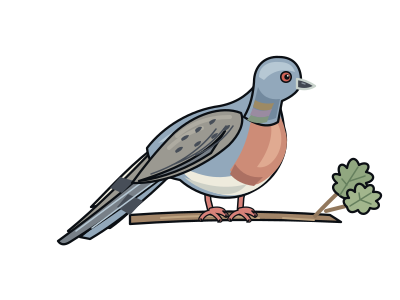
- Victoria crowned pigeonThe largest living pigeon, a blue New Guinea bird wearing a lacy fan of feathers on its head.
- Mourning doveNamed for its soft, sad-sounding coo; it is one of North America's most common birds.
- Tooth-billed pigeonA rare Samoan pigeon nicknamed the 'little dodo' for its hooked, notched beak.
Next to it on the tree
- Core waterbirdsPenguins, albatrosses, pelicans and herons share one ancestor.
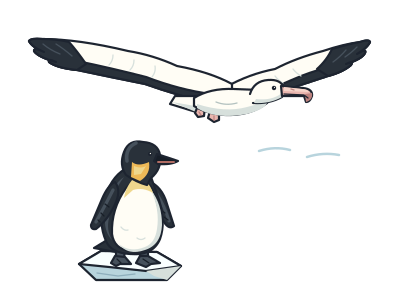
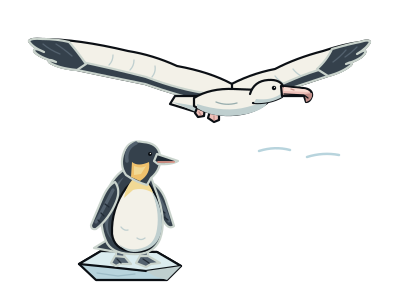
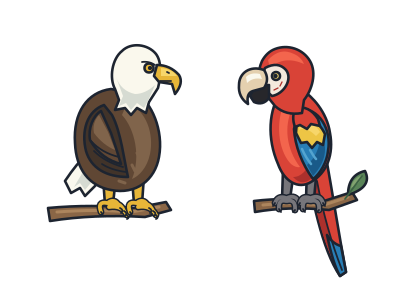
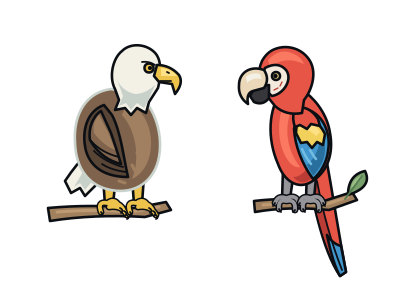
- Land birdsOwls, eagles, parrots and songbirds came from one ancestor, probably a predator.
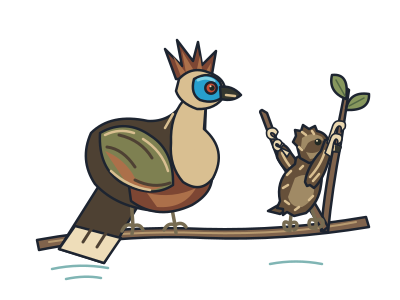
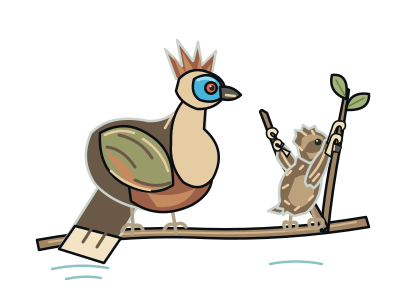
- HoatzinChicks have claws on their wings; adults ferment leaves in their gut like a cow.
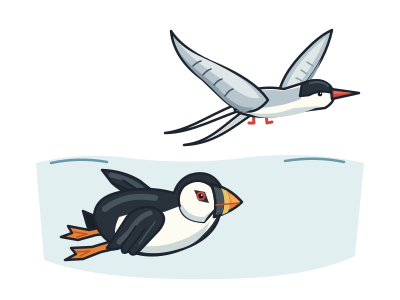
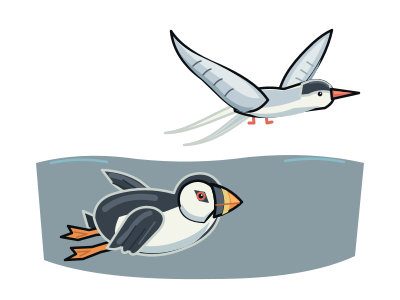
- Shorebirds, gulls and auksA varied group, from waders to gulls to puffins that 'fly' underwater.
- Flamingos and grebesFlamingos' closest relatives are grebes, diving birds that look nothing like them.
- Cuckoos, turacos and bustardsThree very different-looking families, from tree-hopping turacos to huge ground-striding bustards, share one ancestor.
- Nightjars, swifts and hummingbirdsHummingbirds and swifts descend from night-flying, insect-catching ancestors like nightjars.
- Cranes and railsStately cranes and secretive marsh rails are cousins.