A species
Herring gull
Larus argentatus
A red spot that means dinner
You and the herring gull meet in the Amniotes branch, shown at about 320 million years ago (on 4 December, in a calendar from life's shared ancestor to today).
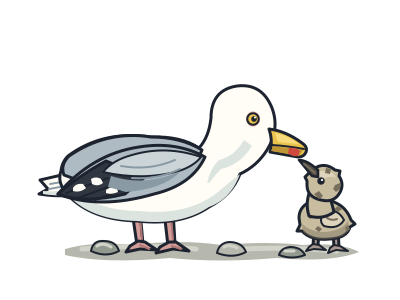
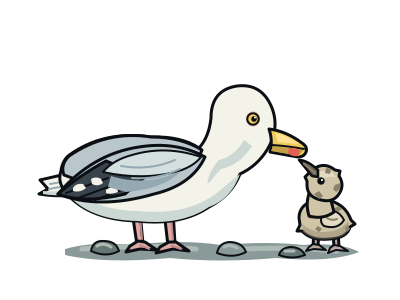
For this bold seaside gull, a red spot is part of family mealtimes. Chicks peck the spot near the tip of a parent's lower beak when begging for food. This encourages the adult to bring swallowed food back up for them.
Its wider family includes some surprising seabirds. Gulls, terns and auks belong to the same broad branch of the shorebird group. That makes the Arctic tern, Atlantic puffin and great auk relatives, despite their different shapes.
Adults have pale grey backs, white undersides and black wingtips with white patches. Their thick yellow beaks carry that red spot. Young birds look quite different: they are mottled brown, with dark beaks.
Despite its name, this gull eats much more than herring. It hunts fish, crabs and other small animals, and also finds food left behind. Nor is it tied to the seaside: alongside cliffs, islands and dunes, some choose buildings as nesting places.
Shell-opening trick
Herring gulls sometimes drop shellfish from a height to break them open.
Worm dance
They sometimes stamp their feet on wet sand or grass, bringing worms to the surface.
A winter change
An adult's head is white during the breeding season but becomes streaked in winter.
Next to it on the tree
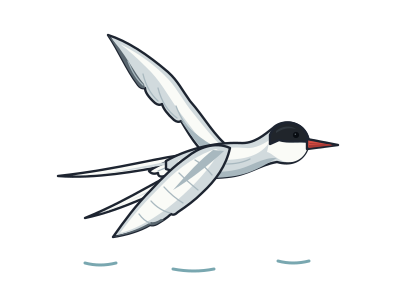
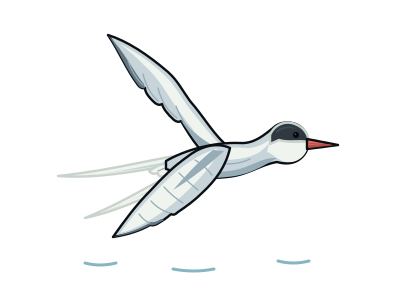
- Arctic ternFlies from the Arctic to the Antarctic and back each year, the longest migration known.
- AuksNorthern seabirds that 'fly' underwater with their short wings, like penguins of the north.
- KilldeerA plover that lures danger away from its nest by pretending to have a broken wing.
- Eurasian oystercatcherUses its long orange beak to pry open mussels and hammer through shells.
- Bar-tailed godwitFlies from Alaska to New Zealand without stopping: over 13,000 km in about 11 days.
- Eurasian woodcockA forest wader with eyes set so far back it can see behind itself without turning.
- African jacanaWalks across lily pads on enormous toes; fathers care for the chicks, even carrying them under their wings.