A group of living things
Mint family
Lamiaceae
Square stems and scented leaves make one big herb family
This branch is shown at about 55 million years ago; its age is a rough estimate.
You and mint family meet in the Eukaryotes branch, shown at about 1.8 billion years ago (on 28 July, in a calendar from life's shared ancestor to today).
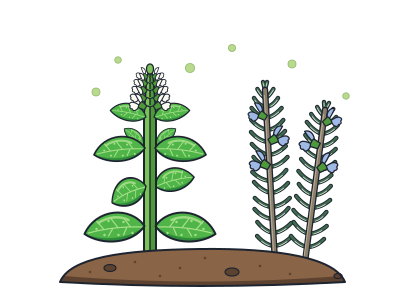
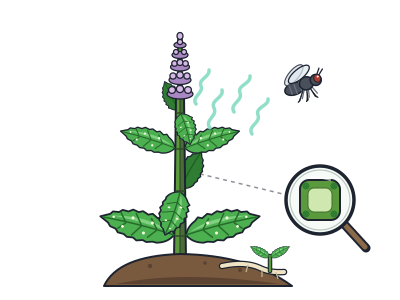
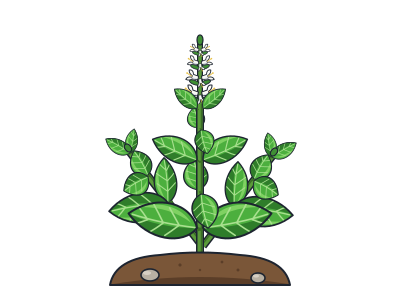
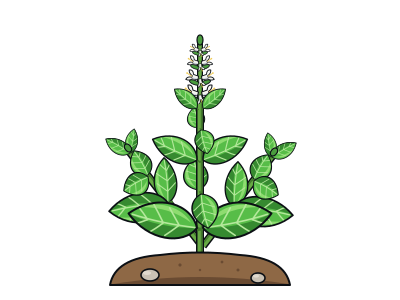
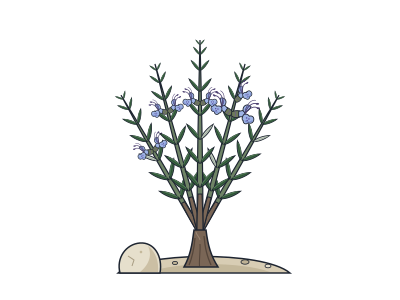
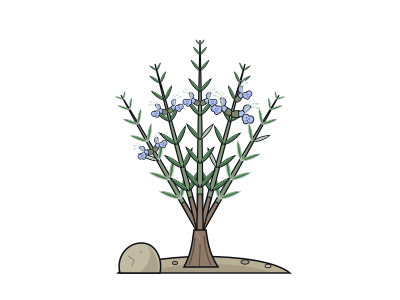
Pinch the stem of a basil plant and roll it between your fingers. It usually feels square, with four flat sides. That clue links basil to a surprising group of relatives. Mint, rosemary, lavender, sage, thyme and oregano all belong to the same family. Rub a leaf and you often find the second clue: a strong, fragrant smell.
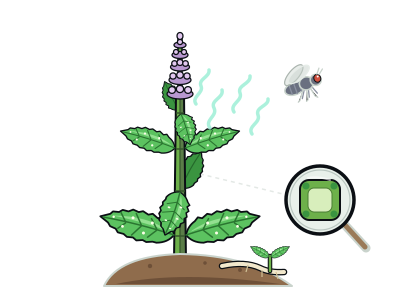
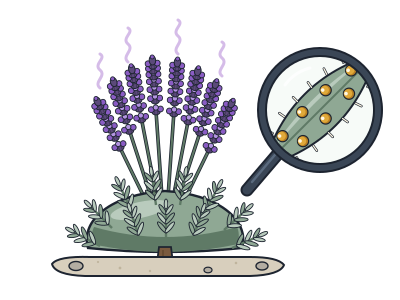
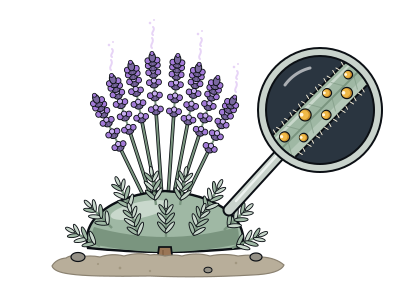
That smell comes from oils made in tiny hairs on the leaves and stems. On many leaves these show up as little dots. Many of the scented chemicals help protect the plant from hungry animals and disease. Basil's clove-like scent is mostly made and stored in these hairs.
Look closely at the leaves too. They usually grow in pairs, and each pair is turned at right angles to the pair above it. Most of the small flowers have two lips: an upper lip and a lower lip that gives bees a place to land.
This is a big family, with about 7,000 kinds of plants. They grow on every continent except Antarctica. It is the largest family in a wider group of plants that also includes olives, lilacs and foxgloves.
Trees in the family
It is not all small herbs. After DNA studies, scientists moved teak trees, beautyberry and chaste trees into the mint family from the verbena family.
Chia comes from here
The chia seeds sprinkled on breakfasts come from a member of the mint family.
Four tiny nutlets
The fruit usually splits into four small, hard, seed-like pieces called nutlets.
Inside mint family
Next to it on the tree
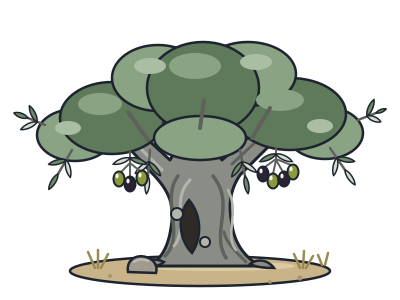
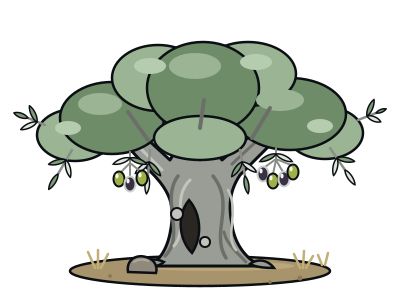
- OliveSome olive trees in the Mediterranean are thought to be over 2,000 years old.
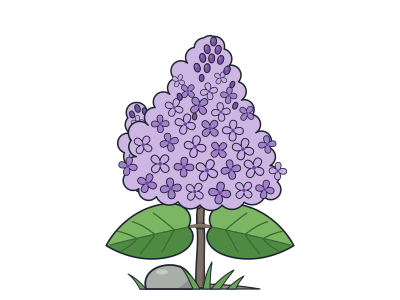
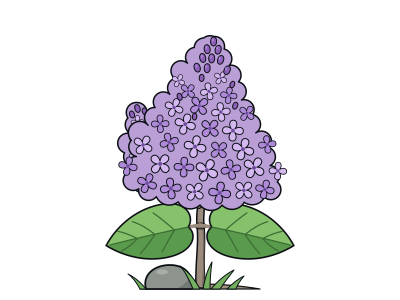
- LilacFragrant spring flowers from a shrub in the olive family.
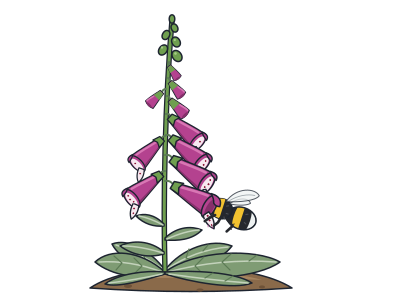
- FoxgloveTall spires of bell flowers that bumblebees crawl into; a source of a heart medicine.
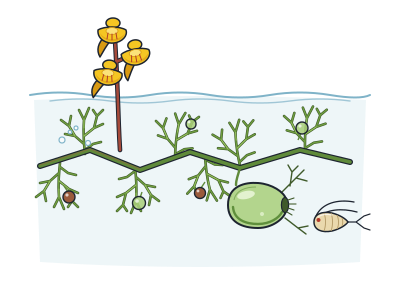
- Greater bladderwortUnderwater bladders that snap shut on tiny animals in under a millisecond.