A species
Spearmint
Mentha spicata
A square-stemmed herb whose minty oils help keep hungry insects away.
You and the spearmint meet in the Eukaryotes branch, shown at about 1.8 billion years ago (on 28 July, in a calendar from life's shared ancestor to today).
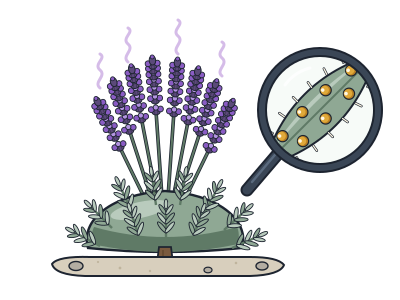
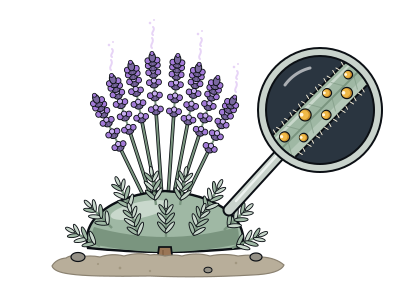
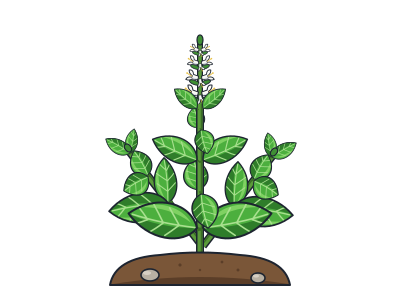
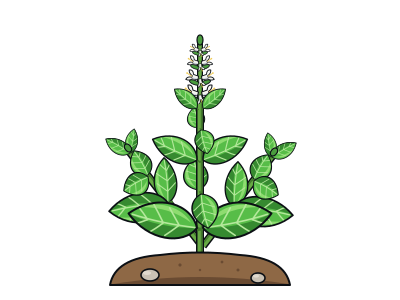
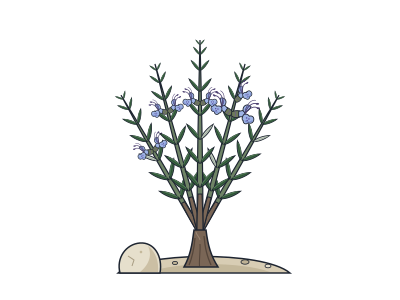
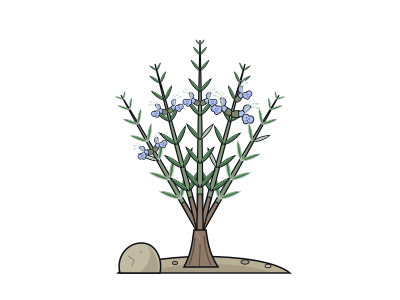
Roll a spearmint stem between your fingers and you'll feel that it isn't round but square. Square stems, with leaves in opposite pairs, are so typical of the mint family that you can often recognise a member without seeing its flowers. That family is huge, with about 3,200 species, including sage, thyme, rosemary, basil and the lavender shown beside it. The olive tree is a more distant relative in the same wider group.
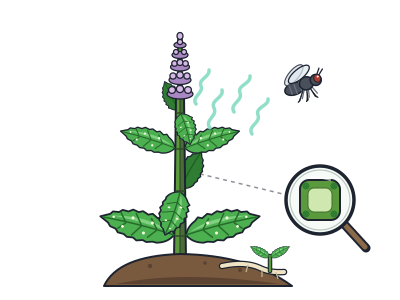
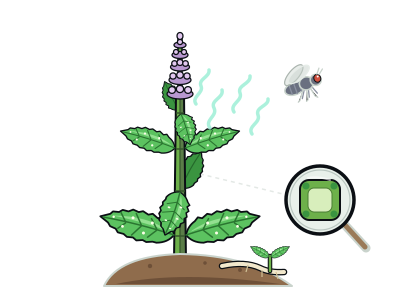
That fresh minty smell is more than a nice flavour. Spearmint's leaves are dotted with tiny glandular hairs that make and store a little oil. The main scent chemical is called carvone. Scientists think these oils help defend the plant by putting plant-eating insects off their meal. The oil has even shown promise for killing mosquito larvae.
Not every insect is put off, though. Blue and green mint beetles, each about the size of a grain of rice, happily munch mint leaves. Usually they don't eat enough to badly harm a healthy plant.
Spearmint is a long-lived herb that grows up to about waist height. It comes from a wide stretch of land, from about Ireland to southern China, and now grows in mild climates all over the world.
Not the same as peppermint
Peppermint is a different plant. Its oil is rich in menthol, which gives it a stronger, cooler taste than spearmint.
A mix of two mints
Spearmint is probably a cross between horse mint and apple mint. Each parent has 24 chromosomes, but spearmint has 48 because its number doubled after the cross.
Very old favourite
People have been writing about spearmint since at least the 1st century AD. Today it flavours food, toothpaste and drinks such as mojitos.