A species
Rosemary
Salvia rosmarinus
A Mediterranean herb that turned out to be a sage.
You and the rosemary meet in the Eukaryotes branch, shown at about 1.8 billion years ago (on 28 July, in a calendar from life's shared ancestor to today).
Rosemary and sage often grow side by side in herb gardens. They turn out to be closer relatives than they look. For more than 250 years, botanists gave rosemary a genus of its own. Then DNA studies showed that it sits inside the sage group. In 2017 botanists proposed moving it into the sage genus, joining cooking sage and chia, the plant that chia seeds come from. Major references now use its new name. The plant itself did not change. Only our understanding of its relatives did.
Why was it kept apart for so long? Many sage flowers have a tiny lever. When a bee pushes in, the lever tips the flower's two stamens down onto its back. Rosemary does not have the long lever arm of typical sages, which is partly why it seemed different.
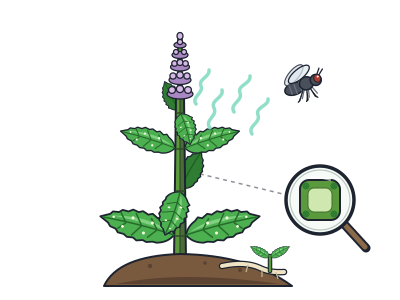
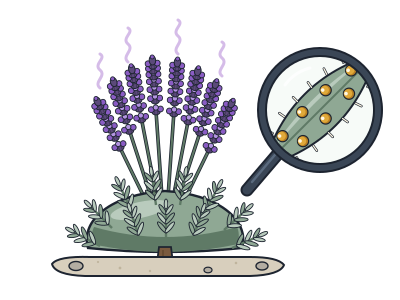
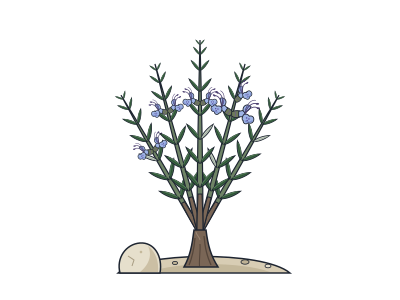
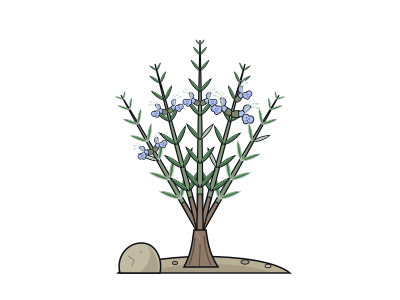
Rosemary is a woody, evergreen shrub, usually about a metre tall, though upright forms can grow as tall as an adult. Its leaves look like stiff pine needles, but they are true leaves: green on top, and white and woolly underneath. Small flowers, often pale blue, grow in twos and threes along the branches. In the wild it grows on dry, sunny scrubland around the Mediterranean and copes well with drought. Like mint and basil, it belongs to the mint family.
Dew of the sea
The name rosemary comes from the Latin 'ros marinus', meaning 'dew of the sea'. It does not mean 'rose of Mary'. The plant often grows well near the coast.
An old name brought back
The name Salvia rosmarinus was not invented in 2017. A botanist first suggested it in 1835, and the 2017 change brought it back into use.
A huge family of sages
The sage genus now has nearly 1,000 species. About half of them grow in Central and South America, far from rosemary's Mediterranean home.