A species
English lavender
Lavandula angustifolia
A garden favourite whose sweet smell is really a defence.
You and the english lavender meet in the Eukaryotes branch, shown at about 1.8 billion years ago (on 28 July, in a calendar from life's shared ancestor to today).
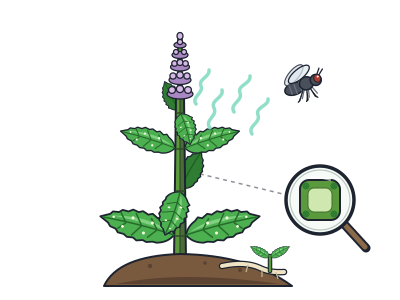
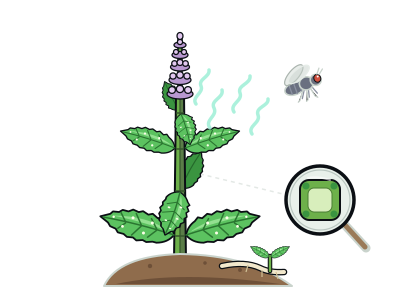
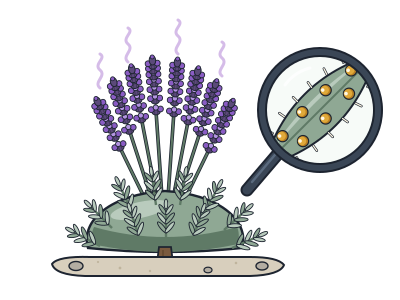
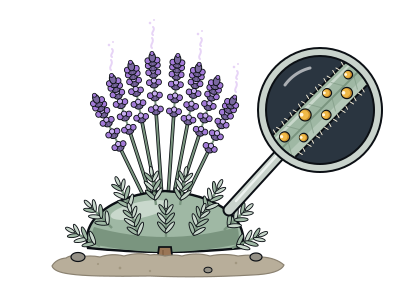
Rub a lavender leaf and the smell on your fingers comes from tiny oil glands. These glands are special hairs on the plant's skin. Many of them hold a small pocket of scented oil. When an insect chews or crawls over the plant, the glands can break and let the oil out. In lab tests, scientists used lavender's scent genes to make two of its scent chemicals in other leaves. About seven in ten aphids stayed away from these leaves, and ladybirds, which eat aphids, were drawn to them. So the smell may push pests away and call in their enemies too.
The flowers hold most of the oil, but the leaves have glands as well. That is why the leaves smell when they are bruised.
Lavender belongs to the mint family, a group of about 7,000 kinds of plants. Many of them are scented herbs, such as spearmint, basil, rosemary, sage and thyme. Mint and basil make their oils in the same kind of gland. Like most of its family, lavender has square stems and leaves in opposite pairs. More surprisingly, the olive tree sits in the same wider branch of flowering plants.
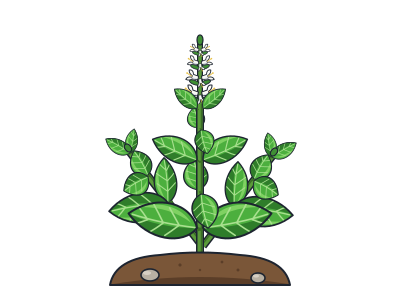
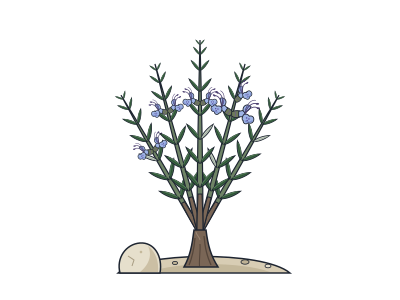
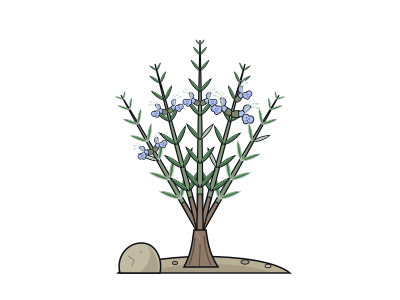
In the wild, English lavender grows on dry, rocky, chalky hillsides and mountains in Spain, France and Italy. It forms a bushy mound of slim grey-green leaves. Purple flower spikes rise above them on bare stalks.
A name about leaves
Its species name, angustifolia, is Latin for 'narrow leaf'.
Once a medicine plant
It used to be called Lavandula officinalis, a name that points to its use in medicine. It is also known as true lavender or garden lavender.
Lavender crosses
When English lavender crosses with spike lavender, the hybrid plants are called lavandins.