A species
Basil
Ocimum basilicum
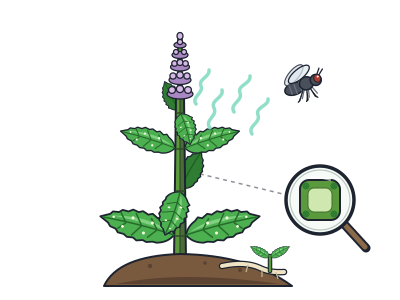
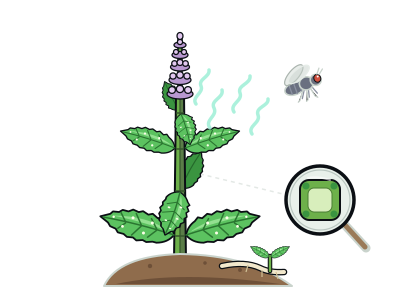
The pesto herb is a member of the mint family.
You and the basil meet in the Eukaryotes branch, shown at about 1.8 billion years ago (on 28 July, in a calendar from life's shared ancestor to today).
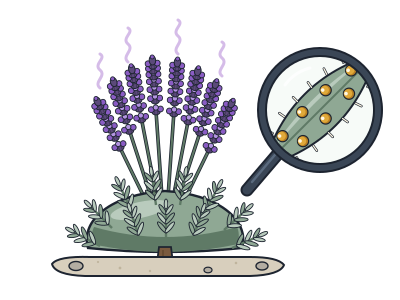
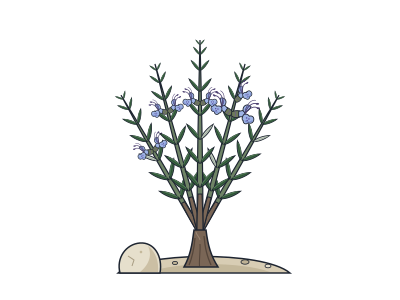
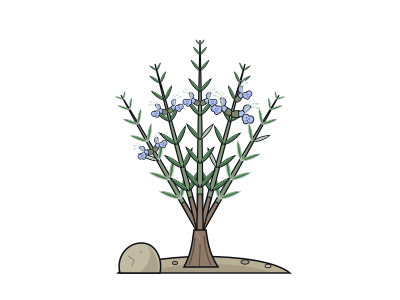
Basil is the herb that gives pesto its bright green colour and strong smell. Gardeners often plant it beside their tomatoes. But its closest relatives are not tomatoes. Basil belongs to the mint family, along with spearmint, English lavender and rosemary. Sage, thyme, oregano and even teak, a tree grown for its timber, are part of the same big family.
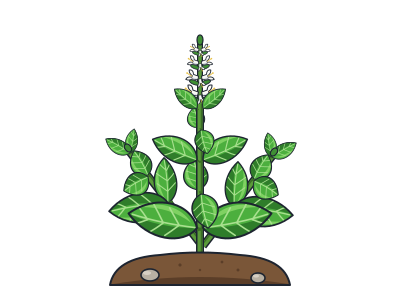
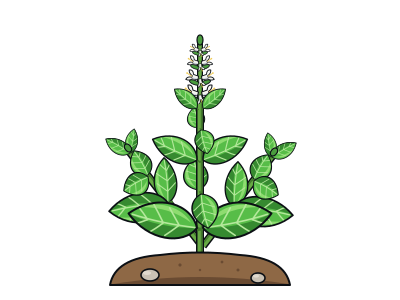
You can feel the family link with your fingers. Roll a basil stem between your finger and thumb, and it feels square, not round, just like a mint stem. Its leaves grow in pairs, and each pair is turned at right angles to the pair below. Its small flowers have two lips, like the flowers of most of its relatives.
Basil is famous in Italian cooking, but it is a warm-climate plant from the tropics. Pesto comes from the city of Genoa in northern Italy. Even so, basil only shows up in pesto recipes from about the 1850s.
Does basil help tomatoes? In one study, people tasted tomatoes in blind tests over three years and showed no steady preference for tomatoes grown with basil. The same study found that growing the two together produced about a fifth more from the same space, on average. But the gain depended on how closely they were planted, how much of each was grown and when they went in.
Made by pounding
The name 'pesto' comes from a Genoese word meaning 'to pound' or 'to crush'. The sauce is traditionally made by hand, using a wooden pestle in a marble mortar.
A sacred relative
Holy basil, also called tulsi, is a separate species in the same genus as basil. It is sacred in Hinduism.
Odd one out
In most mint-family flowers, the parts that make and receive pollen are tucked under the upper lip. Basil's lie over the lower lip instead.