A species
Olive
Olea europaea
A tree that can live for centuries, and a relative of the herbs in your garden
You and the olive meet in the Eukaryotes branch, shown at about 1.8 billion years ago (on 28 July, in a calendar from life's shared ancestor to today).
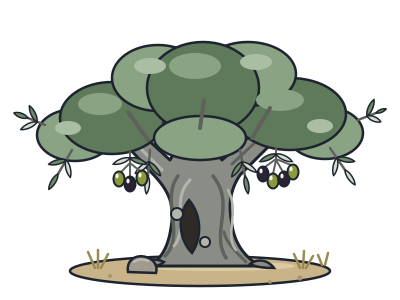
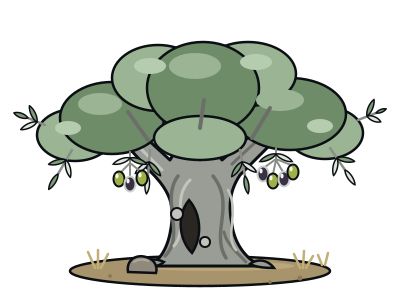
Some olive trees around the Mediterranean are thought to be more than 2,000 years old. One on the Greek island of Crete, the Vouves olive, is estimated by local researchers to be about 4,000 years old. It still grows olives on its hollow, twisted trunk. Proving these ages is hard, though. The oldest wood inside usually rots away, and the growth rings are difficult to read.
The olive is a slow-growing evergreen tree, usually about 10 metres tall, roughly the height of a three-storey building. Its narrow, leathery leaves are grey-green on top and silvery-white underneath, so the tree seems to shimmer silver when the wind blows. It does best in places with hot, dry summers and mild winters, and it copes well with drought.
Here is a surprise: the olive tree is a relative of lavender and spearmint. They all belong to one large group of flowering plants that also includes basil, rosemary and snapdragons. The olive's own, closer family includes ash trees, lilac and jasmine.
People began growing olives about 6,000 years ago, in the eastern Mediterranean. Green and black olives are not different kinds of tree. They are usually the same fruit picked at different times: green ones before they are ripe, and black ones once they have ripened.
Back from the roots
If a hard frost kills the top of an olive tree, the base of the tree and its roots can survive and send up new shoots that grow into a fresh trunk. This helps explain how some olive trees last so long.
Too bitter to eat raw
An olive picked straight off the tree tastes very bitter. It has to be cured first, for example by soaking it, putting it in salty water or fermenting it.
Thick doesn't mean old
Going by the thickness of its trunk, people thought an olive tree in Israel was centuries old. Dating showed its oldest wood was only about 150 to 170 years old.
Next to it on the tree
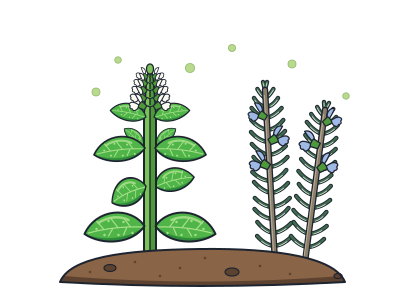
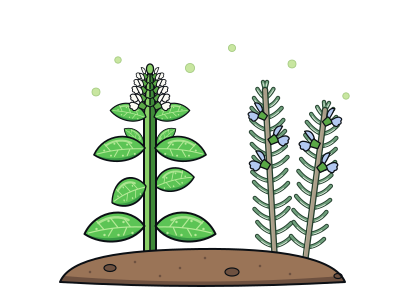
- Mint familySquare stems and fragrant oils link mint, basil, rosemary and lavender.
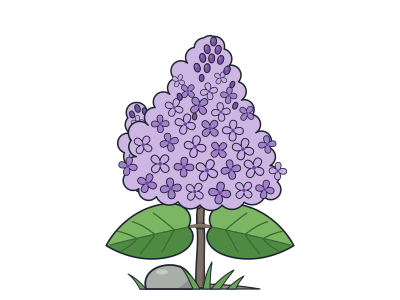
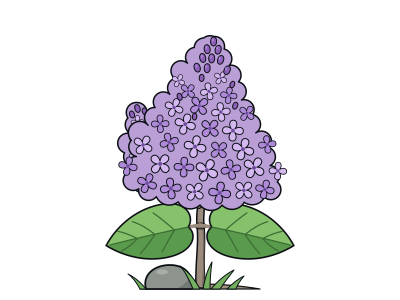
- LilacFragrant spring flowers from a shrub in the olive family.
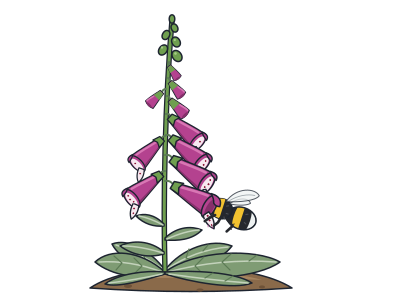
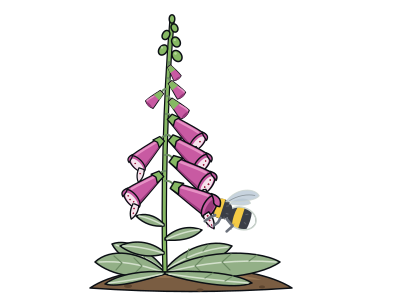
- FoxgloveTall spires of bell flowers that bumblebees crawl into; a source of a heart medicine.
- Greater bladderwortUnderwater bladders that snap shut on tiny animals in under a millisecond.