A species
Foxglove
Digitalis purpurea
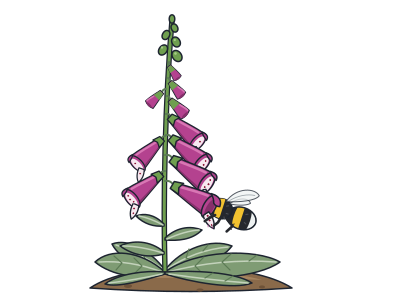
Tall spires of bells that bumblebees climb into, and a source of a heart medicine
You and the foxglove meet in the Eukaryotes branch, shown at about 1.8 billion years ago (on 28 July, in a calendar from life's shared ancestor to today).
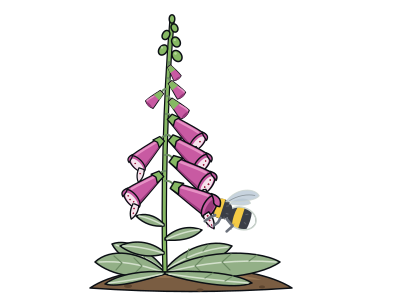
Picture a spire of drooping purple bells that can be taller than a 12-year-old. Bumblebees climb right inside the bells to reach the nectar hidden there. Some plants, especially in gardens, have pink, yellow or white flowers instead. The flowers open in order, starting at the bottom of the spike and working up to the top.
Foxglove looks nothing like an olive tree or a mint plant. Even so, it sits on the same big branch of the tree of life as olive trees, lilac bushes and mint. Its closer family includes snapdragons, speedwells and the low-growing plantain weeds, which have nothing to do with the banana-like plantain fruit.
A foxglove usually lives for two years. In its first year it makes only a flat rosette of soft leaves. In its second year it sends up its flower spike, scatters its seeds and then dies.
Every part of the plant is poisonous because it contains chemicals that act on the heart. Yet in 1785 an English doctor, William Withering, published his notes on using foxglove to treat over 150 patients with dropsy, a fluid build-up often caused by a failing heart. Medicines from foxgloves slow the heartbeat while making each beat stronger. Withering also noted how easily the dose became poisonous. That is why the plant must never be used as a home remedy, and foxglove-type medicines are only taken under a doctor's care.
A moth that lives in the bells
Caterpillars of the foxglove pug moth crawl into newly opening foxglove flowers, one caterpillar to a flower. They feed on the pollen-making parts and the seeds growing inside.
Woolly leaves
The leaves are about 10 to 35 cm long, and the biggest are longer than a school ruler. They are covered in soft, woolly hairs.
A world traveller
Foxglove comes from western Europe and north-west Africa. It now grows wild on other continents too, including in more than twenty US states.
Next to it on the tree
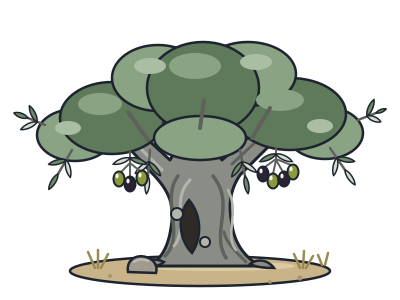
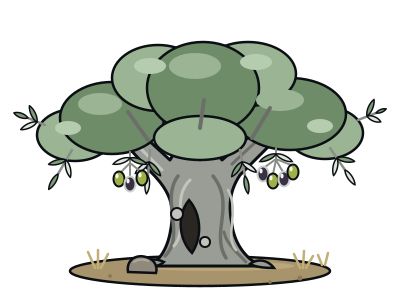
- OliveSome olive trees in the Mediterranean are thought to be over 2,000 years old.
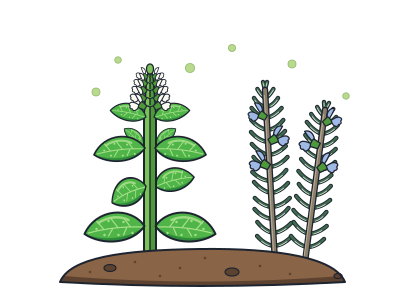
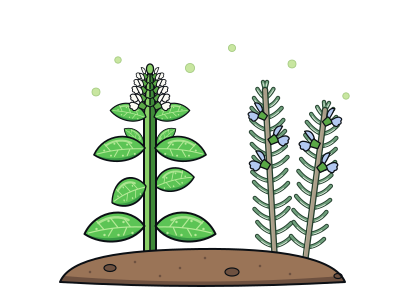
- Mint familySquare stems and fragrant oils link mint, basil, rosemary and lavender.
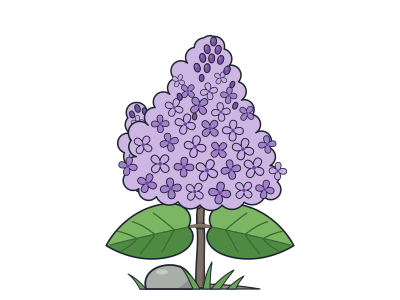
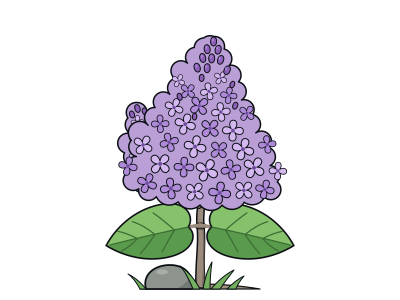
- LilacFragrant spring flowers from a shrub in the olive family.
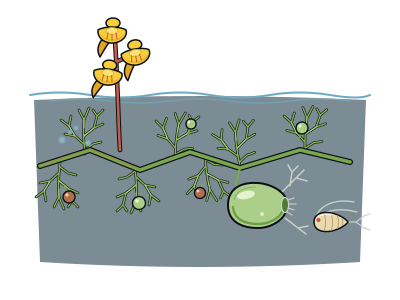
- Greater bladderwortUnderwater bladders that snap shut on tiny animals in under a millisecond.