A group of living things
Spore-formers and yogurt bacteria
Bacillota
Tough bacteria that make yogurt, live on you, and can sleep inside armoured spores.
This branch is shown at about 2 billion years ago; its age is a rough estimate.
You and spore-formers and yogurt bacteria meet in the All life branch, shown at about 4.2 billion years ago (on 1 January, in a calendar from life's shared ancestor to today).
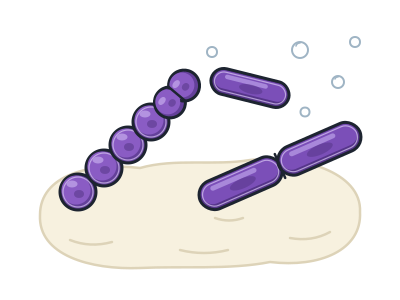
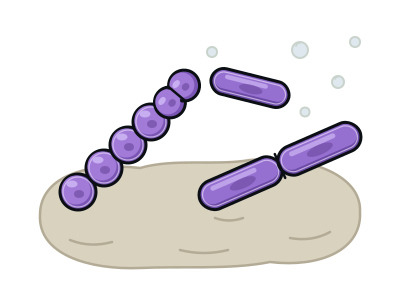
The bacteria that turn milk into yogurt belong to the same big group as germs that live on people's skin and in their noses. Some of their relatives are so tough that they can sleep for years inside armoured spores. Most of their cells come in one of two basic shapes: tiny rods like sausages, or tiny balls.
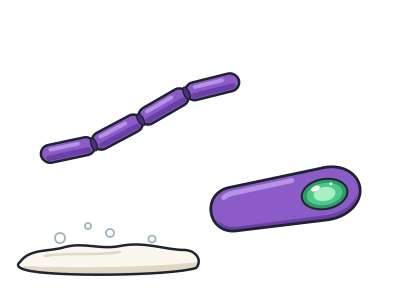
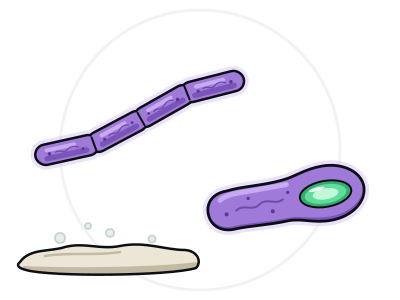
Yogurt is made by two members of this group working as a team. A long, slim rod and a round cell that forms chains like a string of beads turn the sugar in milk into acid. The acid makes the milk thicken, and each bacterium helps the other grow.
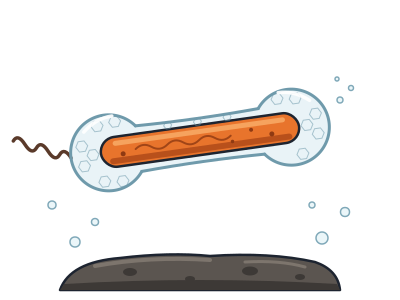
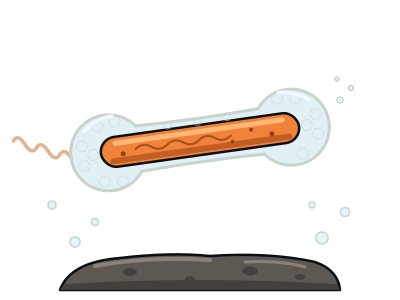
When food runs out, some members, such as the hay bacillus, build a spore inside the cell. One cell makes one spore, so a spore is a way to survive, not a way to have babies. It is built in layers like an onion, with a very dry centre that holds its genes. Spores can survive drying out and freezing, and some can even last for hours in boiling water.
Not every member makes spores. The yogurt bacterium does not, for example. But together, these bacteria live almost everywhere: in soil, in your gut, and even in hot, water-filled cracks nearly 3 kilometres underground in a South African gold mine.
No wall at all
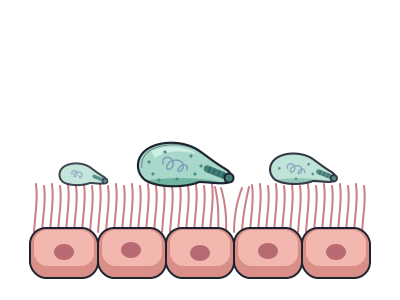
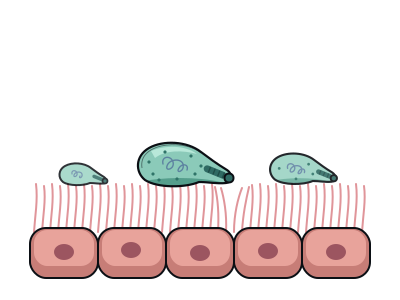
One member, the bacterium behind 'walking pneumonia', has no cell wall. That is why penicillin, which attacks cell walls, does not work on it.
Powered by rock
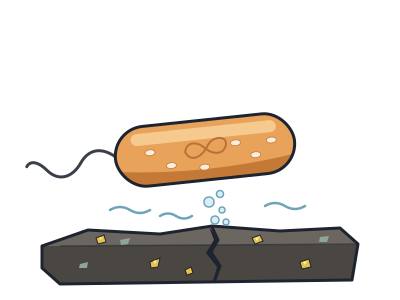
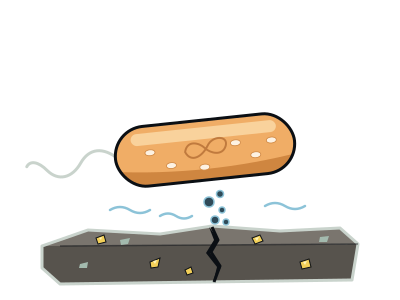
The bacterium in the deep gold mine lives almost entirely alone in total darkness. It gets its energy indirectly from radioactive uranium breaking down in the rock around it.
Nose passengers
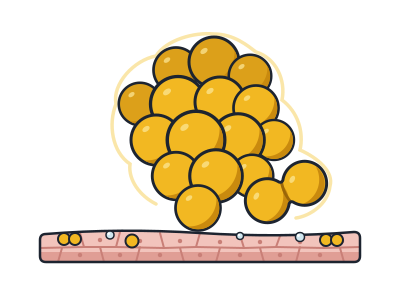
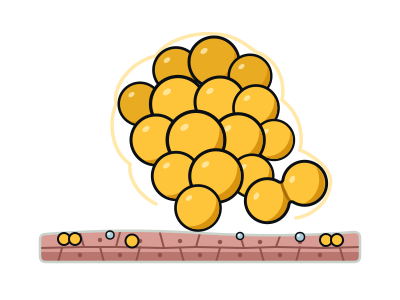
About 3 in 10 people carry golden staph in their nose. Most of the time it does no harm.
Inside spore-formers and yogurt bacteria
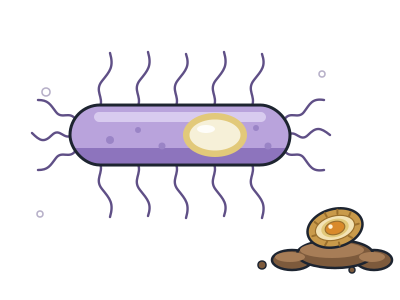
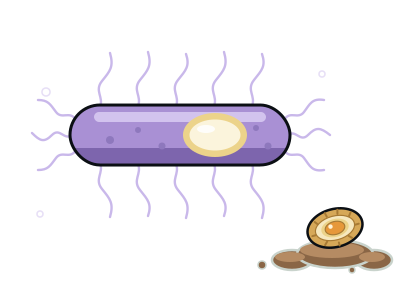
- Hay bacillusA harmless soil bacterium that seals itself into a spore able to survive boiling, drying and even space.
- Golden staphLives harmlessly in many noses, but can cause infections, and some strains shrug off antibiotics.
- Botulinum bacteriumMakes the most potent natural toxin known, which doctors now use in tiny doses as Botox.
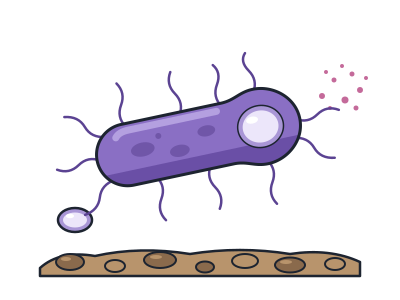
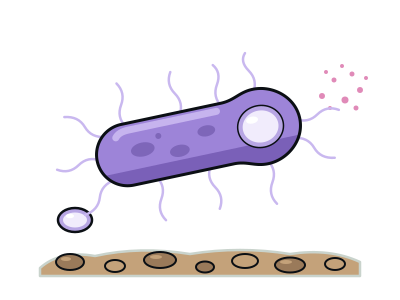
- ListeriaA food-safety microbe that can grow in the fridge and rockets around inside cells on tails of protein.
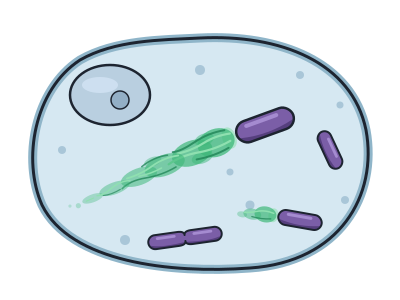
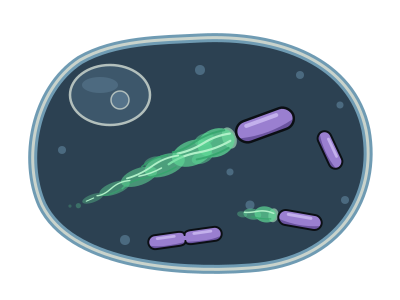
- Wall-less bacteriumOne of the smallest free-living cells, with no cell wall and a tiny genome; it causes walking pneumonia.
- Lone deep-earth bacteriumLives alone 2.8 km down a South African gold mine, a whole ecosystem made of one species.
- Lactic acid bacteriaThe sour-makers behind yogurt, cheese, sauerkraut and sourdough, turning sugar into tangy acid.
Next to it on the tree
- CyanobacteriaPond scum that filled the air with oxygen and later moved into plant cells as chloroplasts.
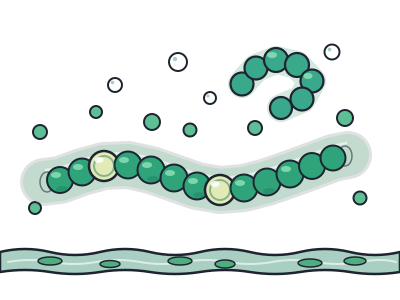
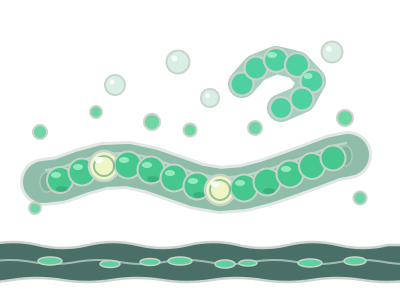
- Soil antibiotic-makersBranching soil bacteria that give rain its earthy smell and gave us most of our antibiotics.
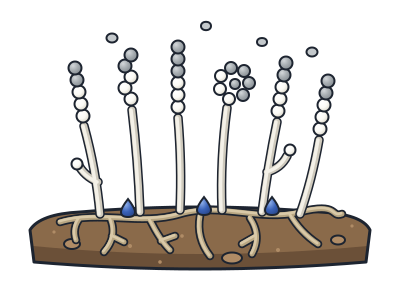
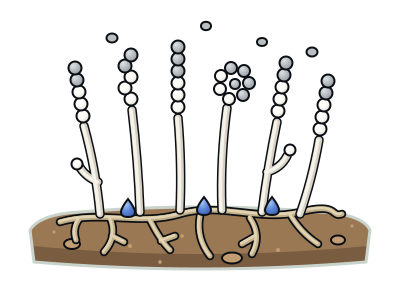
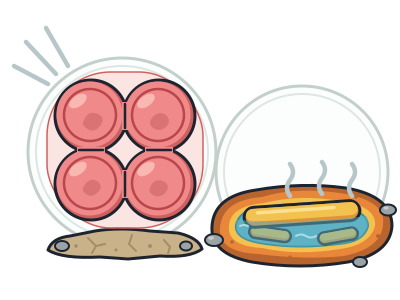
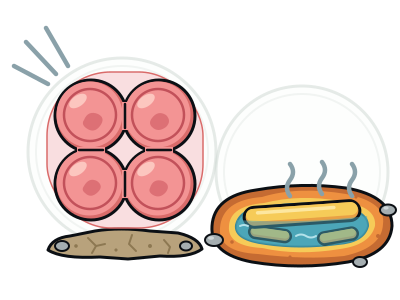
- Extreme survivorsA small branch of champions: one survives huge radiation doses, its cousin loves hot springs.
- Tiny-genome bacteriumPart of a hidden branch of ultra-small bacteria found only by reading DNA, perhaps a quarter of all bacterial kinds.
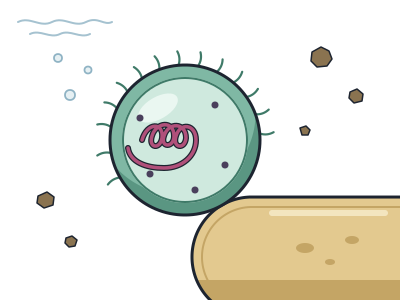
- Hot-spring filamentOrange-green threads that glide through hot-spring mats, using sunlight without ever making oxygen.
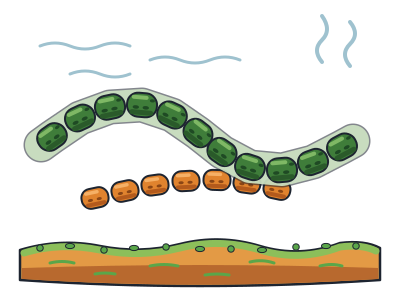
- Toga bacteriumWears a loose outer sheath like a toga and thrives at 80 °C; many of its genes came from archaea.