A species
Tiny-genome bacterium
Candidatus Saccharimonas aalborgensis
A tiny bacterium from a hidden branch of life that was found only by reading DNA
You and the tiny-genome bacterium meet in the All life branch, shown at about 4.2 billion years ago (on 1 January, in a calendar from life's shared ancestor to today).
This bacterium belongs to a huge hidden branch of life. Nobody knew about it until scientists began reading DNA collected straight from the environment. Most members of this branch have never been grown in a lab. Some estimates say it could hold a large share of all bacterial kinds, perhaps a quarter, but the figures vary a lot.
This species has never been grown either. Scientists pieced its DNA together from a jumble of genetic material collected in the Danish city of Aalborg, and the species is named after the city. That is why its name carries a label marking it as provisional.
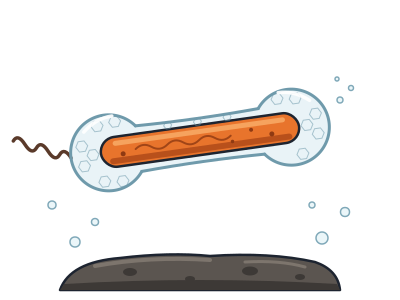
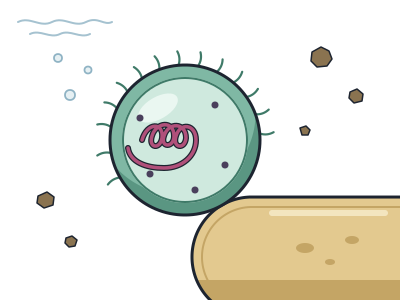
It is described as a tiny round cell. Its genes suggest it lives by fermenting sugars, and it may make lactic acid, the acid that makes yogurt sour. Relatives in its wider group turn up in human mouths, wastewater, rainforest soils and even cockroaches. Every member of that group grown so far is a parasite that lives on larger bacteria.
Here is the surprise: tiny and simple does not mean ancient. A large study in 2021 placed this whole branch beside the group that includes the hot-spring filament, inside a big bacterial group called Terrabacteria. The same study suggests the first bacteria were bigger cells that could live on their own, so these bacteria probably lost genes over time and became smaller.
Named after a peat bog
Its group was first called 'TM7', after a 1994 study of a German peat bog. 'TM' is short for German words that mean 'peat, middle layer'.
Hidden from DNA surveys
In this branch, the gene that standard DNA surveys look for often contains extra stretches that cut themselves out. Because of these inserts, older surveys often missed many of these bacteria.
Cannot build its own skin
Bacteria in this branch seem unable to make the fats needed for their cell coverings. Scientists think they get help from other microbes that act as partners or hosts.
Next to it on the tree
- CyanobacteriaPond scum that filled the air with oxygen and later moved into plant cells as chloroplasts.
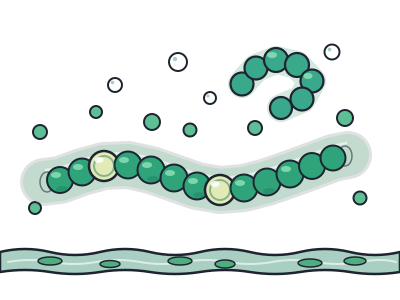
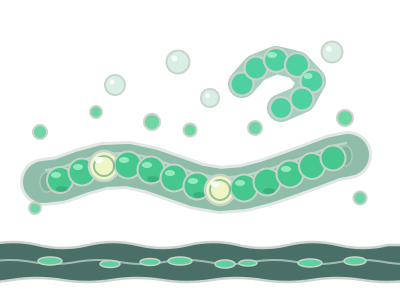
- Spore-formers and yogurt bacteriaTough bacteria that brew yogurt, live on your skin, and can sleep for years as armoured spores.
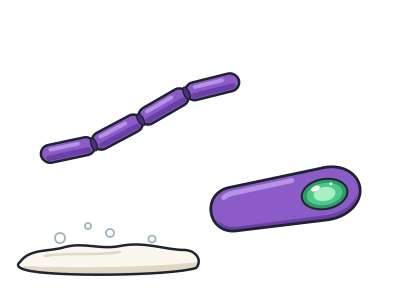
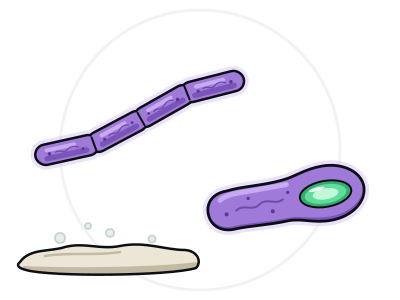
- Soil antibiotic-makersBranching soil bacteria that give rain its earthy smell and gave us most of our antibiotics.
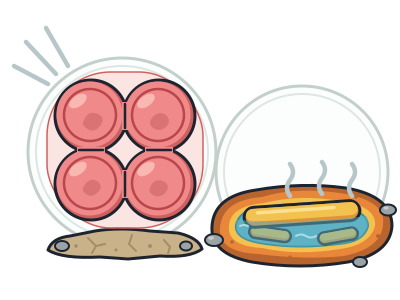
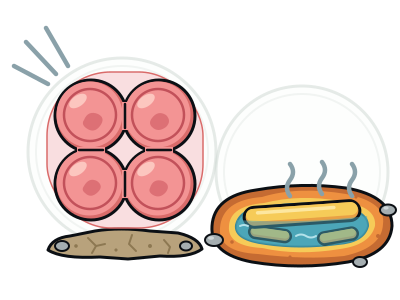
- Extreme survivorsA small branch of champions: one survives huge radiation doses, its cousin loves hot springs.
- Hot-spring filamentOrange-green threads that glide through hot-spring mats, using sunlight without ever making oxygen.
- Toga bacteriumWears a loose outer sheath like a toga and thrives at 80 °C; many of its genes came from archaea.