A group of living things
Extreme survivors
Deinococcota
Tiny champions: one shrugs off radiation, its cousin loves hot springs.
This branch is shown at about 1.8 billion years ago; its age is a rough estimate.
You and extreme survivors meet in the All life branch, shown at about 4.2 billion years ago (on 1 January, in a calendar from life's shared ancestor to today).
This small branch of bacteria holds two kinds of champion. One can survive radiation that would kill a person many times over. Its cousin lives happily in water hot enough to scald you.
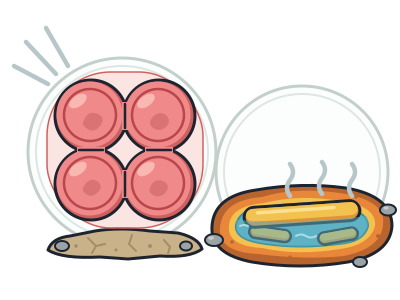
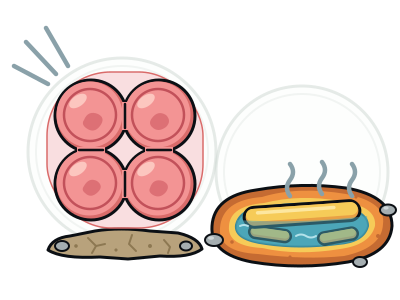
The radiation champion is nicknamed 'Conan the bacterium'. It can take about 5,000 grays of radiation, which is roughly 1,000 times a dose that would kill a human. The radiation still smashes its DNA into pieces. But the cell protects its repair tools and keeps several copies of its DNA, so it can put the pieces back together. Scientists think this toughness probably came from surviving drying out, because there is very little natural radiation on Earth to adapt to.
Its cousin, the hot-spring bacterium, was described in 1969 from a hot spring in Yellowstone National Park in the USA. Before that discovery, many scientists thought bacteria could not live above about 55 °C. It grows best at about 65 to 70 °C, about as hot as a cup of hot tea.
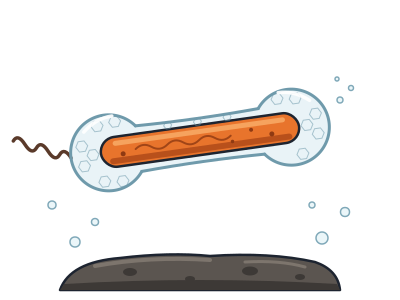
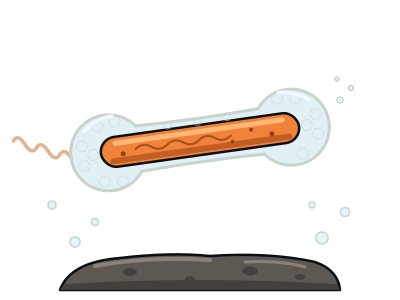
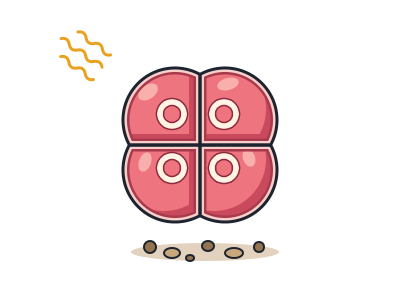
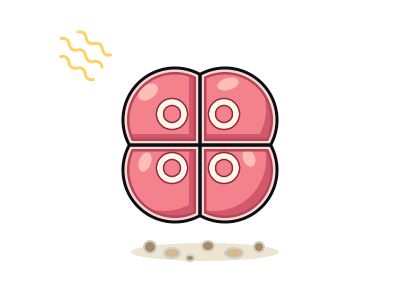
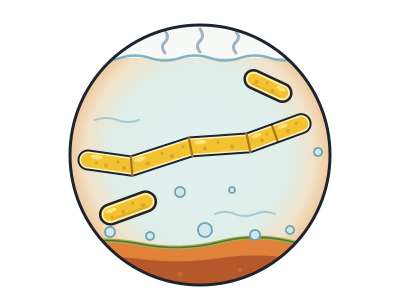
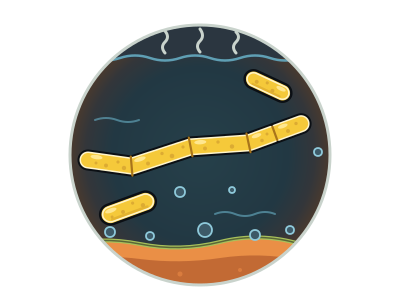
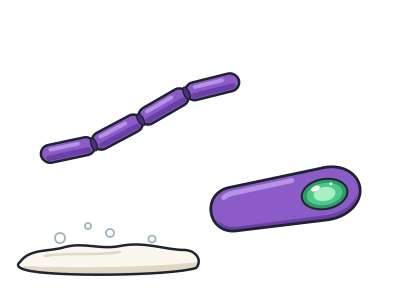
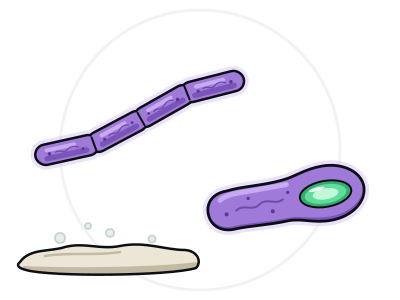
Both are single cells, far too small to see without a microscope. The radiation champion usually forms neat squares of four round, pink cells. The hot-spring bacterium is a thin rod that sometimes joins up into long threads.
Found in spoiled meat
The radiation champion was discovered in 1956, when a scientist tried to sterilise tinned meat with gamma rays. The meat still went bad, because this bacterium had survived.
Helps with medical tests
An enzyme from the hot-spring bacterium copies DNA without falling apart in heat. It made PCR cheap and practical, and PCR is now used in medical tests and crime labs.
Living in hot-water pipes
Since it was found in Yellowstone, the hot-spring bacterium has turned up in hot places around the world, including some hot-water systems in homes and factories.
Inside extreme survivors
Next to it on the tree
- CyanobacteriaPond scum that filled the air with oxygen and later moved into plant cells as chloroplasts.
- Spore-formers and yogurt bacteriaTough bacteria that brew yogurt, live on your skin, and can sleep for years as armoured spores.
- Soil antibiotic-makersBranching soil bacteria that give rain its earthy smell and gave us most of our antibiotics.
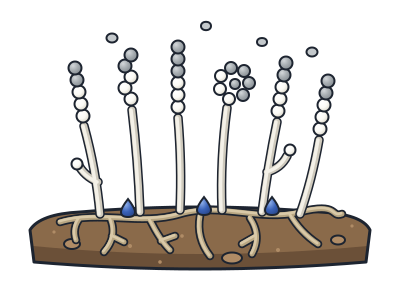
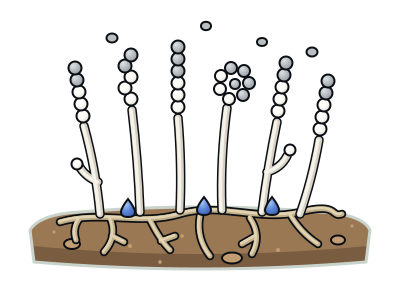
- Tiny-genome bacteriumPart of a hidden branch of ultra-small bacteria found only by reading DNA, perhaps a quarter of all bacterial kinds.
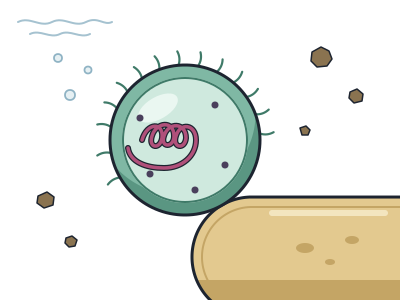
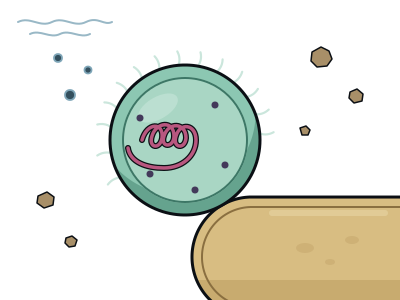
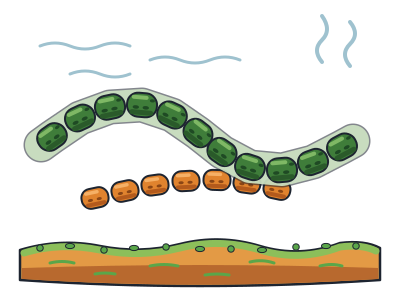
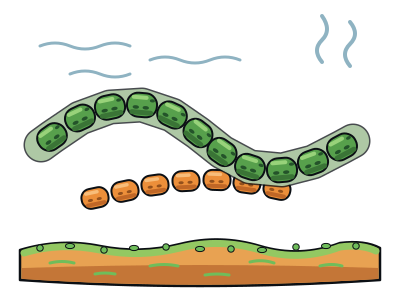
- Hot-spring filamentOrange-green threads that glide through hot-spring mats, using sunlight without ever making oxygen.
- Toga bacteriumWears a loose outer sheath like a toga and thrives at 80 °C; many of its genes came from archaea.