A species
Hot-spring filament
Chloroflexus aurantiacus
Orange-green threads that use sunlight without ever making oxygen.
You and the hot-spring filament meet in the All life branch, shown at about 4.2 billion years ago (on 1 January, in a calendar from life's shared ancestor to today).
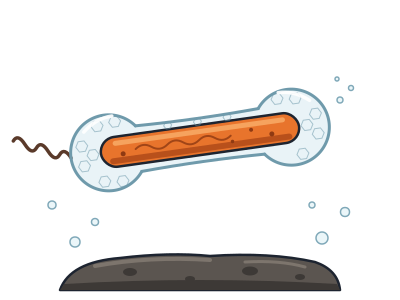
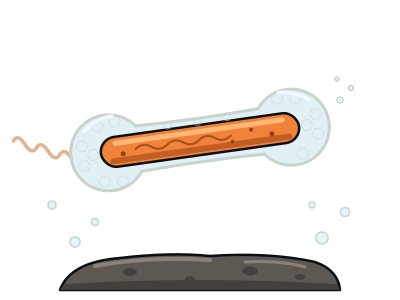
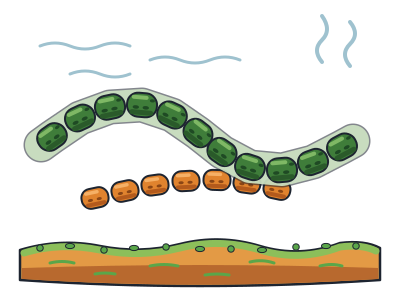
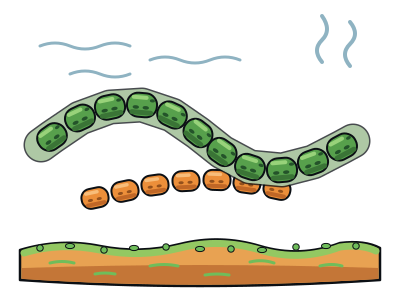
Picture threads far thinner than a hair, orange or green, gliding slowly through the soft, warm mats of a hot spring. This bacterium uses sunlight for energy, just as plants do, but it never makes oxygen. Plants and cyanobacteria split water to get electrons, the tiny charged particles that power this process. This bacterium takes them from things like hydrogen sulfide or hydrogen gas instead.
It can grow in water from about 35 °C, a bit cooler than your body, up to about 70 °C, hotter than a cup of tea you could comfortably sip. In the mats it usually sits just below a top layer of cyanobacteria, and it often feeds on food those neighbours make. On the tree, cyanobacteria are among its relatives in the same big branch of bacteria.
Its family story holds a surprise. It is sometimes called a 'green non-sulfur bacterium', yet it is only a distant relative of the green sulfur bacteria. Many of its relatives are thread-shaped bacteria that don't use light at all. Its light-catching kit is a mix: one part looks like the kit of purple bacteria, and another part looks like that of green sulfur bacteria.
Each thread is a chain of cells joined end to end. It glides without any whip-like tails. Its colour changes too: dark green when grown in light, and dark orange when grown in the dark with oxygen.
Two ways to live
It can live with or without oxygen. In light without oxygen, it grows using sunlight. In the dark with oxygen, it can switch to breathing oxygen and eating organic matter, a bit like an animal.
Its instruction book
Its DNA is about 5.3 million letters long and holds about 3,900 genes.
A different way to use carbon dioxide
When it takes in carbon dioxide, it uses an unusual chemical route, not the one plants and cyanobacteria use.
Next to it on the tree
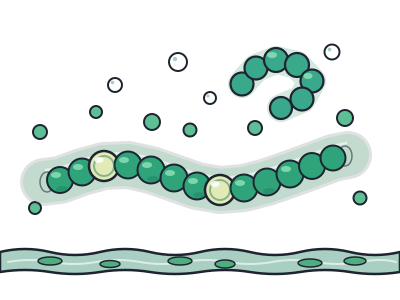
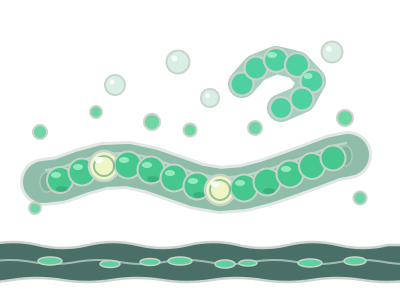
- CyanobacteriaPond scum that filled the air with oxygen and later moved into plant cells as chloroplasts.
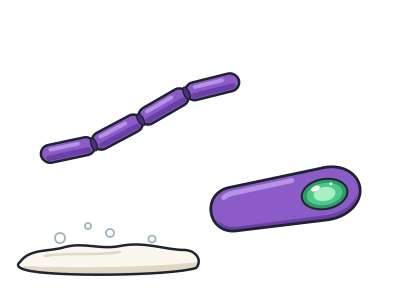
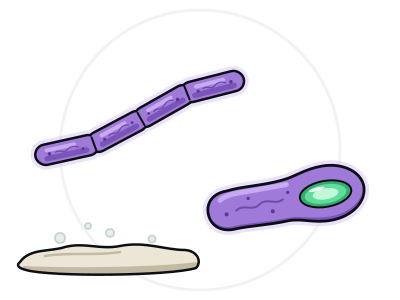
- Spore-formers and yogurt bacteriaTough bacteria that brew yogurt, live on your skin, and can sleep for years as armoured spores.
- Soil antibiotic-makersBranching soil bacteria that give rain its earthy smell and gave us most of our antibiotics.
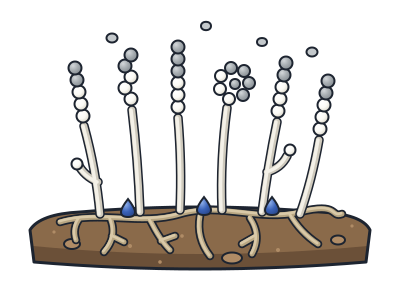
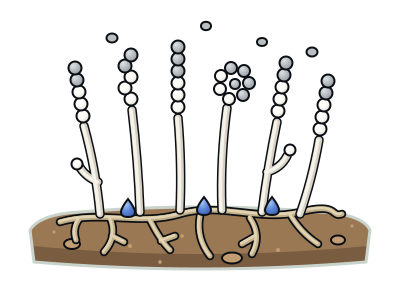
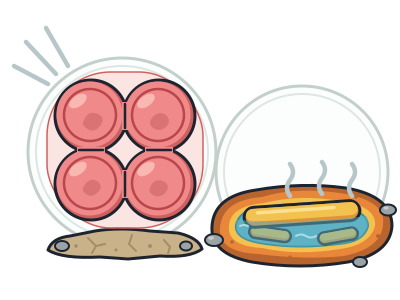
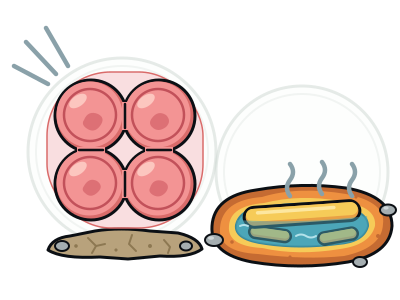
- Extreme survivorsA small branch of champions: one survives huge radiation doses, its cousin loves hot springs.
- Tiny-genome bacteriumPart of a hidden branch of ultra-small bacteria found only by reading DNA, perhaps a quarter of all bacterial kinds.
- Toga bacteriumWears a loose outer sheath like a toga and thrives at 80 °C; many of its genes came from archaea.