A group of living things
Terrabacteria
Terrabacteria
One great half of all bacteria, named for a possible ancestor on land
This branch is shown at about 3 billion years ago; its age is a rough estimate.
You and terrabacteria meet in the All life branch, shown at about 4.2 billion years ago (on 1 January, in a calendar from life's shared ancestor to today).
Many scientists now split bacteria into two great halves, and this group is one of them. Its name comes from the Latin word for land. The scientists who proposed the group in 2004 thought its shared ancestor may have lived on dry ground.
Why land? Many members share tricks that suit dry, sunny places. Many make pigments that act like sunscreen against ultraviolet light, and many can survive drying out. That doesn't mean they all live on land today. Some live in the sea, in hot springs or around deep-sea vents.
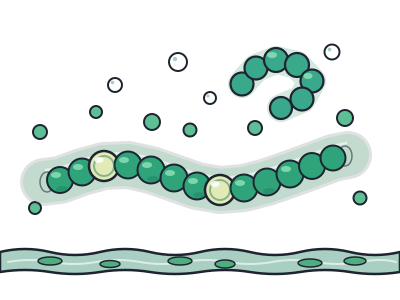
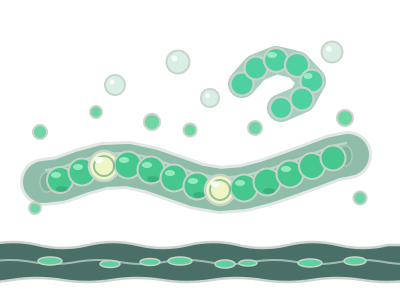
The family is full of surprises. It includes cyanobacteria, often called "blue-green algae", which are really bacteria and not algae at all. The green parts of plant cells that make food, called chloroplasts, came from cyanobacteria that moved inside the cells of plant ancestors. So a bit of this group lives on in every leaf.
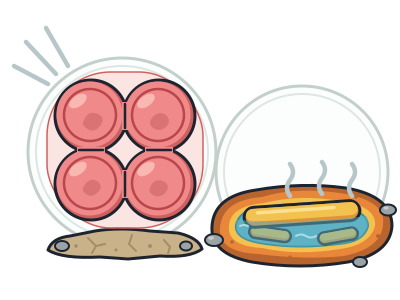
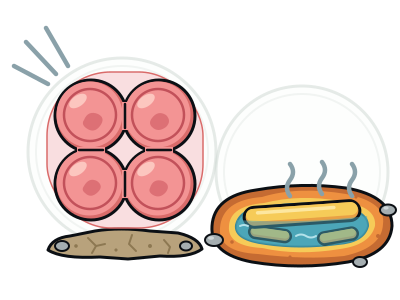
One member, a red microbe, can survive about a thousand times or more the dose of radiation that would kill a person. Other branches include spore-formers, soil bacteria and filaments from hot springs.
Found in a tin of meat
The radiation-proof red microbe was first discovered in 1956, in a tin of ground meat that had been sterilised with radiation. It had survived the treatment.
Tiny genomes, surprising home
Some bacteria have very small sets of genes, and some scientists thought they branched off near the base of all bacteria. A 2021 study put them inside this group instead, next to the hot-spring filaments.
Land and oxygen
The scientists behind the land idea suggested that the stresses of life on land may have helped a new kind of photosynthesis evolve: the kind that gives off oxygen.
Inside terrabacteria
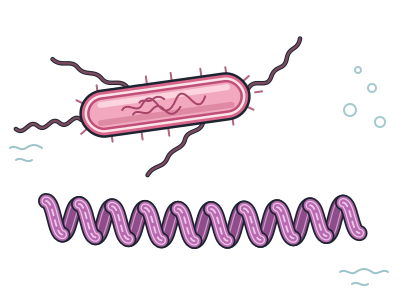
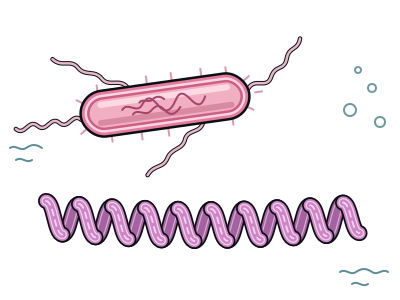
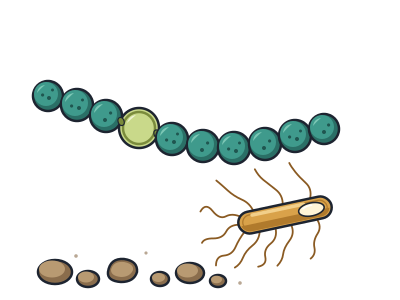
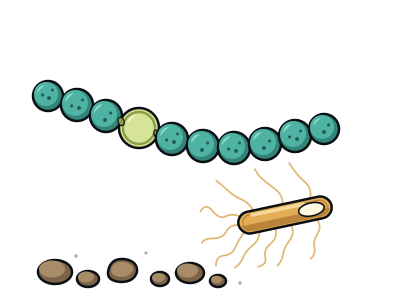
- CyanobacteriaPond scum that filled the air with oxygen and later moved into plant cells as chloroplasts.
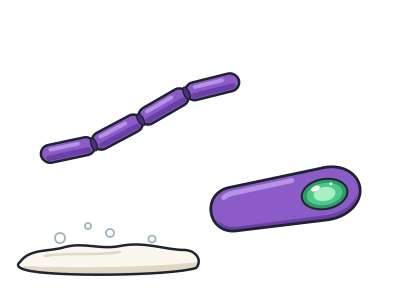
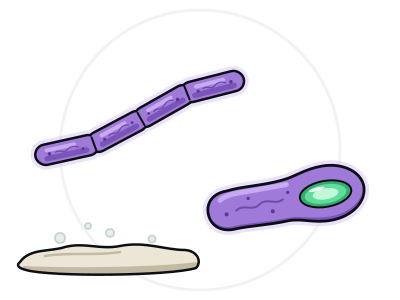
- Spore-formers and yogurt bacteriaTough bacteria that brew yogurt, live on your skin, and can sleep for years as armoured spores.
- Soil antibiotic-makersBranching soil bacteria that give rain its earthy smell and gave us most of our antibiotics.
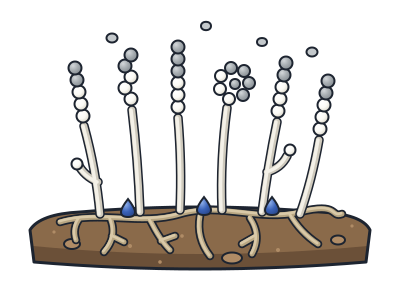
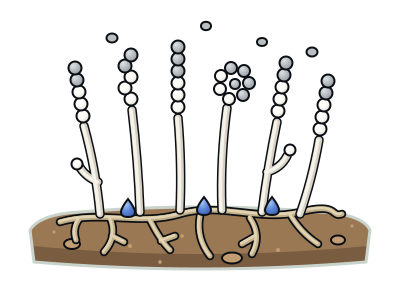
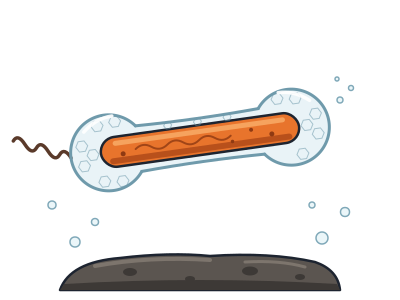
- Extreme survivorsA small branch of champions: one survives huge radiation doses, its cousin loves hot springs.
- Tiny-genome bacteriumPart of a hidden branch of ultra-small bacteria found only by reading DNA, perhaps a quarter of all bacterial kinds.
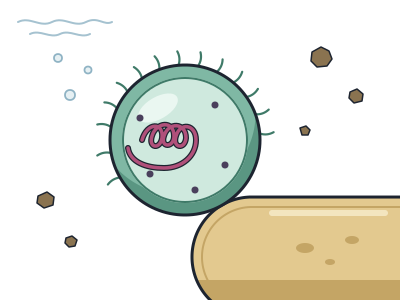
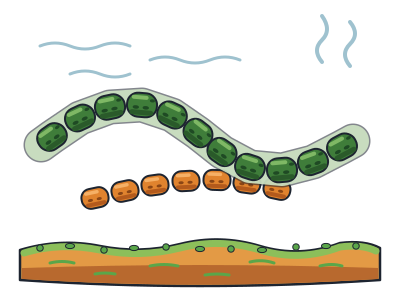
- Hot-spring filamentOrange-green threads that glide through hot-spring mats, using sunlight without ever making oxygen.
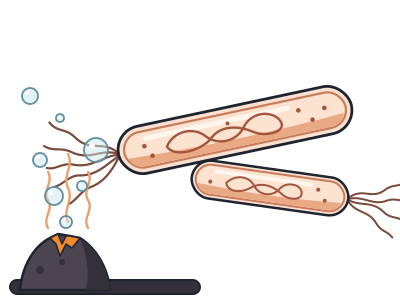
- Toga bacteriumWears a loose outer sheath like a toga and thrives at 80 °C; many of its genes came from archaea.