A group of living things
Gracilicutes
Gracilicutes
The other great half of bacteria: thin double skins, gut partners and living electric wires.
This branch is shown at about 3 billion years ago; its age is a rough estimate.
You and gracilicutes meet in the All life branch, shown at about 4.2 billion years ago (on 1 January, in a calendar from life's shared ancestor to today).
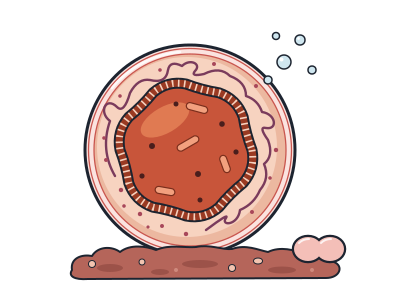
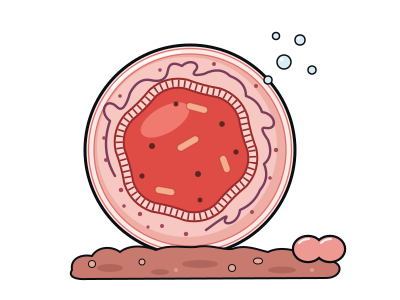
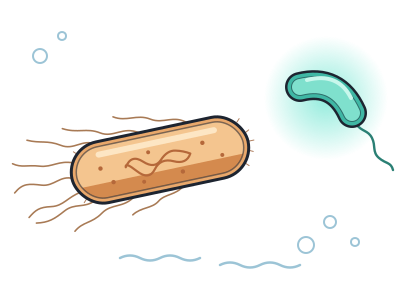
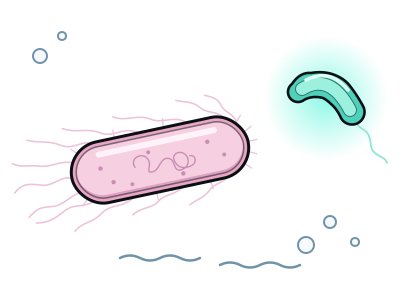
Bacteria fall into two great halves, and this is one of them. Most of its members are wrapped in two thin skins, an inner membrane and an outer one. Most members of the other half, the Terrabacteria, have just one. E. coli, a familiar bacterium from the gut, belongs here.
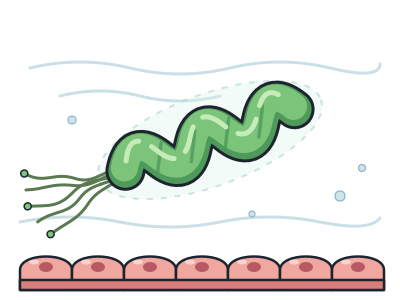
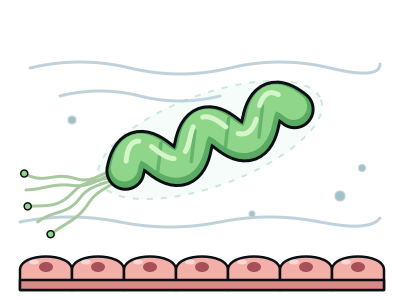
This half includes some of our closest partners. One of the most common bacteria in the human gut belongs to it. That bacterium breaks down dietary fibre our own bodies cannot digest, which feeds both us and other gut microbes. Another member is a spiral about 3 micrometres long that lives in the stomach. It survives the acid by making ammonia, which neutralises the acid around it. It can also cause stomach ulcers.
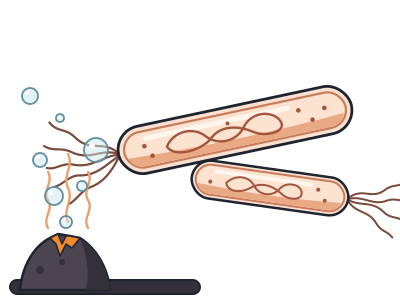
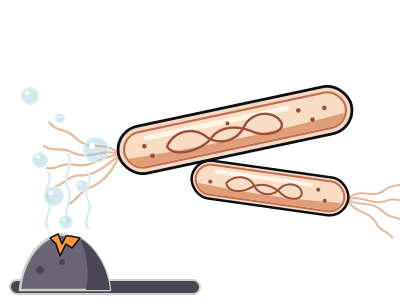
Some of its relatives are far stranger. Cable bacteria live in oxygen-poor seabed mud. They join thousands of cells end to end into living wires that can be centimetres long. Cells at the bottom take electrons from chemicals deep in the mud, and cells at the top hand them to oxygen near the surface.
In 2021, scientists modelled about 11,000 gene families to find the root of the bacterial tree. Their results suggest that the shared ancestor of all bacteria alive today may already have had two skins. If so, the single-skinned bacteria may have come from double-skinned ancestors, not the other way round.
A Nobel Prize gulp
In 1982, Australians Barry Marshall and Robin Warren grew the stomach ulcer bacterium in the lab and linked it to ulcers. In 1984 Marshall drank a culture of it to prove the point, and in 2005 the pair won the Nobel Prize in Physiology or Medicine.
Over 100 metres of wire in a sugar cube
One cubic centimetre of seabed mud, about the size of a sugar cube, can hold about 117 metres of cable bacteria. Fine ridges run along each cable, and inside each ridge is a very thin fibre that carries the current.
A gut bacterium that changes its toolkit
The fibre-digesting gut bacterium has about 4,800 genes. More than 1,200 of them switch on when it moves from simple sugars to complex carbohydrates.
Inside gracilicutes
- ProteobacteriaThe most varied bacterial branch: gut dwellers, glowing squid partners, root helpers and our mitochondria's kin.
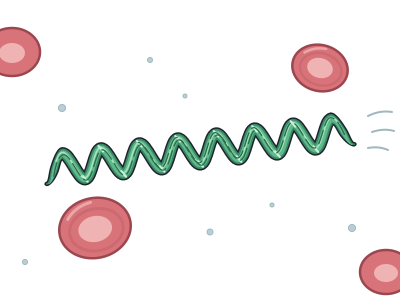
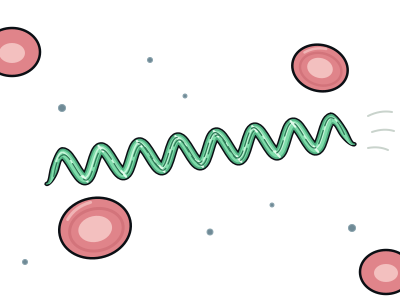
- Lyme disease spirochaeteA corkscrew-shaped bacterium that swims by twisting its whole body; ticks carry it between animals.
- Gut fibre-digesterA gut regular that breaks down plant fibre we cannot digest and shares the energy with us.
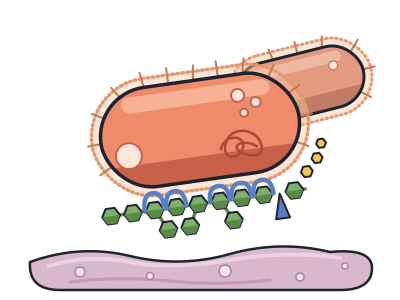
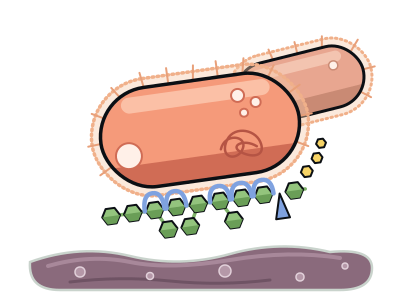
- Stomach ulcer bacteriumLives in the stomach's acid; a doctor drank it to prove it causes ulcers and later won a Nobel Prize.
- Wolf-pack bacteriumHunts other microbes in swarms and, when food runs out, gathers by the thousand into tiny fruiting towers.
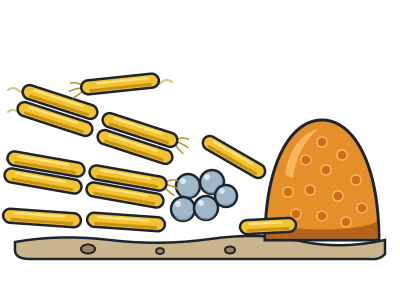
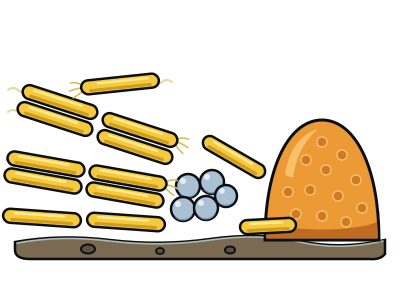
- Cable bacteriumThousands of cells link into centimetre-long living wires that carry electric current through sea mud.
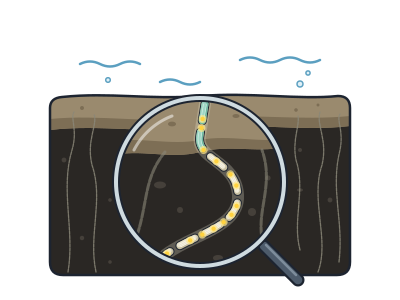
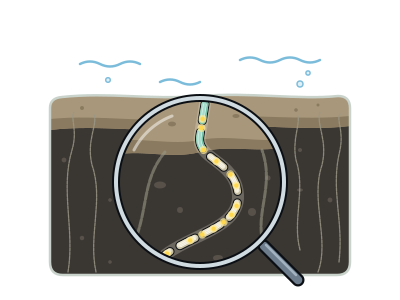
- Mucus-eating gut bacteriumGrazes on the mucus lining your gut, and may help keep that lining healthy and thick.
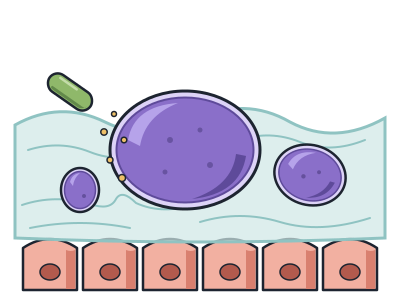
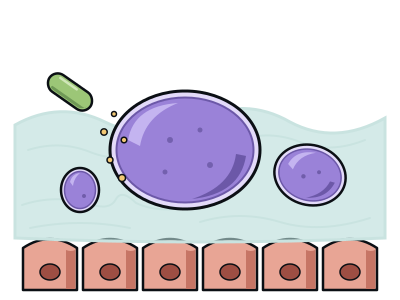
- Rocket-fuel bacteriumMakes hydrazine, a rocket fuel, inside a special compartment, and quietly cleans nitrogen from sewage.