A species
Stomach ulcer bacterium
Helicobacter pylori
A spiral germ that survives in the acid of the stomach, and the doctor who drank it to prove a point.
You and the stomach ulcer bacterium meet in the All life branch, shown at about 4.2 billion years ago (on 1 January, in a calendar from life's shared ancestor to today).
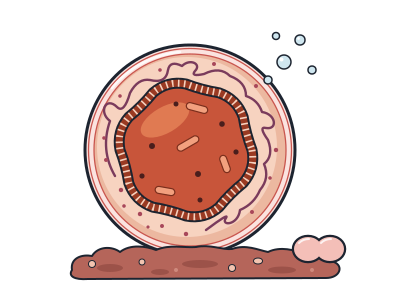
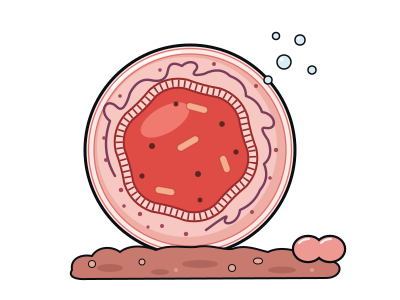
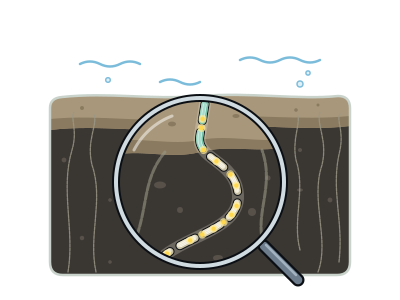
Your stomach makes acid strong enough to help break down food. Yet this tiny spiral germ manages to live there. It burrows into the slimy mucus that lines the stomach wall, away from the strongest acid. It also turns a substance called urea into ammonia, which wraps it in a small bubble that is less acidic.
In the early 1980s, most doctors thought ulcers came from stress, spicy food and too much acid. In Perth, Robin Warren and Barry Marshall suspected this bacterium instead, but many people laughed at the idea. In 1984 Marshall, then 32, checked that his own stomach was free of the germ and then drank a broth full of it. Within a few days he felt ill and had bad breath, and then he started vomiting. He didn't get an ulcer, but his stomach became badly inflamed. That showed the germ could infect a healthy stomach.
Other doctors were slowly won over. In 2005 the two men shared the Nobel Prize in Physiology or Medicine for their discovery. Today most ulcers caused by this germ can be cured with a short course of antibiotics and medicine that lowers stomach acid.
On the tree of life, its relatives are surprising company. They include a common food-poisoning germ, and bacteria that live around hot springs on the deep sea floor. Together they make up their own separate branch of bacteria. The hot-vent bacterium shown nearby on the tree belongs to a different branch.
It travelled with us
Scientists rebuilt this germ's genes from the stomach of Ötzi the Iceman, a mummy from about 5,300 years ago found in the Alps. His strain was mostly of Asian origin, which is different from the mixed strain most Europeans carry today.
Half the world or more
About half to two-thirds of all people carry it. Most catch it as children, often from their own family. Most of them never have any symptoms.
A swimming corkscrew
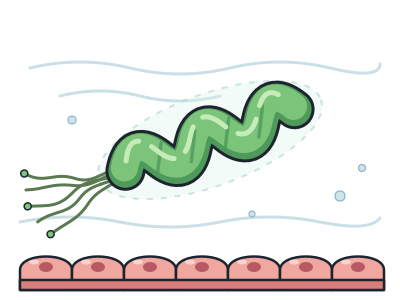
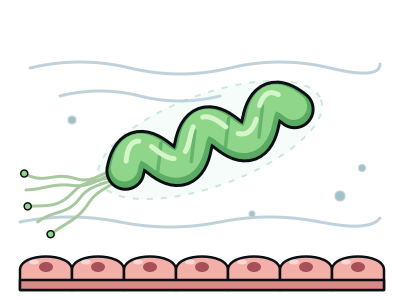
It swims using a tuft of about two to seven flagella, all at one end of its body. Each one is about as long as the germ itself.
Next to it on the tree
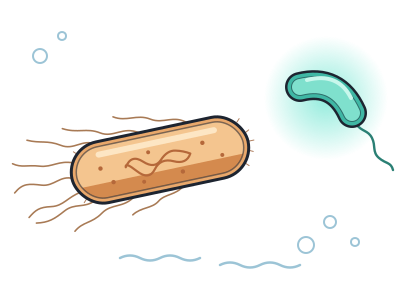
- ProteobacteriaThe most varied bacterial branch: gut dwellers, glowing squid partners, root helpers and our mitochondria's kin.

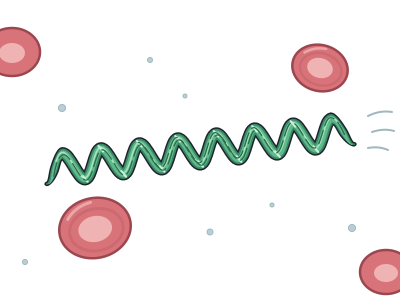
- Lyme disease spirochaeteA corkscrew-shaped bacterium that swims by twisting its whole body; ticks carry it between animals.
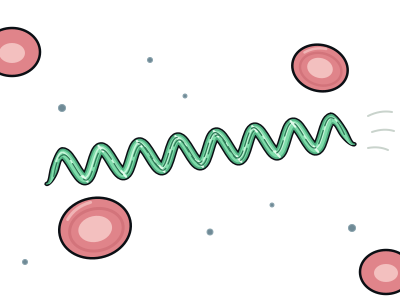
- Gut fibre-digesterA gut regular that breaks down plant fibre we cannot digest and shares the energy with us.
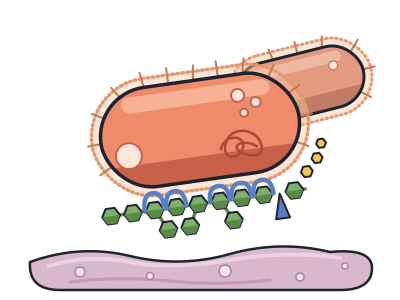
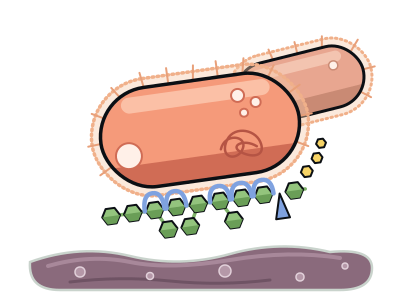
- Wolf-pack bacteriumHunts other microbes in swarms and, when food runs out, gathers by the thousand into tiny fruiting towers.
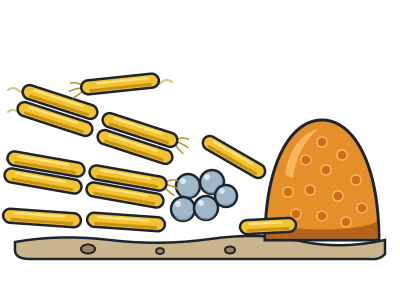
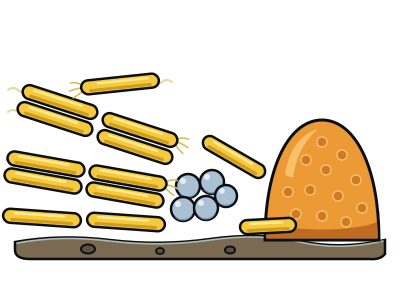
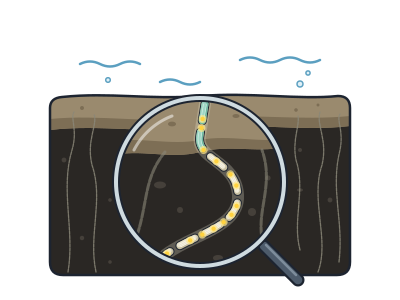
- Cable bacteriumThousands of cells link into centimetre-long living wires that carry electric current through sea mud.
- Mucus-eating gut bacteriumGrazes on the mucus lining your gut, and may help keep that lining healthy and thick.


- Rocket-fuel bacteriumMakes hydrazine, a rocket fuel, inside a special compartment, and quietly cleans nitrogen from sewage.