A species
Cable bacterium
Candidatus Electrothrix communis
A living electric wire made of thousands of cells, hidden in sea mud.
You and the cable bacterium meet in the All life branch, shown at about 4.2 billion years ago (on 1 January, in a calendar from life's shared ancestor to today).
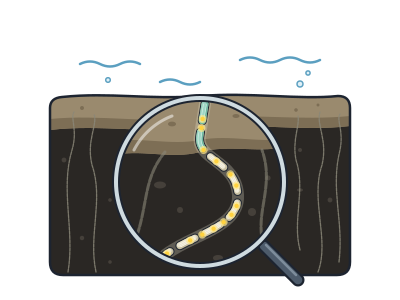
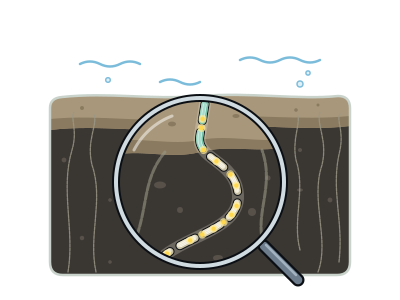
Picture thousands of tiny cells joined end to end into a living wire, about a centimetre long, that carries electric current through sea mud. That is a cable bacterium. One thread can pass current along a chain of more than 10,000 cells. It is about 100 times thinner than a human hair, so you need a microscope to see it.
The thread splits the work between its two ends. The top end reaches into the thin layer of oxygen at the surface of the mud and 'breathes'. The lower end sits deeper, in black mud with no oxygen, and 'eats' sulphur compounds. Electrons from the food travel up the thread to the oxygen.
The current runs through very fine fibres in the thread's shared outer layer. Each fibre has a conducting core inside an insulating protein shell, much like a plastic-coated wire. The fibres contain nickel held in a way not known from any other living thing.
On the tree, it sits in the same big branch of bacteria as the stomach ulcer bacterium and the wolf-pack bacterium. But nobody had imagined living things that work like electric cables until a team in Denmark reported them from Aarhus Bay mud in 2012.
A few cells do the breathing
Fewer than 1 in 10 of the cells in a thread use oxygen, but they do it at the highest rate known in biology. The other cells digest food and make new cells, kept safe from oxygen damage.
Fast growers
In a lab test with Danish mud, cable bacteria doubled in less than 20 hours. Within 3 weeks there were more than 2 kilometres of thread under each square centimetre of mud.
Wired like a house
Researchers estimate that each tiny fibre carries about as much current for its size as the copper wiring in a home.
Next to it on the tree
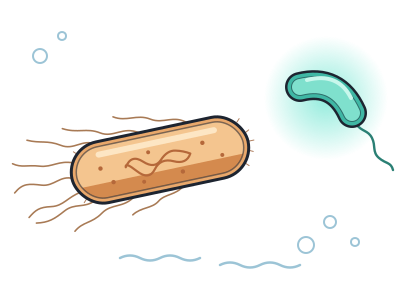
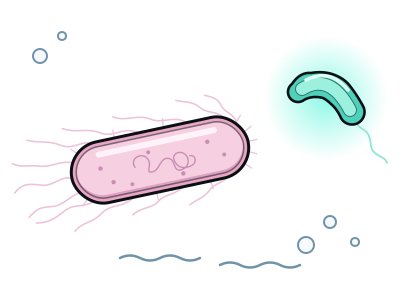
- ProteobacteriaThe most varied bacterial branch: gut dwellers, glowing squid partners, root helpers and our mitochondria's kin.
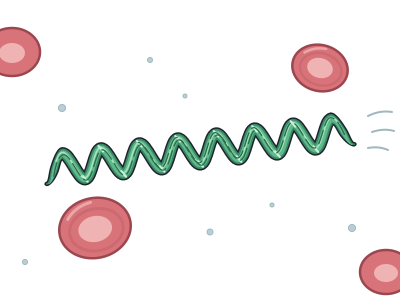
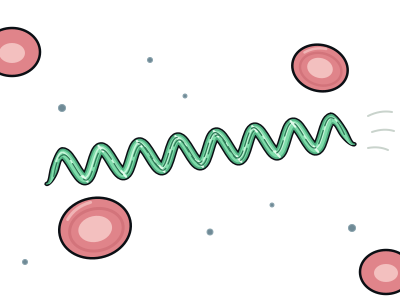
- Lyme disease spirochaeteA corkscrew-shaped bacterium that swims by twisting its whole body; ticks carry it between animals.
- Gut fibre-digesterA gut regular that breaks down plant fibre we cannot digest and shares the energy with us.
- Stomach ulcer bacteriumLives in the stomach's acid; a doctor drank it to prove it causes ulcers and later won a Nobel Prize.
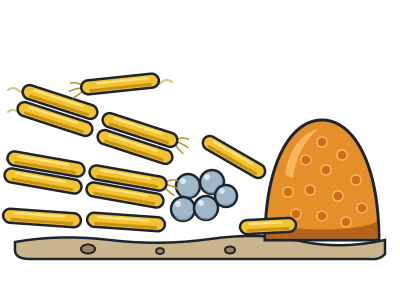
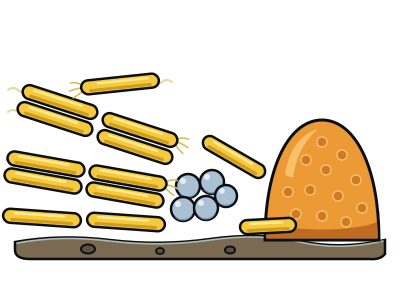
- Wolf-pack bacteriumHunts other microbes in swarms and, when food runs out, gathers by the thousand into tiny fruiting towers.
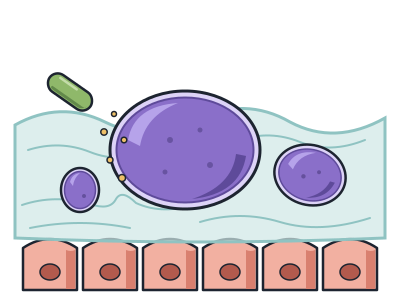
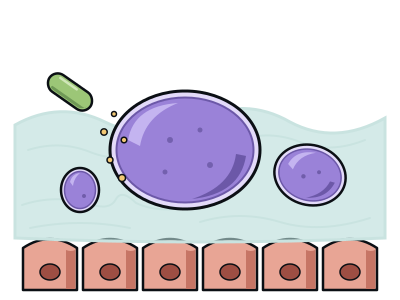
- Mucus-eating gut bacteriumGrazes on the mucus lining your gut, and may help keep that lining healthy and thick.
- Rocket-fuel bacteriumMakes hydrazine, a rocket fuel, inside a special compartment, and quietly cleans nitrogen from sewage.