A species
Gut fibre-digester
Bacteroides thetaiotaomicron
A tiny gut resident that turns the plant fibre we can't digest into energy we can use.
You and the gut fibre-digester meet in the All life branch, shown at about 4.2 billion years ago (on 1 January, in a calendar from life's shared ancestor to today).
Every time you eat vegetables, beans or wholegrain bread, you swallow plant fibre that your own body cannot break down. This bacterium can. It is very common in the human large intestine, where it helps ferment that fibre into small fatty acids. Your body absorbs them as fuel. When a diet is rich in fibre, gut bacteria like this one may supply up to about a tenth of our daily energy.
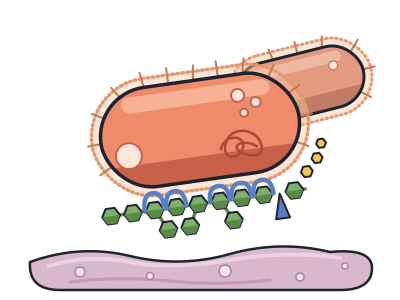
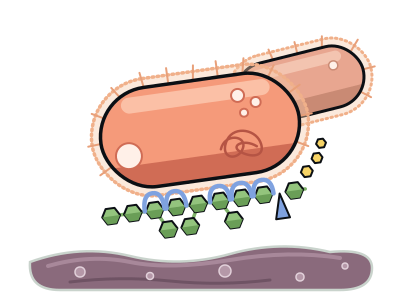
It is a fibre-cutting specialist. Nearly a fifth of its genetic instructions make up 88 separate toolkits, each for catching and digesting a different kind of complex carbohydrate. It holds long fibre chains against its surface and snips them into shorter pieces with enzymes. Then it pulls the pieces inside and breaks them down into simple sugars.
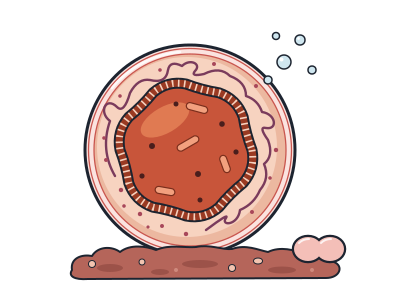
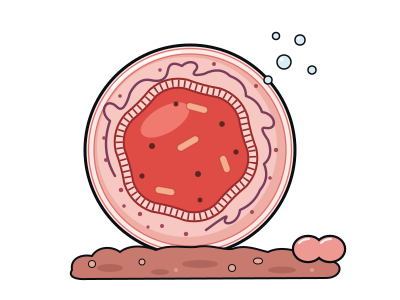
When the food has no fibre, it does not go hungry. In experiments with mice, it switched to eating sugars from the slimy mucus that lines the gut, a kind of backup food supply. More than a thousand of its genes changed their activity when the diet changed.
It sits with the other bacteria on the tree, so its distant relatives include the stomach ulcer bacterium and the cyanobacteria. Normally it is a helpful resident. But if it escapes the gut, for example after an injury or surgery, it can cause serious infections.
Named after Greek letters
Its name joins three Greek letters: theta, iota and omicron. They describe how some of its cells look, with bubble-like spaces inside. It was first described in 1912.
A big kit of enzymes
In 2003, scientists read its whole set of genes, about 4,800 of them. They found more than 170 enzymes for breaking complex carbohydrates down into simple sugars.
Sharing the work
A close relative in the gut prefers different plant fibres. This one is best at jelly-like fibres called pectins, found in the cell walls of fruit and vegetables. The relative goes for other fibres, so the two species split the menu between them.
Next to it on the tree
- ProteobacteriaThe most varied bacterial branch: gut dwellers, glowing squid partners, root helpers and our mitochondria's kin.
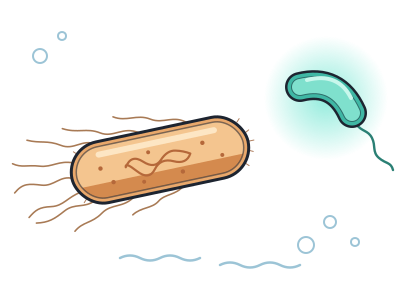
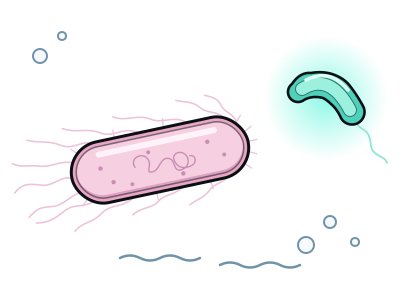
- Lyme disease spirochaeteA corkscrew-shaped bacterium that swims by twisting its whole body; ticks carry it between animals.
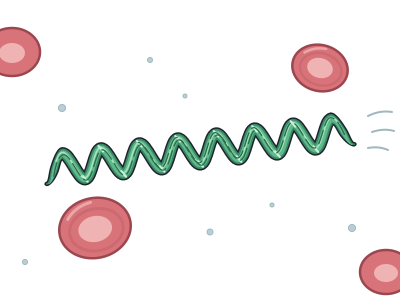
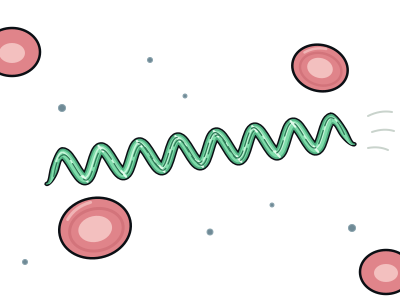
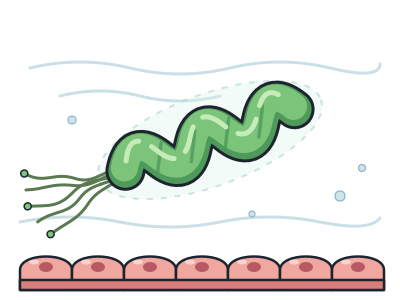
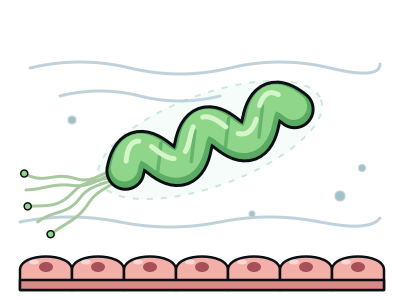
- Stomach ulcer bacteriumLives in the stomach's acid; a doctor drank it to prove it causes ulcers and later won a Nobel Prize.
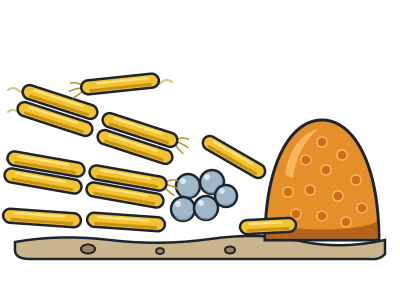
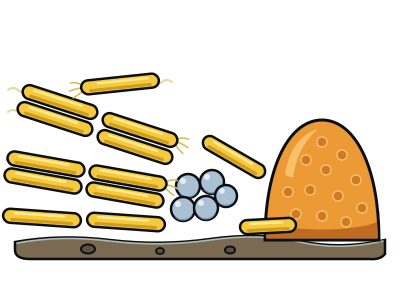
- Wolf-pack bacteriumHunts other microbes in swarms and, when food runs out, gathers by the thousand into tiny fruiting towers.
- Cable bacteriumThousands of cells link into centimetre-long living wires that carry electric current through sea mud.
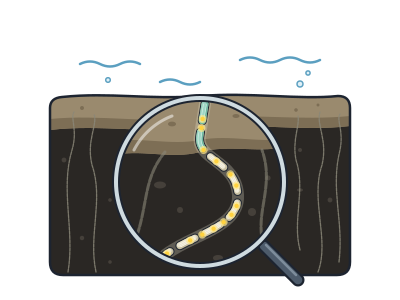
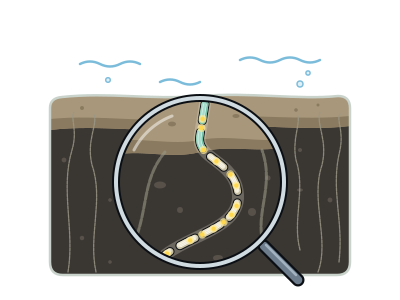
- Mucus-eating gut bacteriumGrazes on the mucus lining your gut, and may help keep that lining healthy and thick.
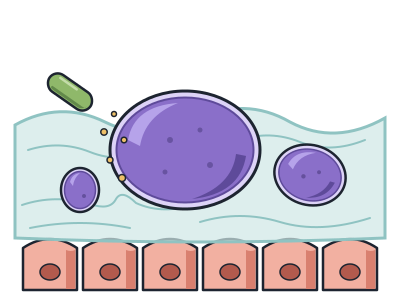
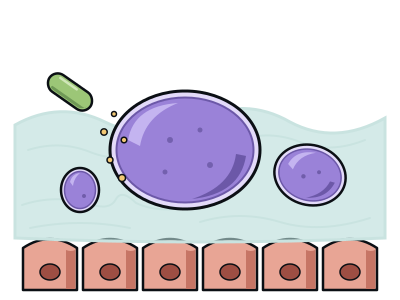
- Rocket-fuel bacteriumMakes hydrazine, a rocket fuel, inside a special compartment, and quietly cleans nitrogen from sewage.